Contact lens care: a clear rinse is not the same as disinfection
Tap water, sterile saline and disinfecting solutions do different jobs. Guidance from US health agencies and a UK eye hospital explains why the distinction matters.
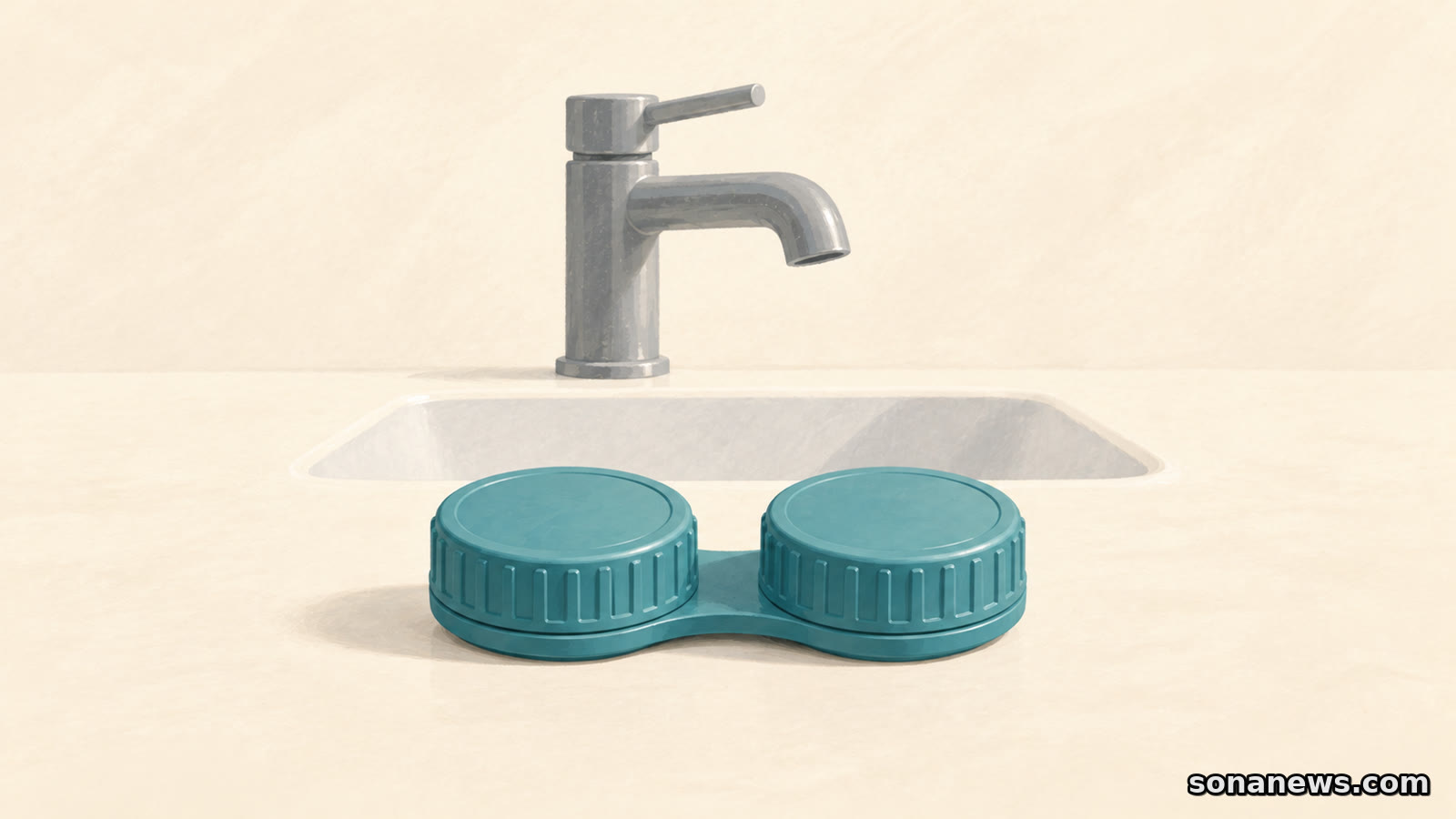

A contact lens can look clean after a rinse without having been disinfected. That distinction is easy to lose among clear liquids sold for lens care, especially when the words cleaning, rinsing and storing appear close together on the shelf.
The US Centers for Disease Control and Prevention draws a clear line: saline does not disinfect contact lenses. Tap water is not a substitute either. The US Food and Drug Administration warns against exposing lenses to water, including tap, bottled and distilled water. Moorfields Eye Hospital in the UK also tells wearers not to rinse lenses or their case under the tap.
These are established care principles, not a new October restriction or evidence of a new outbreak. Their everyday value lies in separating the job a liquid performs from how clear or familiar it looks. For reusable lenses, removing debris and killing harmful germs are related tasks, but they are not the same task.
The CDC defines cleaning as removing deposits, debris and some germs from a lens surface. Disinfection is the process needed to kill harmful germs that can cause eye infections. A rinse may remove material loosened during cleaning, but the presence of a rinsing step does not establish that disinfection has happened.
That explains an otherwise confusing product distinction. A daily cleaner is for cleaning, not disinfecting. Sterile saline can have a rinsing role within a suitable care system, but it does not replace a disinfectant. A product being sterile when supplied is not the same as that product being able to disinfect a used lens.
Multipurpose solution has a broader role. The CDC describes it as a system for cleaning, rinsing, disinfecting and storing soft contact lenses. The relevant distinction is its intended function, not its resemblance to another clear liquid. The agency still directs wearers to the instructions from their eye-care professional and the solution manufacturer.
Moorfields' guidance helps explain why the word saline is not itself a warning sign. Its soft-lens care instructions include saline rinsing alongside separate cleaning and soaking steps. That does not contradict the CDC's statement that saline is not a disinfectant. It shows why a single step cannot be lifted out of a complete care routine and treated as the whole process.
Water that seems perfectly ordinary in a bathroom is not a contact lens care product. The FDA's warning extends beyond the kitchen or bathroom tap to bottled and distilled water. Substituting a different kind of water does not turn it into an appropriate cleaning or disinfection system.
The FDA associates water exposure with Acanthamoeba keratitis, an infection of the cornea. That is a reason for the precaution, not a claim that every water contact causes an infection or a way to estimate an individual's risk from a single incident. A clear-looking lens or case cannot settle that question.
Moorfields makes the same boundary practical by warning against tap-water rinsing of both the lens and its storage case. Its guidance also addresses showering, bathing and swimming in lenses. The common issue is water contact, rather than whether the water is being used deliberately as a cleaning liquid.
For readers, this is a distinction between uses, not a verdict on a household's drinking-water supply. The cited guidance concerns a medical device worn on the eye. It does not say that a tap-water warning for contact lenses means the same water is unsuitable for every other household purpose.
Hydrogen peroxide solutions illustrate why even two products designed to disinfect lenses cannot simply be used in the same way. The FDA explains that peroxide systems need a neutralisation step before the lenses go back into the eyes. Most are one-step systems with a neutraliser built into the supplied case; others use a separate neutralising tablet.
The agency warns against putting peroxide solution directly into the eyes or using unneutralised peroxide as a final lens rinse. Its instructions specify the special case supplied with each new bottle. An ordinary flat storage case is therefore not an interchangeable accessory for a peroxide system.
This does not make peroxide products inherently unsuitable. The FDA says they are safe and effective when used properly. It means that the bottle, the case and the specified process belong together. This article does not select a system for an individual or provide a universal soaking time: the manufacturer's instructions and professional guidance remain essential.
The storage case is not just packaging. The FDA notes that cases can support bacterial growth, while the CDC warns that adding fresh solution to used solution reduces disinfection effectiveness. A case that appears topped up is not evidence of a completed, effective disinfection step.
The FDA also distinguishes a solution's expiry or discard date from the amount left in the bottle. It advises against transferring solutions into smaller travel containers because this can affect sterility and create confusion about what the container holds. Keeping the product identifiable matters as well as keeping enough liquid available.
Care instructions vary with lens type and product. The CDC says rigid gas-permeable lenses have different care systems from soft lenses. Moorfields separately states that daily disposable lenses are discarded after removal, rather than treated as reusable lenses. A cleaning routine for one category should not be presented as a way to extend another category's use.
The useful question is therefore not simply whether a lens has been rinsed. It is whether the correct care system has performed the jobs required for that lens, with the matching instructions and accessories. Clear liquid, a wet case and a clean appearance cannot answer that on their own.
Editorial note. This article provides general health information, not medical advice, a diagnosis, treatment or an individual contact lens care plan. Follow the instructions supplied for your lenses and care products and the guidance of a qualified eye-care professional. Do not use this article to select or substitute a care system or to delay care for eye pain, redness, irritation or changes in vision. The FDA advises removing lenses and consulting an eye-care professional if eyes become red or irritated or vision changes.
Sources
- **CDC: About Cleaning, Disinfecting, and Storing Contact Lenses** Reviewed 27 May 2025; read in full 9 October 2026. Supports the distinctions between cleaning and disinfection, saline's limited function, multipurpose solution, peroxide systems, topping off and rigid versus soft lens care. Existing guidance, not a new October announcement
- **FDA: Contact Lens Solutions and Products** Read 9 October 2026. Supports warnings about tap, bottled and distilled water, Acanthamoeba keratitis, expiry and discard dates, reused solution, case hygiene and decanting. No individual risk estimate or diagnosis is derived from this page
- **FDA: Contact Lenses, Safe Use of Hydrogen Peroxide Solution** Read 9 October 2026. Supports neutralisation, one-step versus two-step systems, the supplied case and the warning against direct eye exposure. The article avoids a universal soaking time and does not recommend a product or treatment
- **Moorfields Eye Hospital: Care of your soft contact lenses** Read in full 9 October 2026. Corroborates the tap-water warning, distinguishes saline rinsing from the rest of a care routine, and separates daily disposable from reusable lenses. This is UK hospital guidance, not a worldwide product specification. Product-specific instructions and differing case-replacement schedules are not generalised
Help us improve
Was this article useful?
One anonymous tap helps Sona improve future reporting, headlines and source context.
Up next

WHO guidance pairs sound level with listening time. A weekly exposure tracker can make that relationship clearer, but it is not a hearing test or a personal safety guarantee.
Continue readingMore in Health