The heat forecast is becoming a health signal, not just a weather number
CDC and NWS tools now connect local heat forecasts with health risk, which makes early-summer heat less about bravado and more about planning.

The old summer question was simple: how hot will it be? The better question is now slightly more awkward: what does that heat do to people in this place, on this date, with this kind of housing, work and health risk around them?
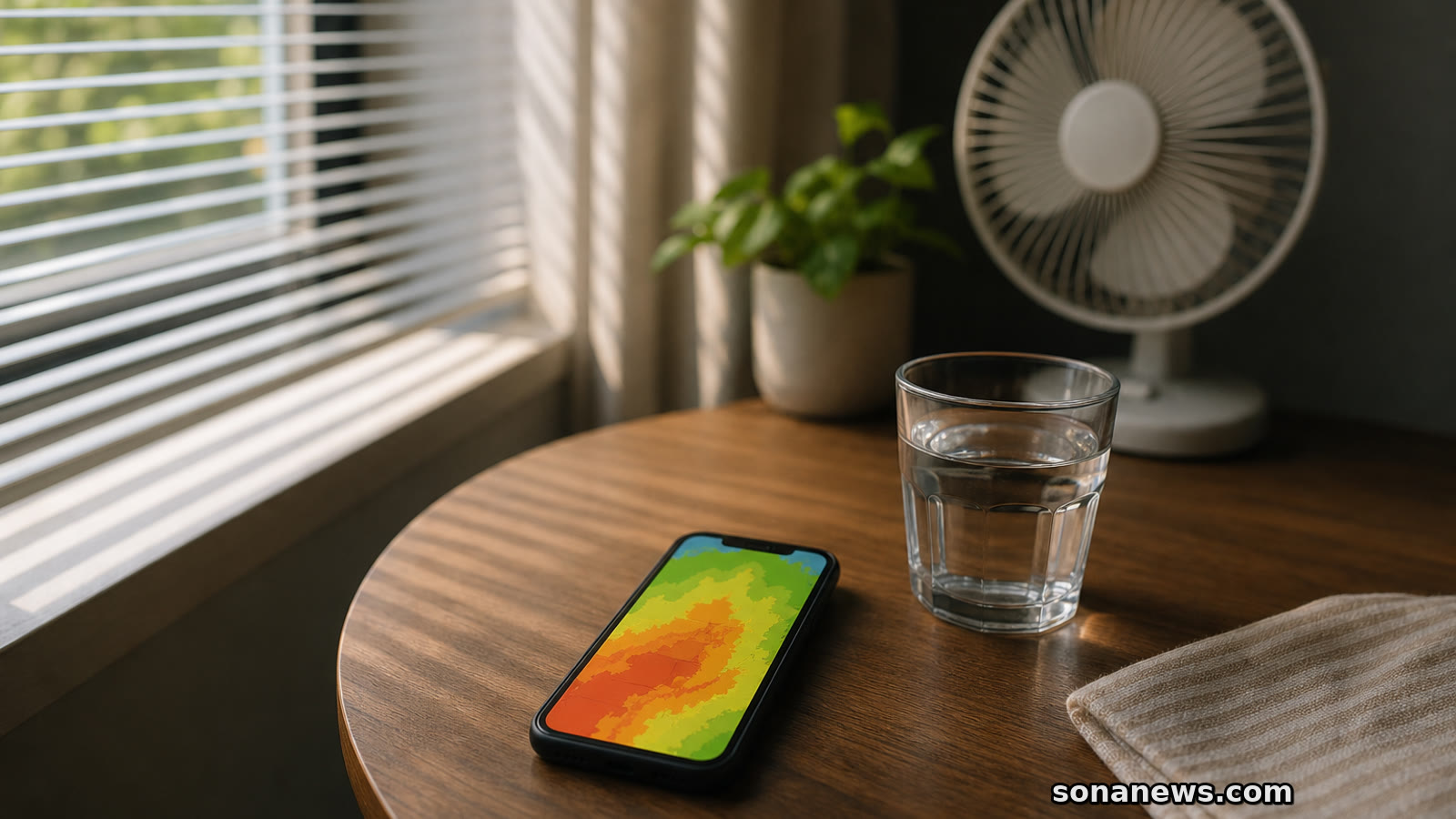
That is the shift behind the growing use of HeatRisk, the colour-and-number forecast from the U.S. National Weather Service. It is not a replacement for official heat watches, advisories or extreme heat warnings. NWS says those remain its official heat products. HeatRisk is supplementary, and still labelled experimental, but it has become a useful clue because it tries to translate a forecast into likely heat-related impact over a 24-hour period.
The detail matters. HeatRisk is calculated daily for each location from the current date through seven days ahead, using the NWS high resolution national gridded forecast database. It was available in the western United States from 2014 and expanded across the contiguous United States in 2024. Instead of asking only whether a temperature looks high on a national scale, the system asks whether the heat is unusual for that location and time of year. NWS describes that as heat in the warmest 5% of temperatures for a particular date and place.
That is why early-season heat can be a different problem from the same number in late July. A city used to cool spring evenings may not have the same tolerance, routines or open cooling spaces as it does later in the season. Warm nights also matter. The NWS explanation says HeatRisk looks at the duration of unusual heat, including whether overnight temperatures lower heat stress or carry it into the next day. That point feels obvious once stated, but a forecast high temperature can hide it.
CDC's heat pages put the health side plainly. Extremely hot weather can make people sick, and heat waves are among the leading causes of weather-related deaths in the United States. Heat-related illness happens when the body cannot cool down properly. Sweating usually helps, but sometimes it is not enough. Very high body temperatures can damage the brain and other vital organs.
There is a danger, in writing about heat, of making the whole subject sound dramatic and then useless. Most people do not need a lecture about summer being hot. They need signals that are local enough to change ordinary decisions: whether a school sports session is sensible, whether an older relative's flat will cool overnight, whether an outdoor shift has shade and water, whether a home without air conditioning has a backup cool place.
The CDC Heat & Health Tracker and HeatRisk Dashboard are built around that practical layer. CDC says its tracker helps users see how heat events affect their county and which populations may be at higher risk. The HeatRisk Dashboard adds local heat forecast information, local air quality details and health-protective actions. That last pairing, heat plus air quality, is important. Hot weather can sit alongside ozone, wildfire smoke or still air, and people with asthma, heart disease or other chronic conditions may feel the stack before the healthy majority does.
The higher-risk list is broader than the lazy stereotype of someone who simply dislikes hot weather. CDC names pregnant people, children and teens with asthma, people with heart conditions or other chronic health conditions, older adults, outdoor workers, athletes, infants and young children. NWS also points to people experiencing homelessness, people without reliable cooling or hydration, indoor workers in non-cooled spaces, people on some medicines and people doing strenuous activity before they have acclimatised.
That does not make HeatRisk a personal medical assessment. It is a public-health forecast, not a diagnosis and not an instruction for any individual medicine, job or event. Its value is that it makes a quieter problem visible. A green, yellow, orange, red or magenta day is easier to discuss than a vague sense that the weather feels oppressive. It gives households, schools, employers and local officials a common language before the worst hours arrive.
The indoor detail may be the most under-rated one. CDC says air conditioning is the strongest protective factor against heat-related illness, and even a few hours a day in air conditioning can reduce risk. It also warns that fans are not always helpful: when indoor temperatures rise above 90°F, a fan can increase body temperature. That is not the kind of nuance that fits neatly inside a weather icon, but it is exactly the kind that can matter inside a small flat in the evening.
Medicines and devices complicate the picture too. CDC notes that many medicines can make people more likely to become dehydrated or overheated on hot days, and that some medicines need to be kept out of hot places. Power outages can affect refrigerated medicines or electronic medical devices. None of this means a forecast should make people frightened of heat. It means the forecast is a prompt to notice the parts of daily life that heat can quietly bend.
National Heat Safety Week in May 2026 put this in plain language: the heat index is familiar, but HeatRisk tries to account for forecast temperatures, humidity, time of year, duration of heat and heat casualty data. That is a more human way of reading the weather. Not softer. More precise.
The test for the new heat forecast is not whether everyone opens a dashboard every morning. Most will not. The test is whether heat stops being treated as a generic summer inconvenience and starts being treated as local information. A forecast can say 35°C or 95°F. A health signal asks the better follow-up: who gets through that day easily, and who needs the plan to start before the room is already hot?
Editorial note. This article is for general information only and is not medical advice. Heat risk varies by location, age, health status, work, housing, medicines and access to cooling. Use official local alerts and qualified health professionals for personal medical questions or urgent symptoms.
Sources
- CDC - "Tracking Heat Events" - - extracted 2026-06-08. Verified: 6 May 2026 page date, heat waves as among the leading causes of U.S. weather-related deaths, CDC Heat & Health Tracker and HeatRisk Dashboard descriptions, heat illness mechanism and air conditioning protection language
- CDC - "About Heat and Your Health" - - extracted 2026-06-08. Verified: 25 July 2025 page date, higher-risk groups, HeatRisk and air-quality framing, fan warning above 90°F, medicine and medical-device planning context
- National Weather Service / NOAA - "NWS HeatRisk" - - extracted 2026-06-08. Verified: experimental status, seven-day display, 8 June 2026 update timestamp, colour risk categories and statement that HeatRisk is supplementary to official NWS watches, advisories and warnings
- National Weather Service / NOAA - "HeatRisk overview" - - extracted 2026-06-08. Verified: HeatRisk definition as a 24-hour heat-related impact risk index, location-specific daily values, western U.S. availability since 2014, contiguous U.S. expansion in 2024 and warmest 5% unusual-heat method
- National Weather Service / NOAA - "What's in HeatRisk?" - - extracted 2026-06-08. Verified: inputs including unusual above-normal temperatures, humidity approximation, time of year, duration of unusual heat, overnight lows and CDC-supported heat-health thresholds
- National Weather Service Indianapolis - "2026 Heat Safety Week" - - extracted 2026-06-08. Verified: 18-22 May 2026 National Heat Safety Week dates and official summary of HeatRisk factors compared with heat index
Help us improve
Was this article useful?
One anonymous tap helps Sona improve future reporting, headlines and source context.
Up next

Primary school sessions begin this week, with secondary pupils following later in autumn. For most families, the practical deadline comes from the local school immunisation team.
Continue readingMore in Health