Europe’s drug-resistant gonorrhoea warning starts at the surveillance bench
ECDC says reported ceftriaxone-resistant cases remain limited and general-population risk is low. The harder question is whether laboratories can keep finding resistance early.
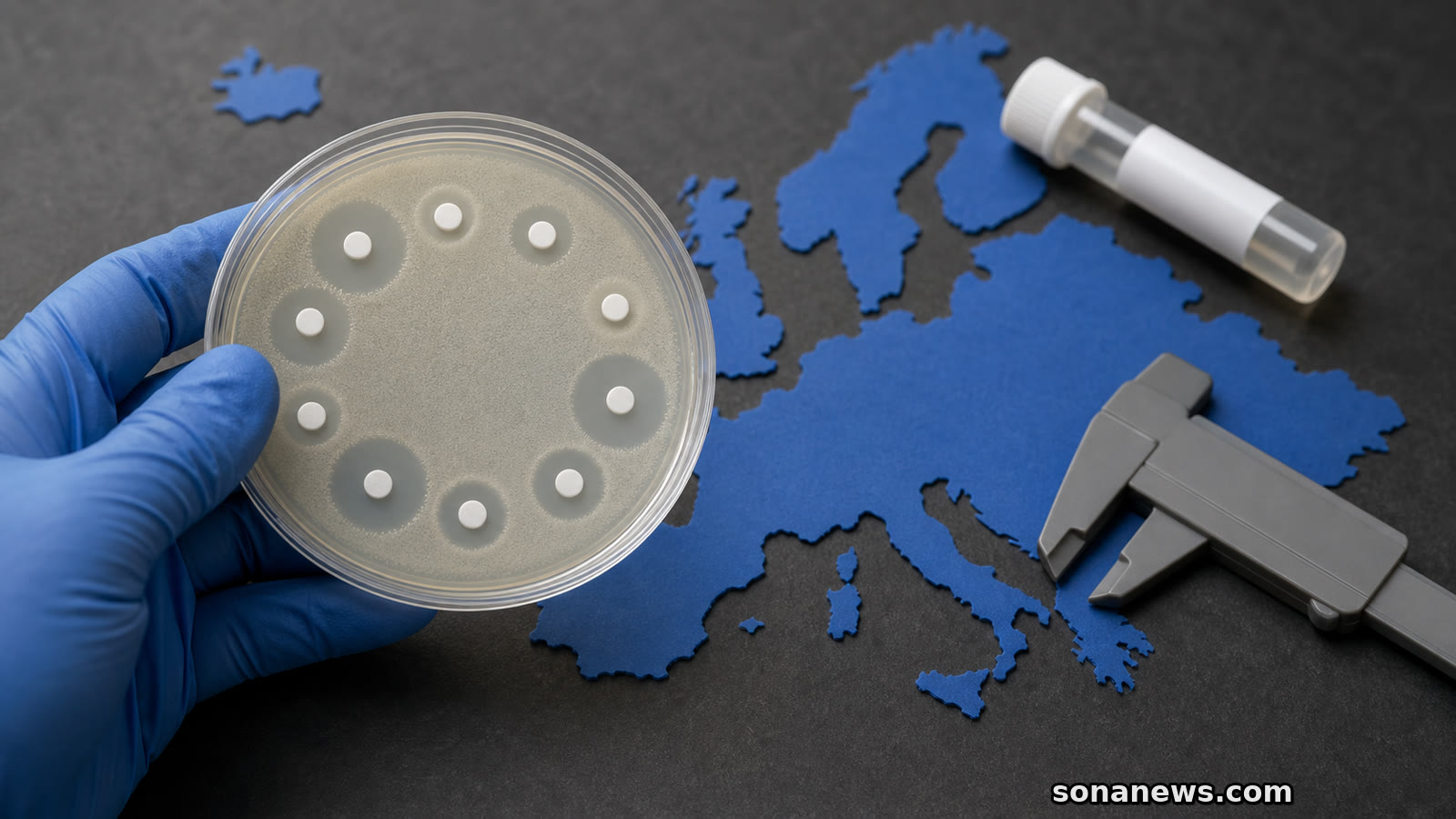

An antibiotic-resistance warning can begin with something as quiet as a culture plate. A laboratory grows a bacterial isolate, tests how it responds to antimicrobial drugs and passes the result into a surveillance system. The alert becomes visible only because the sample, method and reporting chain all work.
That laboratory chain is the useful way to read the European Centre for Disease Prevention and Control’s new assessment of ceftriaxone-resistant gonorrhoea. Published on 16 July, it says an increasing number of European countries have reported resistant strains since 2022. Early detections were mainly sporadic and often associated with travel. During 2025 and 2026, several countries recorded more cases and growing evidence of transmission within Europe.
This is a warning about direction, not a declaration that gonorrhoea has suddenly become untreatable across the continent. ECDC says reported ceftriaxone-resistant cases remain limited. At the time of its assessment, all reported infections had been successfully treated. It assessed the overall risk as low for the general sexually active population in the EU and European Economic Area who do not have behaviours associated with a higher probability of acquiring a sexually transmitted infection.
The assessment becomes more specific for different contexts. ECDC rates the risk as low-to-moderate for people with multiple or frequently changing partners, or those having sex without a condom with casual or new partners. It rates the risk as moderate when travel to areas with more circulation of resistant strains is combined with those exposure patterns. Those categories are population-level judgements, not a way to calculate one person’s diagnosis or treatment needs.
Ceftriaxone matters because it sits at the centre of current European first-line treatment. Gonorrhoea has repeatedly developed resistance to drugs used against it, which means each new resistant lineage narrows the margin available to clinical services. The latest assessment includes reports from 11 European countries and says importation from areas with higher circulation, particularly in South-East Asia, remains an important route into Europe. It also describes clusters and locally acquired infections, so travel no longer explains every detection.
The less visible story is whether health systems can keep finding those strains early. ECDC’s separate monitoring of Europe’s response plan found mixed progress between 2019 and 2023. The estimated average share of specialist sexual-health clinics with access to culture and antimicrobial susceptibility testing fell from 97.3% to 82.6%. The share of reported cases tested with culture fell from 38.5% to 29.5%. Participation in the European surveillance programme and in external laboratory quality assessment also declined.
Those figures do not mean that every clinic needs to perform every specialist test on site. They do show why referral routes, reference laboratories and quality-assured methods matter. WHO’s gonococcal antimicrobial surveillance programme says culture-based monitoring needs to be standardised and linked with clinical and epidemiological information. A resistance signal is much less useful if the relevant isolate is never cultured, if laboratories cannot compare results or if a suspected treatment failure does not reach the surveillance network.
Europe’s routine surveillance illustrates the distinction between infection totals and resistance findings. ECDC recorded 106,331 confirmed gonorrhoea cases across 28 EU and EEA countries in 2024, the highest notification level since European STI surveillance began in 2009. That is the total reported burden, not the number of ceftriaxone-resistant infections. The 2024 antimicrobial-susceptibility report analysed a much smaller collection of cultured isolates submitted through participating laboratories. Conflating those datasets would turn a targeted resistance warning into a false claim about every reported case.
There is a similar reason to avoid the phrase “superbug crisis” as a shortcut. WHO estimates that 82.4 million new gonorrhoea infections occurred globally among people aged 15 to 49 in 2020, while also warning that resistance data is uneven across countries. A place with stronger laboratory surveillance may detect more resistant strains than a place with weaker capacity. Silence in a dataset can mean low resistance, but it can also mean that too few isolates were tested.
ECDC’s public-health response combines non-stigmatising prevention messages with better detection, partner services, timely care and surveillance. Its general guidance highlights consistent barrier protection and regular STI testing in relevant exposure contexts. The new assessment is not a substitute for local clinical advice, and it does not support blaming any country, traveller or sexual network. Bacteria move through connected populations; stigma only makes testing and communication harder.
The calm conclusion is not that one culture plate can predict Europe’s future. It is that a durable treatment system needs many laboratories to notice small changes before they become common. The case count may be limited today, but the ability to see the next resistant strain is itself part of keeping gonorrhoea treatable.
Editorial note. This article is for general public-health information only. It is not medical, sexual-health, testing or treatment advice and does not assess any individual symptom, exposure, partner, travel history, laboratory result or medicine. For personal concerns, use current local public-health information and qualified sexual-health or clinical services.
Sources
- Source: European Centre for Disease Prevention and Control, “Upsurge in ceftriaxone-resistant Neisseria gonorrhoeae with evidence of domestic transmission in the EU/EEA and the UK”, Published and extracted 16 July 2026. Verified: increasing detections since 2022; the shift from mainly sporadic travel-associated cases to some domestic transmission; 11 reporting countries; ECDC’s population risk levels; limited reported cases; successful treatment to date; and recommendations for culture, susceptibility testing, genomic surveillance and non-stigmatising communication
- Source: ECDC, “Drug-resistant gonorrhoea on the rise in Europe, ECDC warns”, Published 16 July 2026; extracted 17 July 2026. Verified: plain-language summary of ceftriaxone’s first-line role, Europe’s current risk framing, travel and domestic-transmission context, prevention language and public-health recommendations
- Source: ECDC, “Response plan to control and manage the threat of multi-and extensively drug-resistant gonorrhoea in Europe - Indicator monitoring 2023”, Published 13 July 2026; extracted 17 July 2026. Verified: mixed implementation progress; changes in Euro-GASP and external-quality participation; clinic access to culture and antimicrobial susceptibility testing from 97.3% to 82.6%; and cultured-case share from 38.5% to 29.5% between 2019 and 2023
- Source: ECDC, “Gonococcal antimicrobial susceptibility surveillance in the European Union/European Economic Area, 2024”, Published 26 May 2026; extracted 17 July 2026. Verified: Euro-GASP’s quality-assured susceptibility role, participating-laboratory model, tested antimicrobials and distinction between submitted isolates and population case notifications
- Source: ECDC, “Gonorrhoea - Annual Epidemiological Report for 2024”, Published 21 May 2026; extracted 17 July 2026. Verified: 106,331 confirmed cases across 28 EU/EEA countries, the 26.9 per 100,000 notification rate and the highest notification level since surveillance began in 2009
- Source: World Health Organization, “Multi-drug resistant gonorrhoea”, Updated 22 October 2025; extracted 17 July 2026. Verified: global antimicrobial-resistance context, the 82.4 million estimated new infections in 2020 among people aged 15 to 49, uneven surveillance capacity and the importance of preserving treatment options
- Source: World Health Organization, “Gonococcal Antimicrobial Surveillance Programme”, Extracted 17 July 2026. Verified: culture-based resistance monitoring needs standardisation and linkage to clinical and epidemiological data, and the programme’s role in detecting resistance and informing guidelines
Help us improve
Was this article useful?
One anonymous tap helps Sona improve future reporting, headlines and source context.
Up next
The fingertip clip uses light, not a blood sample. US health guidance explains its accuracy limits and why a wellness device is not the same as a medically reviewed one.
Continue readingMore in Health