Walking still counts, precisely because it is ordinary
The most accessible form of movement keeps gaining official support, but its plainness makes it easy to undervalue. The evidence is less about perfection than repetition.

The person making the healthier choice may not be wearing running shoes. They may be walking to the bus stop with a bag of shopping, taking the stairs because the lift is slow, or circling the block after dinner because the house has become too loud. It does not look like a fitness plan. That is part of the point.
Walking has always had a public-relations problem. It is too common to feel like an intervention, too slow to look impressive, and too dependent on pavements, weather, safety and time to be sold as a universal cure. It does not come with much equipment. It does not photograph as a transformation. It can be done badly, inconsistently and for reasons that have nothing to do with health.
Yet official guidance keeps returning to it because health systems are interested in what people can repeat. The World Health Organization defines physical activity broadly as any bodily movement produced by skeletal muscles that requires energy expenditure. That includes leisure activity, transport-related movement such as walking, work-related activity, domestic activity, sport and play. The definition matters because it rejects the idea that only formal exercise counts.
WHO’s physical activity fact sheet, dated 26 June 2024, says adults should do at least 150 minutes of moderate-intensity physical activity a week, or at least 75 minutes of vigorous-intensity activity, or an equivalent combination. It also says any amount of physical activity is better than none and that all physical activity counts. That is not a slogan for laziness. It is a practical admission that population health improves when ordinary movement is made easier to start and easier to keep.
The NHS walking guidance makes the point in still plainer language. It describes walking as simple, free and one of the easiest ways to get more active. It says a brisk 10-minute daily walk has health benefits and counts towards the 150 minutes of weekly exercise recommended in adult physical activity guidelines. It also gives a useful test for pace: you are walking briskly if you can still talk but cannot sing the words to a song.
This is where walking is often misunderstood. The goal is not to turn every pavement into a personal performance chart. A brisk walk is not the same as a stroll, but it is also not a race. For many people, the hardest part is not knowing what counts. It is making movement fit into days that are already crowded, uneven or tiring.
There are limits to the simplicity. Walking is not equally available to everyone. Some people live in places where pavements are poor, traffic is hostile, lighting is weak or public space feels unsafe. Some have pain, disability, fatigue, caring responsibilities, shift work or medical conditions that change what movement means. Some need clinical advice before changing activity levels. A health article that praises walking without noting those constraints turns a public-health tool into a private scold.
That is why the best reading of the guidance is not moralistic. It is infrastructural. If walking is useful because it is repeatable, then the question becomes: what helps people repeat it? A safer route to school. A workplace that does not make every break feel suspect. Public transport stops close enough to walk to. Parks that feel usable. Shoes that do not hurt. Social plans that include movement without demanding athletic identity.
On an individual level, the same logic applies at a smaller scale. The NHS suggests building walking into daily routines: part of a journey to work, a trip to the shops, stairs instead of a lift, walking children to school, a regular walk with a friend, or a stroll with family or friends after dinner. These examples are modest. Their strength is that they do not require a person to become a different kind of person before beginning.
There is a useful scepticism to keep. Step counts have become a shorthand for health, but the official sources cited here do not require a single magic number for everyone. Pace, duration, frequency and personal circumstances all matter. A phone can nudge; it can also turn movement into another task to fail at. Walking’s value is partly that it can escape the performance economy if we let it.
The evidence base also points beyond the heart and lungs. WHO says regular physical activity provides significant physical and mental health benefits and is associated with reduced risk of several conditions in adults, including cardiovascular disease, hypertension and type 2 diabetes. It also improves mental health, cognitive health, sleep and overall well-being. Those are broad public-health statements, not a guarantee about any one person.
The broadness is important. Walking will not replace prescribed treatment, physiotherapy, medication, sleep, food security, housing or clean air. It should not be sold as a bargain substitute for care. But that is different from dismissing it. Public health is often made of unglamorous repetitions: vaccination appointments, cleaner air, safer streets, handwashing, sleep routines, movement that can be kept.
In a culture drawn to optimisation, walking’s ordinariness is easy to mistake for weakness. It is not the most intense exercise, the most efficient calorie burn or the neatest identity badge. It is just movement that many people can return to, in imperfect conditions, without needing to win anything.
That may be the calmest way to understand it. Walking counts not because it is miraculous, but because it is available often enough to matter. The useful question is not whether it is impressive. It is whether a day can be arranged so that a little more of it happens, safely and without theatre.
Editorial note. This article is for general information only and is not medical advice. If you have a health condition, pain, disability, pregnancy-related concerns or questions about changing activity levels, consult a qualified health professional.
Sources
- World Health Organization - “Physical activity” fact sheet - - extracted 2026-06-04. Verified: definition of physical activity; 150-minute adult recommendation; “any amount is better than none”; health benefit categories; insufficient activity risks
- NHS - “Walking for health” - - extracted 2026-06-04. Verified: walking described as simple/free/easy; brisk 10-minute walk counts towards 150 minutes; brisk pace talk-but-not-sing test; routine-building examples
Help us improve
Was this article useful?
One anonymous tap helps Sona improve future reporting, headlines and source context.
Up next
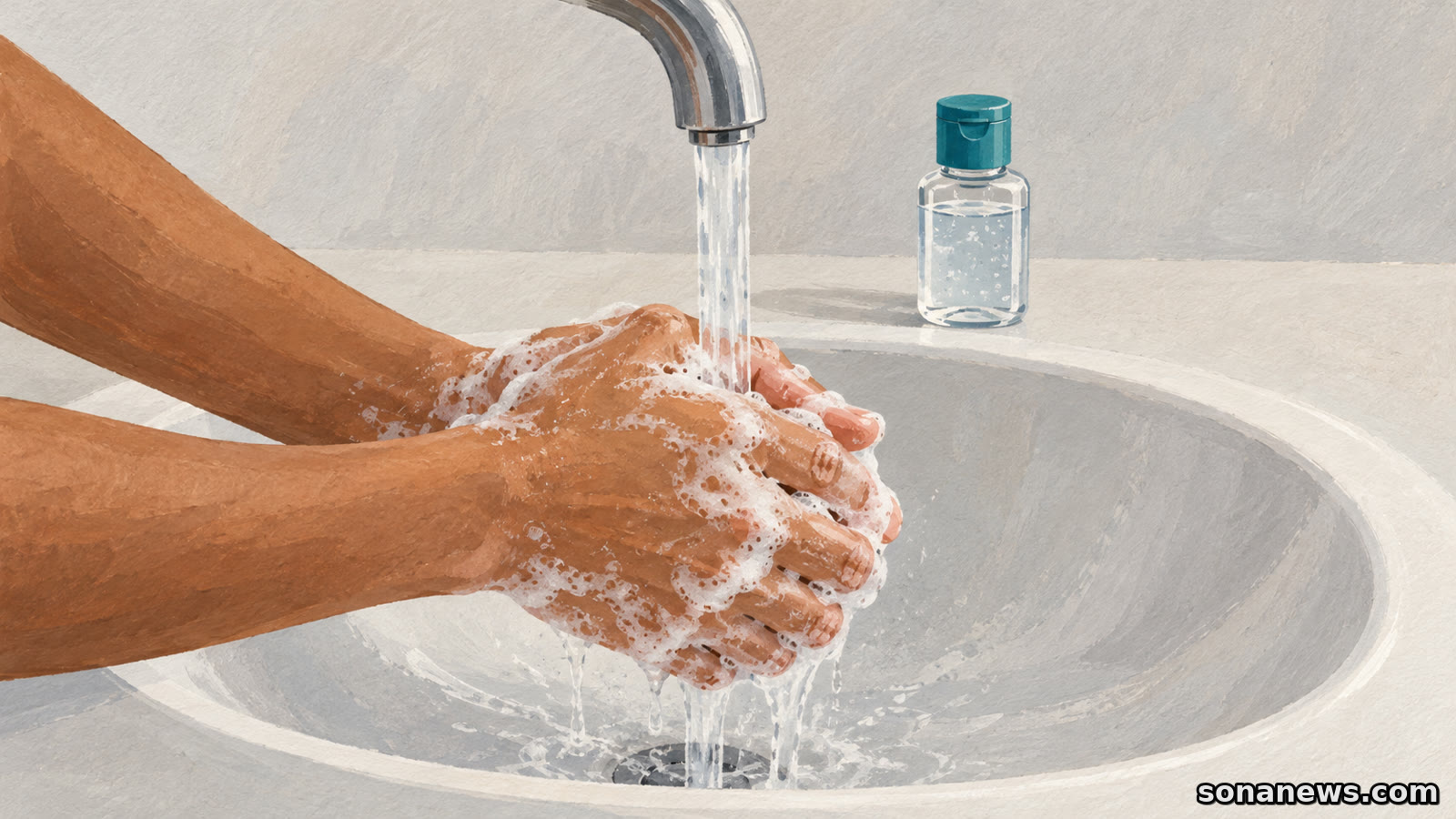
US and UK health guidance makes the same distinction: alcohol hand gel has a role in everyday hygiene, but it is not a substitute for handwashing against norovirus.
Continue readingMore in Health