Draught-proofing a window? The trickle vent is not the gap to seal
UK energy guidance separates unwanted window leaks from deliberate ventilation. Before buying a sealing strip, check which opening is doing which job.
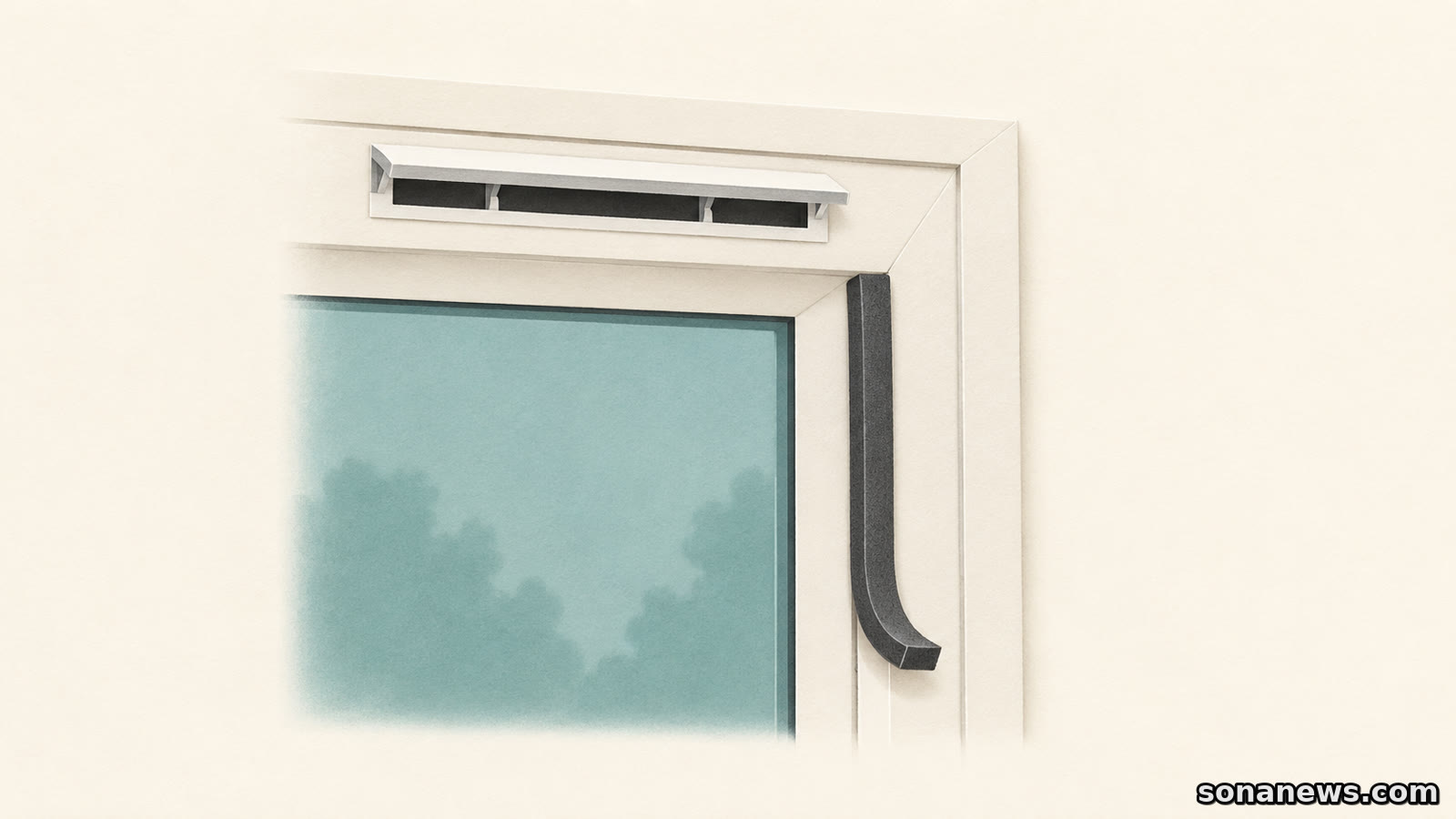

A cold patch beside a window can make a roll of draught-proofing strip look like an obvious purchase. But the small vent above the glass is not another faulty gap. Sealing an unwanted leak and blocking a designed air opening are different jobs, even when both seem to let cold air into the same room.
That distinction runs through current UK advice from the Energy Saving Trust and the Centre for Sustainable Energy. Draught-proofing can reduce uncontrolled air leakage, improve comfort and lower heating demand. It is not a programme to close every opening. The useful first question is what each gap is for, before deciding what material might belong there.
This is established household guidance, not a new October rule. The government ventilation guide discussed here applies to England; homes elsewhere may have different ventilation arrangements and local requirements. Even within one country, a window seal cannot be assessed separately from the way the home gets fresh air.
An unwanted gap between an opening window and its frame can allow a draught. The Energy Saving Trust describes strips that fill this gap, including self-adhesive foam and longer-lasting brush or wiper types. They act at the perimeter where the window closes.
A trickle vent is different: it is a small, purpose-made opening, commonly above a window, that admits fresh air. The Trust says these should normally be left open all the time. The government's existing-home ventilation guide is explicit that trickle vents should remain open and unblocked, even in winter.
The Centre for Sustainable Energy makes the same boundary clear in its draught-proofing guide, reviewed in July 2026: boiler flues, air bricks and window trickle vents must not be blocked. Its warning matters precisely because its subject is saving energy, not choosing between warmth and ventilation as if only one were possible.
A sealing product's usefulness therefore depends on its location. A strip that suits an unwanted perimeter gap is not a reason to tape over a vent nearby. Nor does a draught felt in a room establish, on its own, which opening is responsible.
Even at the window perimeter, the aim is a suitable fit rather than the largest strip on the shelf. The Energy Saving Trust warns that an oversized strip can be crushed and may prevent the window closing. An undersized one leaves a gap for the draught.
The type of window matters too. The Trust says foam strips do not work well for sliding sash windows, where brush strips or professional advice are more appropriate. Its recommendation for sealant on windows that do not open is a separate case, not permission to glue an opening window shut.
This makes a simple shopping comparison more useful than a promise of universal savings: what type of window is it, where is the unwanted gap, and is the proposed product suitable? The manufacturer's instructions and the window's condition still matter. Older buildings and traditional details can require particular materials or professional attention, rather than a general-purpose DIY fix.
In some older homes, accidental gaps have provided much of the air exchange. The England ventilation guide explains that sealing gaps during energy-efficiency work can remove that ventilation. It says the work must not make the home's ventilation worse.
The Energy Saving Trust adds a practical caution: where there are no trickle vents, wall vents or a mechanical ventilation system, a home may already be too airtight and further draught-proofing may not be suitable. The absence of a visible window vent is not, by itself, a diagnosis. It is a reason to understand the existing system rather than assume every remaining opening can go.
Kitchens and bathrooms need particular care because cooking, bathing and washing put moisture into the air. The Centre for Sustainable Energy warns against excessive window draught-proofing in those rooms where there is no mechanical ventilation such as an extractor fan. Existing ventilation outlets are not defects to cover in pursuit of a warmer room.
For homes with whole-house mechanical ventilation, the government guide says to follow the manufacturer's instructions, including filter maintenance. A general article about window strips cannot specify settings for an unfamiliar system. The same limit applies more sharply to combustion appliances: fixed ventilation needed for flueless or open-flue gas heaters must not be blocked, the Trust says.
The ventilation guide explains why this balance matters: everyday activities release moisture, which can become condensation on cold surfaces without effective ventilation. That does not establish the cause of damp in an individual building, and a new seal is not a mould treatment.
Separate government guidance for rented housing providers in England says the underlying causes of damp and mould must be identified and addressed. It names building deficiencies, inadequate ventilation and condensation, and says advice to tenants must never substitute for tackling those causes. A resident should not be left with a roll of foam and responsibility for solving a building defect.
Persistent damp, a faulty window or uncertainty about ventilation calls for the landlord, managing agent or an appropriately qualified professional, as relevant, rather than further sealing by trial and error. Household energy advice is not a building survey or a medical assessment.
For an otherwise suitable window, draught-proofing can still be a modest, useful improvement. The point is to target the unwanted leak while preserving the routes intended to supply fresh air. Before choosing the strip, distinguish the window's closing edge from its ventilation opening. They may be close together, but they are not interchangeable.
Editorial note. This is general household information, not personalised building, gas-safety, legal or medical advice. Follow the window and ventilation-system instructions and local requirements. Do not obstruct required ventilation or alter flues or combustion-appliance air supplies. Seek qualified help where the ventilation arrangement, building condition or suitable work is unclear. Report damp and mould to the housing provider where relevant; health concerns belong with a healthcare professional. The illustration is conceptual, not an installation guide.
Sources
- Source: Energy Saving Trust, "Draught proofing", Updated 20 May 2026; accessed and extracted 4 October 2026. Verifies the distinction between uncontrolled leakage and ventilation, normally open trickle vents, sealing-strip sizing, sash-window limitations, older-building caution and fixed gas-appliance ventilation. Cash-saving figures and proposed support schemes are not used
- Source: Centre for Sustainable Energy, "DIY draught-proofing", Reviewed July 2026; accessed and extracted 4 October 2026. Verifies the explicit warning not to block flues, air bricks or trickle vents, caution in kitchens and bathrooms without mechanical extraction, and the importance of suitable strip thickness. Detailed fitting steps and interior-door recommendations are not reproduced
- Source: UK Government, "Existing home ventilation guide", Accessed and extracted 4 October 2026. Applies to England. Verifies unblocked trickle vents in winter, loss of ventilation through sealing older homes, moisture and condensation context, and following mechanical-system instructions. Not presented as a newly introduced law or as a universal window-replacement rule
- Source: UK Government, "Understanding and addressing the health risks of damp and mould in the home", Accessed and extracted 4 October 2026. England housing-provider guidance. Inspected key messages on underlying building deficiencies, inadequate ventilation and condensation, and the requirement that tenant advice not substitute for addressing causes. Clinical statistics, legal deadlines and individual health outcomes are not used
Help us improve
Was this article useful?
One anonymous tap helps Sona improve future reporting, headlines and source context.
Up next

Heat-pump tumble dryers do not need an exhaust hose through an outside wall. Their water tank, drainage options and installation instructions still deserve a check before delivery.
Continue readingMore in Home & Living