Try one artwork, not the whole museum
Slow looking offers a different plan for a gallery visit: choose a work, stay with it and compare what you notice. Museum guidance makes the case without turning art into another wellbeing prescription.
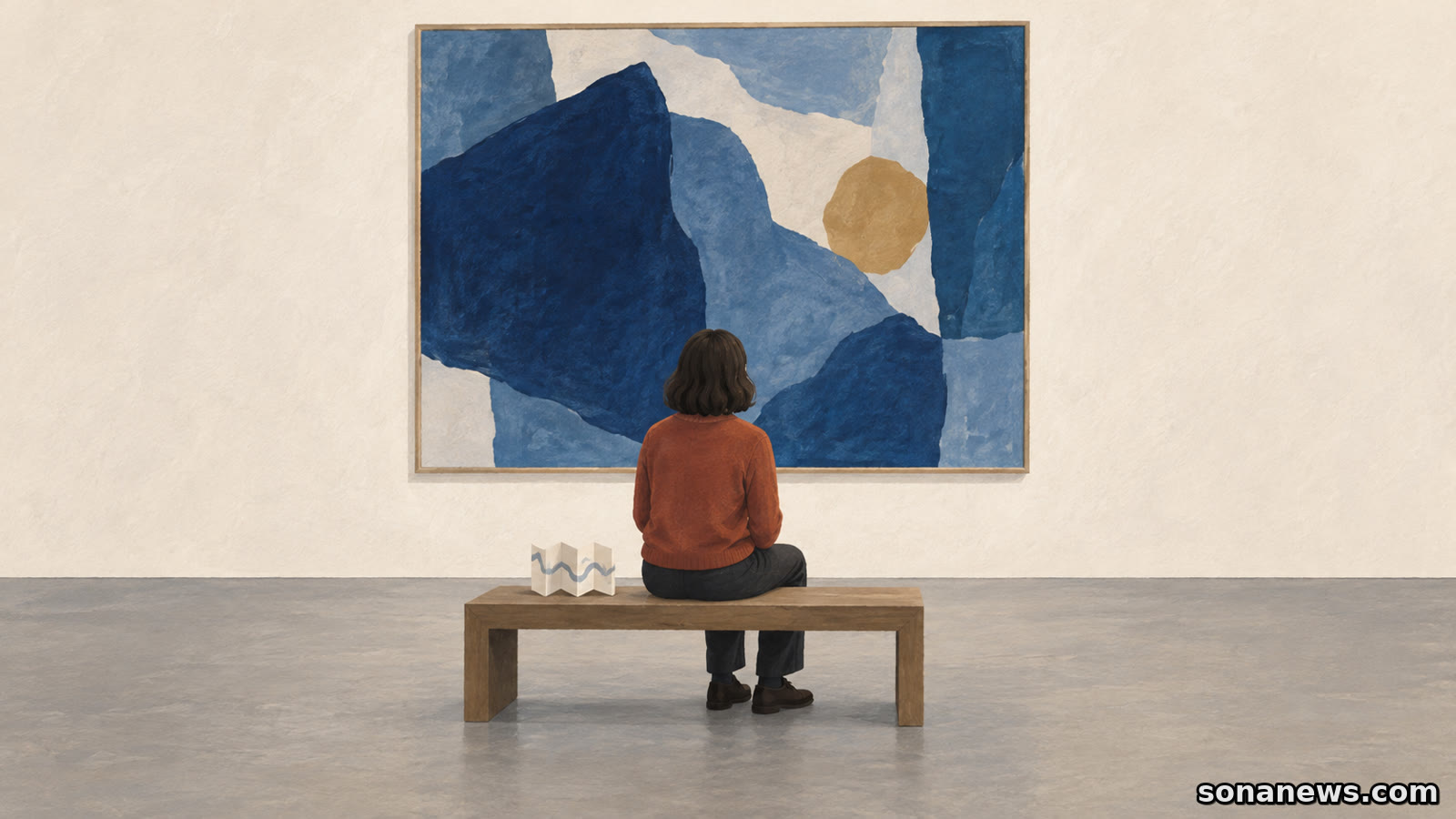

A museum map can make an afternoon look like a task. There are rooms to reach, famous works to find and a closing time somewhere ahead. It is easy to leave with a good sense of the building's layout and a much less distinct memory of anything on its walls.
Slow looking starts with a smaller plan: choose something worth staying with. Tate's guide recommends spending time with a few works rather than trying to see everything. The international Slow Art Day project builds events around sustained looking followed by conversation. Neither requires a visitor to arrive with an art-history vocabulary.
This is an established approach to cultural participation, not a newly discovered treatment or an obligation to spend every visit in silence. Its useful challenge is to the idea that getting your money's worth means covering the most floor space. One work can become the centre of a visit without becoming the only thing you are allowed to see.
Tate suggests choosing something that attracts, intrigues or even frustrates you. It does not have to be the painting on the exhibition poster. An abstract work, photograph, installation or sculpture can all be starting points.
That gives the choice a different purpose from collecting the highlights. Instead of asking which object you ought to recognise, ask which one you would like to understand a little better. The attraction might be a colour, an awkward arrangement of figures or a material you cannot immediately identify. These are possible starting points, not a test with a correct answer.
There is a practical qualification. A work surrounded by a dense crowd may not be the easiest place to linger. Choose somewhere you can look comfortably without blocking another visitor's view or a route through the room. Following gallery instructions matters more than completing any suggested exercise.
Tate recommends ten minutes, while explicitly allowing shorter or longer periods. The number is a starting suggestion, not a scientifically established dose. A quiet timer is one option in its guide, but a visit does not need to become a timed endurance challenge.
Begin with what is actually there. Where does the light appear to fall? Which shapes repeat? Does the surface look smooth, layered or interrupted? Tate offers texture, colour, shape, symbols, story and perspective as possible ways into a work when nothing initially comes to mind.
A useful next step is to separate an observation from an interpretation. “The figure is turned away” describes something visible. “The figure wants to leave” proposes a story. Both can be interesting, but the second does not automatically follow from the first. Look for what supports it, and for something that might complicate it.
That distinction also makes room for changing your mind. A patch that first looked like empty background may turn out to organise the whole scene. You do not have to manufacture a revelation. Noticing that your first account was incomplete is enough to keep looking.
Harvard's Project Zero publishes a slow-looking tool for educational inquiry. It asks people to select a subject, observe it closely, record questions or “wonders”, and reflect. The full protocol goes on to consider wider systems in teaching and learning. It is not a museum experiment, and its claims should not be presented as clinical evidence.
For a gallery visitor, the transferable idea is modest: let close observation produce questions. What made the artist put that object at the edge? Why does one part feel more crowded? What cannot be settled by looking alone?
Labels, audio descriptions, guides and historical context remain useful. Slow looking is not a demand to ignore expertise, nor a claim that any guess about an artist's intention is equally accurate. A question formed in front of the work can give you a more specific reason to read the label or listen to a guide.
Slow Art Day describes a simple format: participants spend time with selected works and then discuss the experience. Its outline suggests five works for ten minutes each, with discussion afterwards. Individual hosts organise their own events, so this is a model rather than a universal timetable.
You do not need an organised event to borrow the sequence. If visiting with someone else, agree on a work and allow each other time before comparing impressions. Starting with “what did you notice?” leaves more room than asking whether the other person liked it.
The conversation need not end in agreement. One visitor might follow a repeated colour while another notices a small figure. Returning to the work together lets each person check what the other saw. That is a concrete exchange, rather than a contest over who has the more sophisticated opinion.
Staying longer is not equally easy for everyone. Tate's guide recommends finding a comfortable viewing position and also describes large-print guides, magnifiers and audio-described tours. Availability depends on the venue and exhibition; check the relevant access information rather than assuming every gallery offers the same support.
A companion may want a faster visit. A child may be ready to move. You may simply dislike the work you chose. None of those outcomes means you have failed at culture. Slow looking can be one part of an afternoon, alongside browsing, conversation and a break.
The sources here are museum and educational guidance, plus an organiser's account of its own practice. They do not establish that ten minutes with a painting will improve your mental health, repair your attention span or make every ticket worthwhile. The more defensible promise is a change of activity: less navigating, more time to see what is in front of you. You can leave the rest of the museum for another day, or leave it unseen.
Sources
- Tate, A guide to slow looking. Checked 10 October 2026. Primary museum guidance supports selecting a few works, flexible timing including a ten-minute recommendation, possible visual themes, comfortable positions, sharing observations and the listed access resources. The unsourced average-viewing-time statement is deliberately excluded, as are any numerical health or attention benefits
- Slow Art Day, Annual Reports and about page. Checked 10 October 2026. The organiser describes its established programme, five-work/ten-minute model, discussion afterwards and local host responsibility. Used for programme design only, not independent evidence of effectiveness, an upcoming event announcement, participation totals or neuroscience claims
- Harvard Graduate School of Education, Project Zero, Slow Looking, Toolkit for Inquiry-Driven Innovation. Checked 10 October 2026. Full PDF inspected. Supports the steps of subject selection, observation, recording questions and reflection, within an educational systems-inquiry protocol. The gallery application is explicitly editorial synthesis, not a museum trial or clinical intervention
Help us improve
Was this article useful?
One anonymous tap helps Sona improve future reporting, headlines and source context.
Up next

UK charity guidance makes a useful distinction: passing clothes on, selling them again and recycling their fabric are different routes. A wardrobe clear-out needs a destination, not just a bag.
Continue readingMore in Lifestyle