The clothes donation bag is not a recycling bin
UK charity guidance makes a useful distinction: passing clothes on, selling them again and recycling their fabric are different routes. A wardrobe clear-out needs a destination, not just a bag.
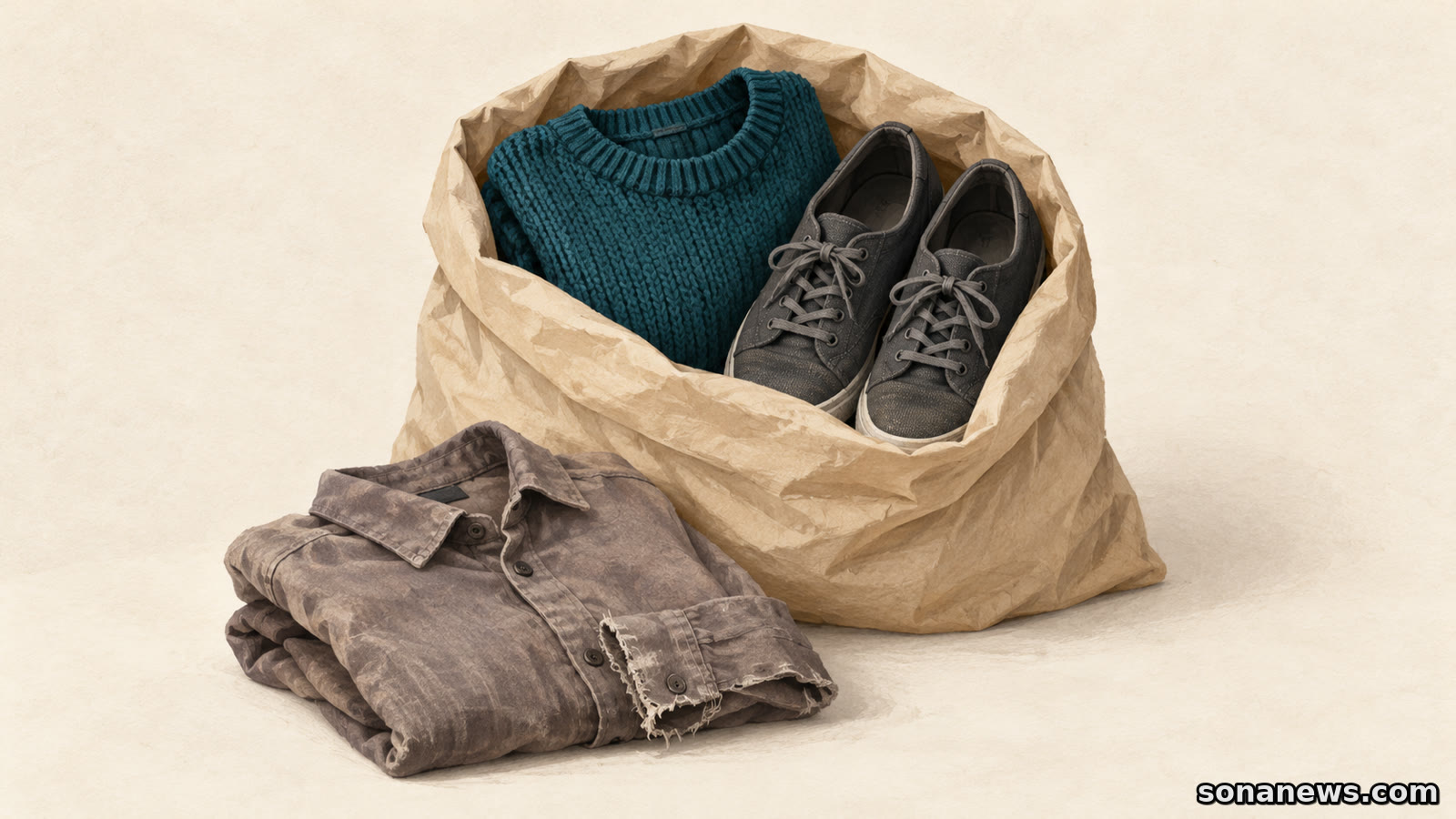

A jumper that no longer fits, a pair of shoes in good condition and a shirt worn through at the cuff can all be unwanted. They are not necessarily the same kind of donation. Putting them in one bag clears the wardrobe, but leaves someone else to work out what can be sold, reused or processed as material.
For UK donors, the useful question is not simply whether an item counts as clothing. It is whether the organisation receiving it accepts that item, in that condition, through that particular collection route. Charity guidance and textile-recycling advice describe different destinations. The word “donate” does not make them interchangeable.
This is an everyday consumer distinction, not a claim that charity shops have stopped taking clothes or that donating is pointless. Nor are these UK instructions a universal rule for other countries. A local shop, a postal service and a textile bank may each have their own requirements.
Oxfam's clothes-donation guidance asks for clean clothing in good condition and shoes in pairs. It includes vintage and out-of-season clothes, so an item does not have to match this month's shop window to be potentially useful. The charity asks donors to wash clothes unless they are brand new.
That is a more helpful starting point than treating everything no longer wanted as waste. A sound coat in the wrong size may have plenty of use left. A favourite shirt with serious wear presents a different question. These are illustrative examples, not an assessment of particular garments or a promise that either item will sell.
The pairing detail is small but concrete: two usable shoes belong together as a donation. So does checking that the clothing is in the condition the recipient asks for. The aim is not an immaculate, photogenic bag. It is a bag whose contents have a plausible next use.
There is also a reason to resist filling the remaining space with unrelated extras. Acceptance is not decided by how much room is left. An organisation's item list is a better guide than the feeling that something might somehow come in handy.
Even within one organisation, the destination matters. Oxfam says its bookshops cannot accept clothing and accessories. Its clothes page directs donors instead towards a standard shop or its postal route. Recognising the name above the door is therefore not the last check.
Different charities also make different choices. Oxfam lists handmade clothing among its donation options, linking to further guidance. The British Heart Foundation's list of items it cannot accept includes homemade knitted clothing. Those published instructions are not contradictory verdicts on whether knitting has value. They are different organisations' acceptance policies.
For a donor, that makes a short check before packing more useful than an argument at the counter afterwards. Look at the intended recipient's current list, and ask about an uncertain item before making the journey. A previous donation to a different shop does not settle what this one can take.
None of these examples establishes that every branch has unlimited capacity or that every advertised collection method suits every parcel. Practical arrangements still belong to the receiving organisation. The examples here are guidance checked on 9 October 2026, not a reservation of collection space.
Recycle Now distinguishes clothes in good condition, which can be donated and sold for reuse, from items unsuitable to pass to another person. It says the latter can be recycled into products such as chair and car-seat padding, cleaning cloths and industrial blankets. That is not the same thing as a shirt becoming another shirt.
Its guidance points readers towards local-authority collections and clothing or textile collection points. The important word is local: check the service and its accepted materials rather than assuming any container labelled for clothes takes every worn-out textile.
Charities can have recycling routes too. Oxfam describes sorting textiles that cannot be resold in its high-street shops, with other outlets and external recycling partners involved. It says damaged or low-grade pieces can go to traders for uses including car soundproofing and mattress filling.
That explains why “not sold in this shop” does not automatically mean “thrown away”. It does not turn the donation bag into an unrestricted waste service. Oxfam's own request for clean, good-condition donations still matters. An account of what happens after sorting is not blanket permission to ignore the intake guidance.
WRAP's 2024 Textiles Market Situation Report gives the wider problem some scale. It reports that around 711,000 tonnes of used textiles went into UK household bins and general-waste containers at household waste recycling centres in 2021. That represented almost half of used textiles, according to the report.
Those are historical figures about used textiles, not a measurement of this year's charity-shop performance or a tally of rejected donation bags. They cannot show what happened to a particular coat. Keeping the year and category attached prevents an old national estimate becoming an apparently current accusation against local volunteers.
The report also describes a market for used textiles involving resale, recycling and exports. Simply handing over a bag does not reveal its eventual destination. If that destination matters to you, look for the collector's explanation rather than assuming that every garment stays on the nearest shop rail.
The practical change is modest: decide where the items can go before combining them. Keep wearable donations together, check uncertain pieces against the recipient's guidance, and look up a suitable textile route for material that cannot be passed on. Repair or continued use may also remain an option for something you still want.
These checks do not certify a zero-waste wardrobe, calculate a carbon saving or guarantee a sale. They make the handover more deliberate. A clear shelf is an immediate result for the donor. A usable, accepted item is the part that matters to the next person.
Sources
- Oxfam GB, Donate clothes to charity. Checked 9 October 2026. Supports clean good-condition clothing, washing except brand-new items, paired shoes, vintage and out-of-season acceptance, bookshop exclusions, handmade-clothing link and the described downstream sorting/recycling routes. These are Oxfam's instructions, not universal charity rules or independently verified destination guarantees
- British Heart Foundation, Items we cannot accept. Checked 9 October 2026. The Clothing section explicitly excludes homemade knitted clothing. Used only to demonstrate organisation-specific intake policies; other safety and disposal instructions on that page are not reproduced or generalised
- Recycle Now, Clothing and textiles. Checked 9 October 2026. Supports the reuse-versus-material-recycling distinction, examples of padding, cleaning cloths and industrial blankets, and checking local-authority and collection-point options. No claim that all banks accept all textiles. Its undated 49% summary is not presented as a current measurement
- WRAP, Textiles Market Situation Report 2024, published 31 March 2024. Checked 9 October 2026. The report landing page's dated key findings support the 2021 estimate of around 711,000 tonnes in household/general waste and almost-half share. Figures are historical used-textile estimates, not charity rejection rates. The page describes resale, recycling and export markets; no unsupported individual-donation tracking or environmental saving is inferred
Help us improve
Was this article useful?
One anonymous tap helps Sona improve future reporting, headlines and source context.
Up next

Slow looking offers a different plan for a gallery visit: choose a work, stay with it and compare what you notice. Museum guidance makes the case without turning art into another wellbeing prescription.
Continue readingMore in Lifestyle