Why a short donor streak can be more persuasive than a big percentage
Across 11 experiments, people were more willing to give when invited to continue a run of donors. The effect offers a useful lesson about social signals, and a warning about how easily momentum can be staged.


A fundraising message often reaches for the biggest number available. Eighty per cent donated. Thousands have already joined. The assumption is simple: a large majority should make the desired choice look normal.
New behavioural research suggests that a much smaller social signal can sometimes be more persuasive. Telling someone that the last few people donated in a row may give the next decision a sense of consequence that a broad percentage does not.
The finding comes from 11 experiments involving 12,688 participants, reported by David E. Levari of Brown University and Michael I. Norton of Harvard Business School in the Journal of Experimental Social Psychology. The researchers call these sequences "collective streaks": runs of the same behaviour carried across different people rather than repeated by one person.
Their central result was that asking people to continue a short, ongoing donor streak increased giving more effectively than telling them that a high percentage of earlier participants had donated. The authors link the pattern to perceived personal impact. Joining a sequence can make a person feel that their choice matters to whoever comes next.
Two preregistered experiments make the distinction unusually concrete. In one, 1,000 US participants recruited through Prolific were offered a real 15-cent survey bonus and could keep it or donate it to one of several charities. Before deciding, participants either saw no social message, learned that roughly eight previous participants had donated in a row, or learned that roughly 80 per cent had donated.
In another preregistered experiment, designed for 1,200 US participants, the information was held closer to a like-for-like comparison. One group was told that the last four people in a row had donated. Another was told only that four people had recently donated. A control group received no such message.
That contrast matters. Both statements mention four donors, but only one turns their choices into a continuing sequence. The published paper reports that the streak invitation was more effective. It also reports higher feelings of personal impact among people shown a streak, which helps explain why the next position in the sequence may feel significant.
The effect was not limited to already popular behaviour. According to the paper's abstract, saying that 5 per cent of people donated was not motivating, while saying that the last five people donated encouraged further giving. A streak can therefore communicate movement without pretending that the behaviour is a majority norm.
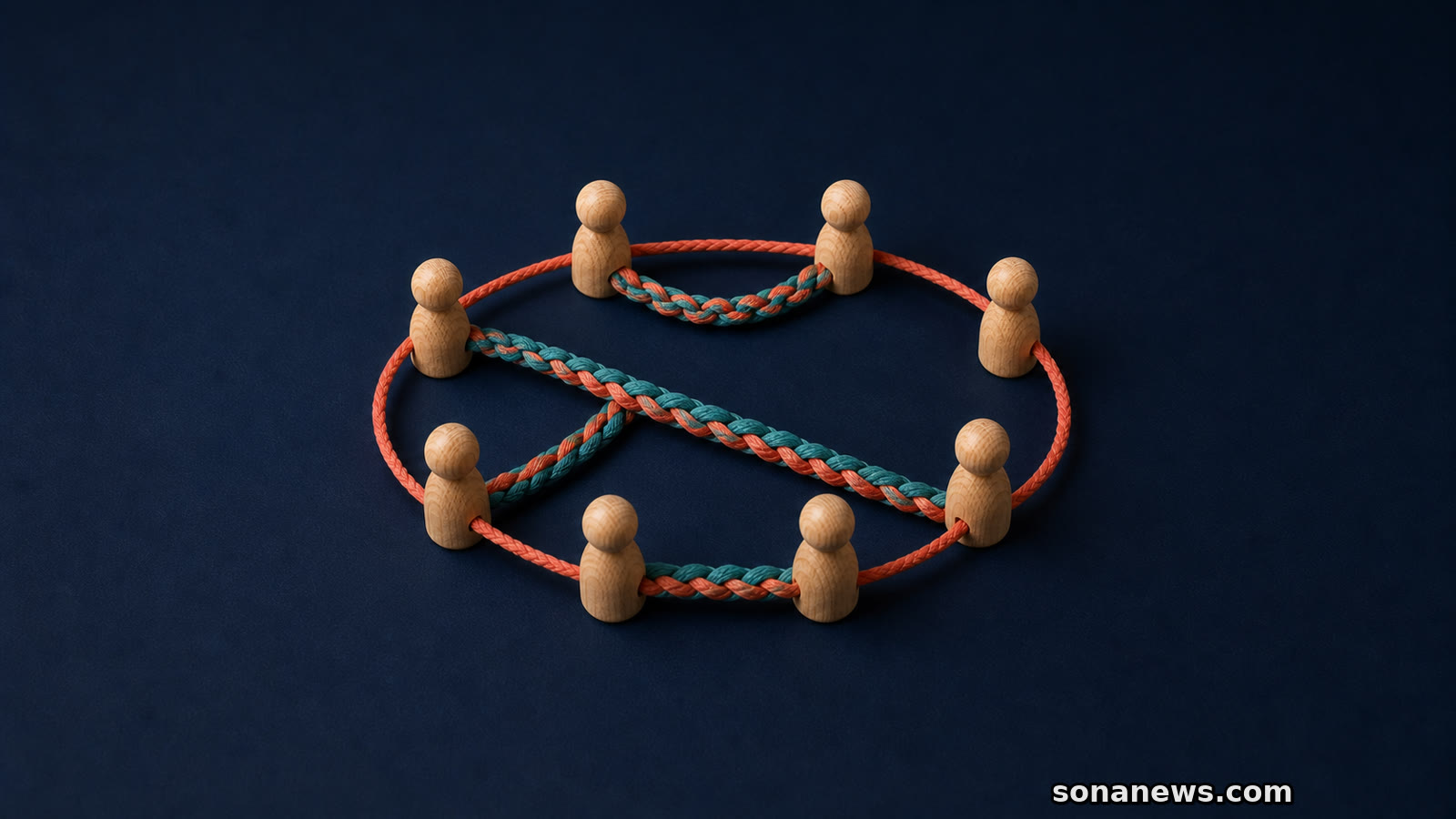
A percentage describes a population. A streak gives the reader a place in a sequence.
That difference can change the question in someone's mind. Instead of asking, "What do most people do?", the prompt invites, "Will I keep this going, and what will the next person see?" The donors can remain anonymous. What matters is the visible continuity between one decision and the next.
This is not proof that people consciously perform that reasoning every time. Nor does it mean a streak is always stronger than a norm. The experiments compare specific messages in controlled online settings, mostly around small charitable decisions. Different sums, causes, cultures, platforms and time pressures may produce different results.
The samples also came from online research participants, and the study tests immediate choices rather than long-term charitable habits. Eleven experiments provide replication across variations, but they do not establish how long the effect lasts or whether it changes the quality of a donor's engagement with a cause.
For charities and community organisers, the research points to a message worth testing: recent sequence may matter more than an impressive aggregate. A genuine note such as "the last five participants chose to contribute" can make the next action feel connected to a group without claiming widespread approval.
The word genuine is essential. A collective streak is persuasive precisely because it appears to describe current behaviour. Freezing an old streak on screen, hiding interruptions or generating a fictitious run would turn an evidence-based social cue into manufactured pressure. Platforms should be able to explain what counts as "last", how recently the choices occurred and whether the sequence updates when somebody declines.
The study also helps readers interpret prompts they encounter. A streak says something narrow: several consecutive people made the same choice. It does not show that the organisation is effective, that the cause is trustworthy or that most people agree. Those questions still require separate evidence.
There is a broader lesson here about online rituals. Streaks are usually presented as personal achievements, from exercise days to language lessons. A collective streak shifts the unit from "me again" to "us, one after another". That can make anonymous actions feel linked even when participants never meet.
Used honestly, the format may help people see how one small act can shape the choice that follows. Used carelessly, it can make social momentum look more solid than it is. The persuasive force is not in the size of the crowd. It is in the open place at the end of the line.
Sources
- Levari and Norton, Journal of Experimental Social Psychology, "Collective streaks motivate prosocial behavior": Verifies the title, authors, journal, September 2026 issue, 11-experiment total of 12,688 participants, comparison with percentage messages, personal-impact mechanism, anonymous-member finding and low-prevalence example
- OpenAlex record for the paper: Provides the publication metadata, author affiliations, open-access status and indexed abstract used to cross-check the paper-level claims
- Authors' Open Science Framework project: Provides public preregistrations, survey materials, de-identified data and analysis code for four main studies and seven supplementary studies
- AsPredicted preregistration 156,147: Verifies the 1,000-participant design, roughly eight-in-a-row versus roughly 80-per-cent versus control conditions, planned exclusions and binary donation outcome
- AsPredicted preregistration 113,640: Verifies the planned 1,200-participant comparison between four donors in a row, four recent donors and no message
Help us improve
Was this article useful?
One anonymous tap helps Sona improve future reporting, headlines and source context.
Up next

A new study tracked reactions to two chatbot changes. The central pattern was not simply dislike of new software, but a sense that the familiar companion was no longer the same.
Continue readingMore in Lifestyle