Before you post the first-day school photo, edit the clues around it
A uniform, name board, house number, location tag and caption can turn a milestone portrait into a bundle of personal data. The useful check is broader than hiding a face.
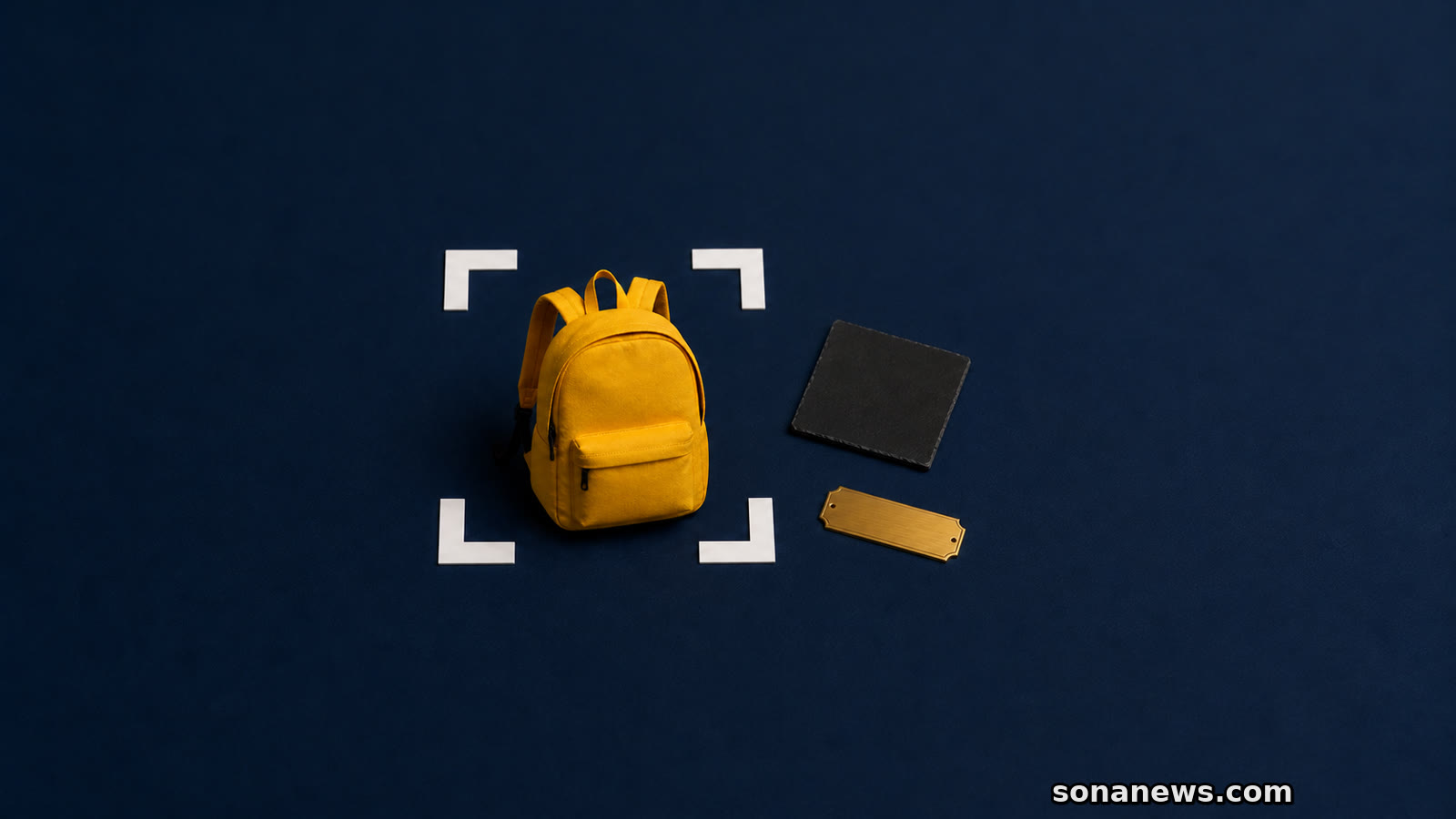

The first-day school photograph has become a small domestic production. There is the new bag, the front step, perhaps a letter board recording a name, class or ambition, and one child who may already be late. The picture is a family record. The posting decision is something else.
A portrait can carry more information than anyone intended to publish. A school crest can identify the building. A house number or familiar landmark can narrow the location. A board and caption can add a full name, age, year group and routine. The image file itself may retain time or GPS metadata, depending on the device, service and way it is shared.
That does not make the first-day photograph a trap, and it does not require families to stop making albums. It means the edit before posting should cover the whole frame, the caption and the audience, not just the child's face.
Australia's eSafety Commissioner advises families to avoid sharing photos that contain full names, contact details, identifying uniforms, home features or other location clues. Its guidance, updated on 6 August, also recommends checking geolocation settings and recognising that some image metadata may remain accessible when a file is downloaded.
The Irish Data Protection Commission offers a similarly concrete test. Its November 2025 sharenting guidance asks parents to look for a house number, a school or club name in the background, a location tag and unnecessary information in the caption. Covering a face with an emoji is not a complete privacy check if the rest of the post still names the child and place.
This is why a first-day sign deserves a second look. It may be charming in the private family version and need fewer fields in the public one. The photograph does not have to carry every detail that the family wants to remember.
A quick scan can work from the edges inward: background signs and numbers, uniform badges, bag labels, paperwork, reflections, other children's faces, then the caption and tags. Cropping is often more effective than adding a conspicuous sticker over one feature while leaving the surrounding clues intact.
The next question is not simply which platform is being used. It is who can see, copy and pass on the specific post.
Both eSafety and the Data Protection Commission recommend reviewing privacy settings and contact lists, then considering more direct ways to share regular family updates. A private profile or close-friends list can reduce exposure. It cannot prevent a recipient taking a screenshot, downloading a picture or forwarding it elsewhere.
The audience check is therefore practical rather than absolute. Would this photograph be suitable for a public feed, a smaller selected group, a family message thread, a password-protected album or only the household archive? Different versions can serve different audiences. The full sign and recognisable doorstep can stay in the private copy while a tighter crop goes to the wider circle.
Internet Matters makes the first-day example explicit in its sharenting advice: a school picture can reveal a child's name and where they attend. Its suggested checks include reviewing followers, inspecting the frame for a road, house number or school name, and asking other parents before posting a photograph that includes their children.
The important distinction is between distribution and storage. A cloud album or direct message is still digital sharing and carries some risk. It may nevertheless give a family more control than a public post designed for discovery, resharing and engagement.
The photograph is also about a person, not only a set of identifiers. eSafety recommends involving children in decisions about taking and sharing their images, explaining why the picture is wanted, who may receive it and respecting a refusal. The Irish regulator similarly advises an age-appropriate conversation before posting.
This is not a claim that a young child can carry the entire privacy decision, nor is it a universal legal rule. Adults remain responsible for choosing what is safe and appropriate. Asking still matters because it gives the child a voice and models the permission that families may later expect children to seek before posting pictures of friends.
The American Psychological Association's June 2026 review of sharenting research describes this as gradually building agency rather than transferring every decision at once. It also summarises a study of 493 US parents of children aged ten or younger in which frequent posting was associated with larger networks that included people the parents did not know personally, and parents often did not distinguish routine photo sharing from sharing identifying information.
That behavioural detail helps explain why a pause can be more useful than a lecture. Posting is normalised by seeing relatives and peers do it. The immediate reward, connection, celebration and reassurance, is visible. A future privacy cost is uncertain and remote. A short household routine brings that delayed question into the moment when it can still change the post.
Current guidance is becoming stricter because public images are easier to copy and manipulate. In a July advisory, eSafety said schools should consider purpose, consent, identification, audience and alternatives before publishing student or staff imagery. It warned that uniforms, names, locations and routines can make altered material appear more specific and convincing.
Families do not need to imagine that every photograph will be misused. The incidence and circumstances vary, and a frightening prediction would be impossible to support. The narrower fact is enough: once an image is public, the person who posted it has limited control over copying, redistribution and modification. Generative image tools have expanded the forms that modification can take.
That makes non-identifiable versions more useful. A photograph from behind, a close crop of the new backpack, a hand on the gate, or a detail of newly polished shoes can still mark the morning without publishing a face and a location together. None is a magic shield. Each reduces the amount of identifying material available in that particular post.
A workable pre-post edit has four passes:
1. **Purpose:** decide whether the picture is for a family record, a selected group or a public feed. 2. **Clues:** check the face, full name, uniform, school mark, house number, landmarks, labels, reflections, caption, tags and location data. 3. **People:** ask the child in an age-appropriate way and get permission before including anyone else's child. 4. **Audience:** review who can actually receive the post and use the narrowest sharing route that fits the purpose.
The result need not be a blank photograph or a scolding rule. It can be two versions of the same joyful morning. One keeps the whole family history. The other shares only what the intended audience needs to see.
Editorial note. This article provides general digital-privacy information, not legal or individual safety advice. Platform settings and local rights vary. If an image is used without permission or manipulated, use the platform's reporting route and the relevant local child-safety, data-protection or law-enforcement service where appropriate.
Sources
- **Australian eSafety Commissioner, Privacy and your child:** Verifies the 6 August 2026 update, risks from identifying details, possible image metadata and geolocation, audience controls, direct sharing alternatives and involving children in image decisions
- **Australian eSafety Commissioner, Sharing school imagery in the age of AI:** Verifies the 28 July 2026 advisory, the purpose-consent-identification-audience-alternatives framework, the relevance of uniforms and routines, and the limits of control after public posting
- **Ireland Data Protection Commission, Sharenting - Top Tips:** Verifies audience limiting, location and background checks, the limits of face-covering alone, direct sharing, age-appropriate discussion and review of older posts
- **Internet Matters, Sharenting tips for parents:** Verifies the specific first-day-school example and its checks for school names, house numbers, followers, other children and future digital footprint
- **American Psychological Association, What you need to know before sharing your child's life online:** Provides a June 2026 evidence review of sharenting motives, the 493-parent study, audience familiarity, identifying information and age-appropriate shared decision-making
Help us improve
Was this article useful?
One anonymous tap helps Sona improve future reporting, headlines and source context.
Up next

Slow looking offers a different plan for a gallery visit: choose a work, stay with it and compare what you notice. Museum guidance makes the case without turning art into another wellbeing prescription.
Continue readingMore in Lifestyle