The one-person household is no longer a lifestyle footnote
Eurostat, ONS and U.S. Census figures show that living alone is not a niche consumer story. It is changing what homes, shops and social plans are built around.
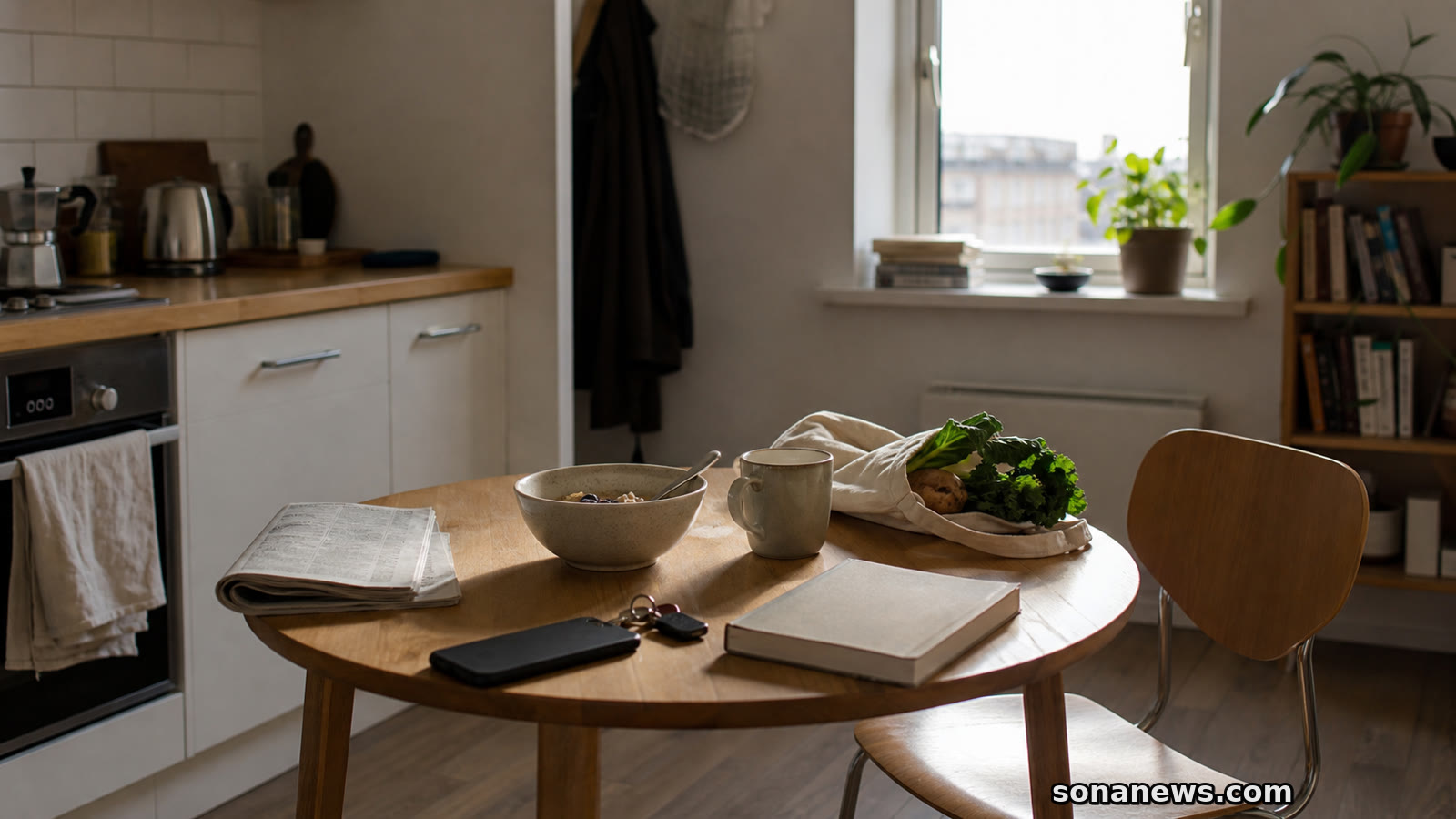

There is a stubborn cultural reflex around the table for one. It is treated as a pause between proper arrangements, a comic scene, a sad scene, or a phase before the household becomes more recognisable. The data now makes that reflex look out of date. The one-person household is not a side note in modern life. It is a large, growing and surprisingly varied part of how people actually live.
Eurostat's latest household composition figures put the scale plainly. In 2025, the European Union had 203.1 million households. Of those, 76.1 million were single adults without children. Calculated from Eurostat's published totals, that is about 37.5% of EU households. It was also the fastest-growing household type in the period Eurostat compared, rising 19.2% between 2016 and 2025, while couple households with children fell 6.3%.
That does not mean Europe has become anti-family, nor that living alone carries one emotional meaning. Household composition is not a diary entry. People live alone after bereavement, divorce, migration, delayed partnership, later-life independence, work moves, housing constraints and simple preference. Some are lonely. Some are relieved. Some are busy, connected and rarely home. The useful lifestyle point is less dramatic: a household with one resident now belongs in the design brief from the start.
The UK picture reinforces that. The Office for National Statistics estimated 29.0 million UK households in 2025, with one-person households making up 29.5% of the total. Around 8.6 million people lived alone. Nearly half of them were aged 65 and over, 49.6%, up from 46.9% in 2015. At the same time, ONS reported that young adults aged 20 to 34 were more likely to live with parents than a decade earlier, with the increase especially visible among young men.
Those two facts sit together better than they first appear. Solo living is not simply a young urban story about tiny flats and expensive coffee. It is also an ageing story, a housing story and a timing story. In one generation, a person may move from a shared parental home to a rented room, a couple household, a solo flat, a family household and back to living alone. The old household ladder, with one presumed destination, is a poor guide to a much messier map.
In the United States, the Census Bureau's 2024 living arrangements release gives the same story a longer historical frame. About 64% of U.S. households were family households in 2024, down from 79% in 1974. There were 38.5 million one-person households, representing 29% of all U.S. households, compared with 19% half a century earlier. Census also notes that family households are those with at least one person related to the householder by birth, marriage or adoption, so this is partly a technical distinction. Still, the shift is large enough to change ordinary consumer assumptions.
That is where the story becomes practical. Supermarkets still sell too many packs sized for someone else's fridge. Recipe culture often assumes four portions, then calls the surplus meal prep. Housing listings praise compact living while forgetting storage, noise and the need to host. Travel deals, restaurant tables, gym plans and subscription bundles can quietly price in a couple, a family or a group. Even admin forms can make living alone feel like an afterthought, with emergency contacts, delivery slots and household benefits built around other arrangements.
There is a risk of over-romanticising solo life as a sleek aesthetic of perfect shelves and immaculate breakfasts. There is also a risk of over-pitying it. Both versions flatten the same reality. A one-person household may want a smaller loaf, not a lecture about connection. It may need better local transport, a secure front door, a reliable repair service, a public library, a WhatsApp thread, a spare key with a neighbour, or simply packaging that does not turn lunch into food waste.
For brands and services, the temptation is to invent a new identity label and sell to it. The better lesson is more boring and more useful: stop treating one resident as the exception. The best products and places for solo households often work for everyone else too. Clearer portion choices help couples with different schedules. Smaller homes need better communal spaces. Bookable tables that do not penalise one diner also help travellers, shift workers and anyone who happens to be between plans.
The one-person household is no longer a lifestyle footnote because it reveals how much of everyday life was quietly written for a fuller table. Updating that script does not require turning solo living into a movement. It requires seeing it as ordinary enough to be planned for, priced fairly and spoken about without the wince.
Editorial note. This article discusses household composition, solo living and consumer culture in general terms. It is not medical, mental-health, financial, housing, legal or relationship advice. Living arrangements can involve personal safety, care, affordability and wellbeing questions that require qualified local support.
Sources
- Source: "Household composition statistics", Eurostat Statistics Explained, Extracted 2026-06-19. Verified: May 2026 data extraction, EU total of 203.1 million households in 2025, 76.1 million single adult households without children, growth of single adult households without children from 2016 to 2025, decline in couple households with children, and household type definitions
- Source: "Families and households in the UK: 2025", Office for National Statistics, Extracted 2026-06-19. Verified: 29.0 million UK households in 2025, 29.5% one-person households, 8.6 million people living alone, age profile of people living alone, young adults living with parents, and Labour Force Survey quality note
- Source: "Nearly Two-Thirds of U.S. Households are Family Households", U.S. Census Bureau, Extracted 2026-06-19. Verified: 2024 family-household share, comparison with 1974, family-household definition, 38.5 million one-person households, one-person household share in 2024 and 1974, and Current Population Survey ASEC source
Help us improve
Was this article useful?
One anonymous tap helps Sona improve future reporting, headlines and source context.
Up next

Across 11 experiments, people were more willing to give when invited to continue a run of donors. The effect offers a useful lesson about social signals, and a warning about how easily momentum can be staged.
Continue readingMore in Lifestyle