The podcast has become a screen habit
Pew, Edison and GWI data point to a quiet shift in everyday media: podcasts still feel intimate, but more of the habit now lives on YouTube, clips and screens.
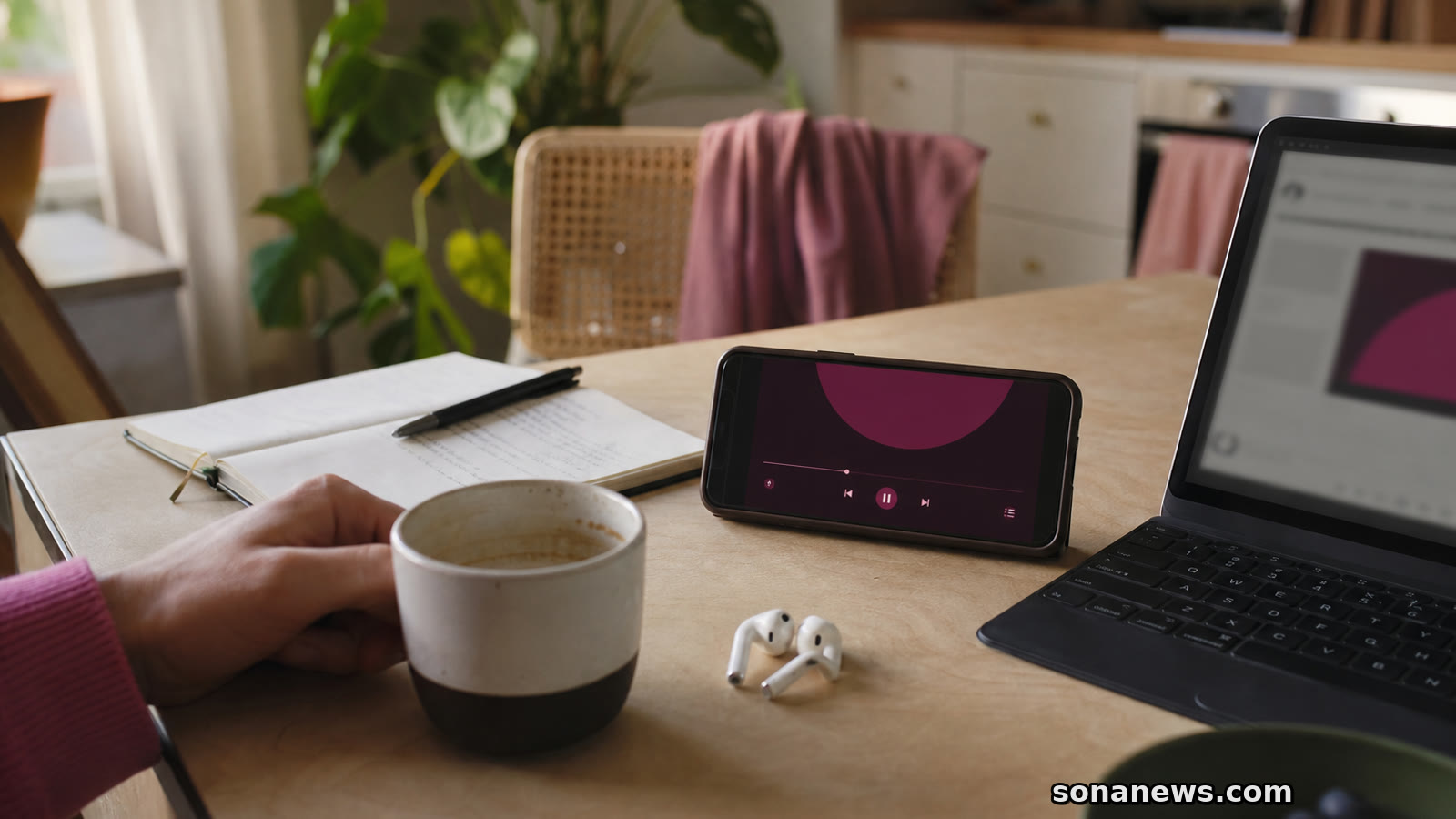

The old picture of podcast listening is almost too neat: one person, one pair of earbuds, a voice in the background while the washing up gets done or the train pulls out. It still exists. It is also no longer the whole story. The podcast has moved from the pocket to the screen, and that changes the feel of the habit.
Pew Research Center's September 2025 podcast fact sheet gives the scale. Just over half of U.S. adults, 54%, said they had listened to a podcast in the previous 12 months, up from 49% in 2022. Among adults aged 18 to 29, the figure was 67%. Around a third of U.S. adults said they get news from podcasts at least sometimes, although only 10% said they do so often. That last detail matters. Podcasts are mainstream, but they are not replacing every other information habit.
Edison Research's 2025 Podcast Consumer report pushes the screen shift into clearer view. Among the U.S. population aged 12 and over, Edison said 73% had ever consumed a podcast, 55% had done so in the last month and 40% in the last week. The more interesting split is behavioural: 48% had both listened to and watched a podcast, 22% had listened but never watched, and 3% had watched but never listened. In other words, the format is no longer simply something that happens when the screen is unavailable.
That sounds like a technical media story, but it is really a lifestyle story. Audio fitted itself into the leftover spaces of the day: commuting, cooking, dog-walking, folding laundry, lying awake without wanting to turn on a bright screen. Video podcasts ask for a different kind of attention. They sit beside lunch at a desk, on the sofa after work, in short clips inside a social feed, or on a television while someone half watches the host's face and half checks messages.
The intimacy of podcasts has always come from a strange bargain. A stranger speaks as if they are nearby, and the listener gets to keep moving through private life. That does not disappear when a camera enters the room. It does change the contract. A video set turns tone into decor. A glance, a mug, a guest's expression or an awkward pause can become part of the product. The listener becomes a viewer, even if nothing much is happening on screen.
GWI's 2025 consumer trends report points in the same direction from a different angle. The company says its findings draw on an ongoing survey of more than one million internet users across more than 50 markets, and it identifies podcast listening as one of the trends shaping consumer behaviour. Its press release says podcasts have overtaken radio shows as consumers' preferred form of audio content, and that Gen Z brand discovery through podcast ads or sponsored content has risen 8% since 2021. Because GWI is a commercial consumer research company, those figures should be read with that context. Still, they show why advertisers and platforms are treating the podcast less like a niche listening habit and more like a full media lane.
The wider digital setting helps explain the pressure. Meltwater and We Are Social's Digital 2026 release says social media user identities reached 5.66 billion, equal to 68.7% of the world's population, and that the typical social media user uses 6.75 different platforms each month. It also says the typical internet user spends more than 2.5 hours a day on social and video platforms. A podcast now has to live inside that attention system. It may begin as a two-hour conversation, but it often travels as a vertical clip, a quote card, a reaction video or a YouTube recommendation.
There is nothing automatically worse about that. Some shows are better when viewers can see a demonstration, a studio performance, a cooking technique or a document being discussed. Video can make guests feel more legible, and it can make a long conversation easier to sample before committing to it. The risk is not that podcasts have screens. The risk is that the screen drags the format toward the habits of the feed: louder moments, more expressive thumbnails, more personality drama and less patience with the parts that made audio useful in the first place.
That is the quiet consumer choice hiding under the numbers. Sometimes a podcast is company. Sometimes it is information. Sometimes it is television with less editing. Those are not the same use. A person playing a news explainer while making breakfast is doing something different from a person watching a three-minute clip of the same show on a commute. Both may count as podcast consumption in a survey, but they do not ask the same thing from the day.
For publishers and creators, the temptation will be to treat every microphone as a camera accessory. That may work for reach, but it can make the format flatter. The best shows still need reporting, editing, sourcing, pacing and a reason to exist beyond the host being visible. If a podcast covers news, Pew's finding that 32% of U.S. adults get news from podcasts at least sometimes should be taken as responsibility, not merely opportunity. A casual voice can still carry serious claims.
For listeners, the point is less dramatic. This is not a call to purify the medium or abandon video. It is simply worth noticing what kind of attention a show is asking for. The podcast began as a way to bring voices into the unused corners of ordinary life. Now it is also another screen on the table. That does not ruin it. It does mean the old promise of podcasts, intimacy without performance, is no longer guaranteed by the format itself. It has to be chosen.
Sources
- Pew Research Center - "Podcasts and News Fact Sheet" - - extracted 2026-06-08. Verified: September 25, 2025 publication date; Aug. 18 to 24, 2025 survey fieldwork; 54% of U.S. adults listened to a podcast in the past 12 months; 67% among adults aged 18 to 29; 32% get news from podcasts at least sometimes; 10% often get news from podcasts; 6% directly paid, donated, subscribed or became a member of a news-focused podcast in the past year
- Edison Research - "The Podcast Consumer 2025" PDF - - extracted 2026-06-08. Verified: U.S. population aged 12 and over podcast consumption figures, including 73% ever consumed, 55% last month, 40% last week, plus the split between listened-only, listened-and-watched, watched-only and neither
- GWI - "6 Consumer Trends to Watch in 2025" - - extracted 2026-06-08. Verified: GWI's report context, ongoing survey scale of more than one million internet users in 50-plus markets, podcast listening as a 2025 consumer trend, podcasts becoming more popular than radio shows as preferred audio content, and Gen Z brand discovery through podcast ads or sponsored content rising 8% since 2021
- Meltwater / We Are Social - "Digital 2026: Internet Users Pass 6B, Social Media Becomes a Supermajority, AI Use Tops 1B" - - extracted 2026-06-08. Verified: 5.66 billion global social media user identities, 68.7% of world population, typical social media user using 6.75 platforms per month, and typical internet user spending more than 2.5 hours per day on social and video platforms
- Google Search Central - "Get on Discover" - - extracted 2026-06-08. Verified: Discover eligibility depends on indexing and policy compliance; Google recommends accurate non-clickbait titles and large relevant images at least 1200px wide with max-image-preview:large eligibility
Help us improve
Was this article useful?
One anonymous tap helps Sona improve future reporting, headlines and source context.
Up next
Across 11 experiments, people were more willing to give when invited to continue a run of donors. The effect offers a useful lesson about social signals, and a warning about how easily momentum can be staged.
Continue readingMore in Lifestyle