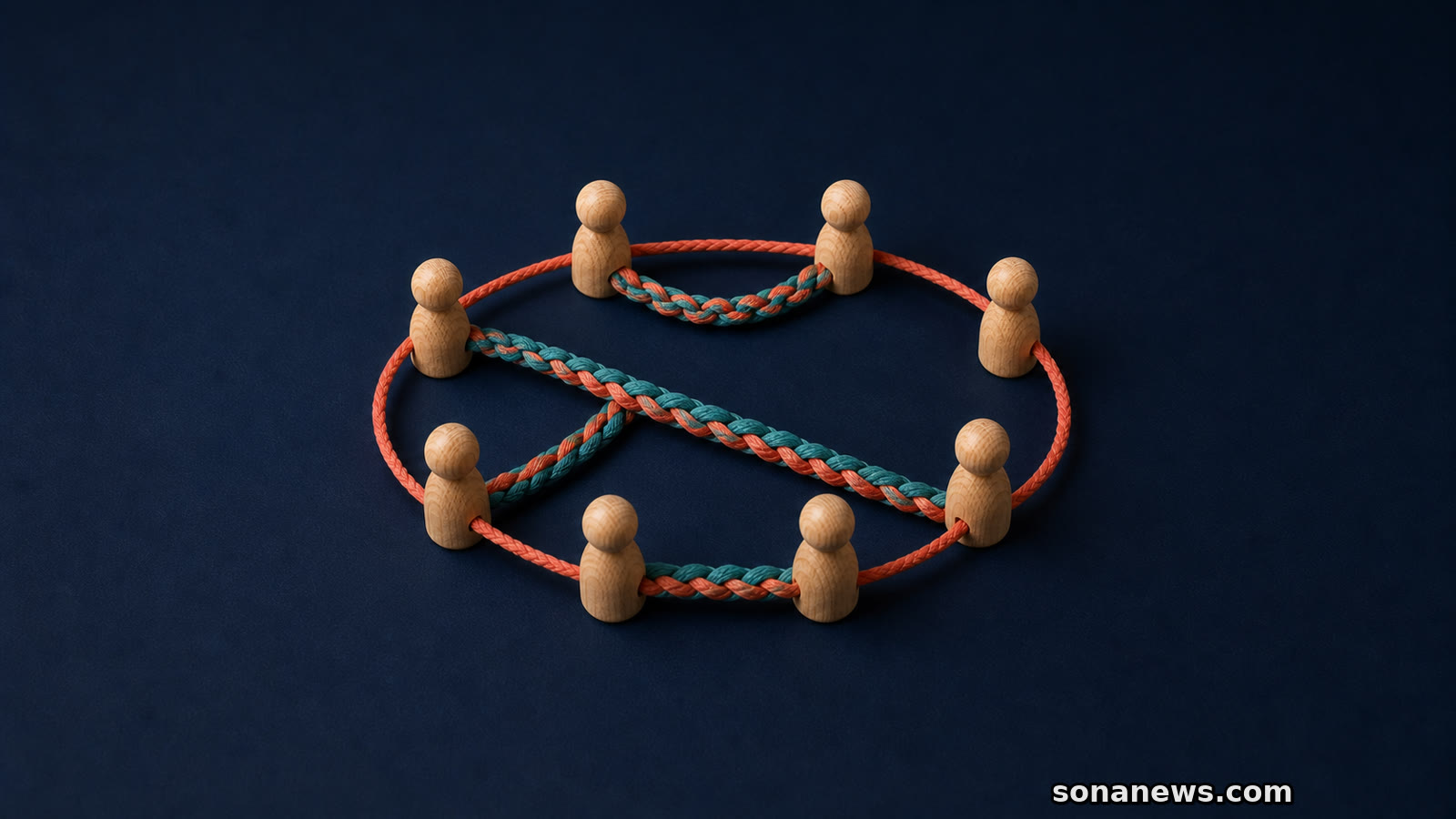
The social plan is becoming a sign-up page
Eventbrite's 2025 study of US and UK 18-to-35-year-olds sits beside WHO, CDC and Pew data on loneliness: more people are turning interests into scheduled, in-person routines.
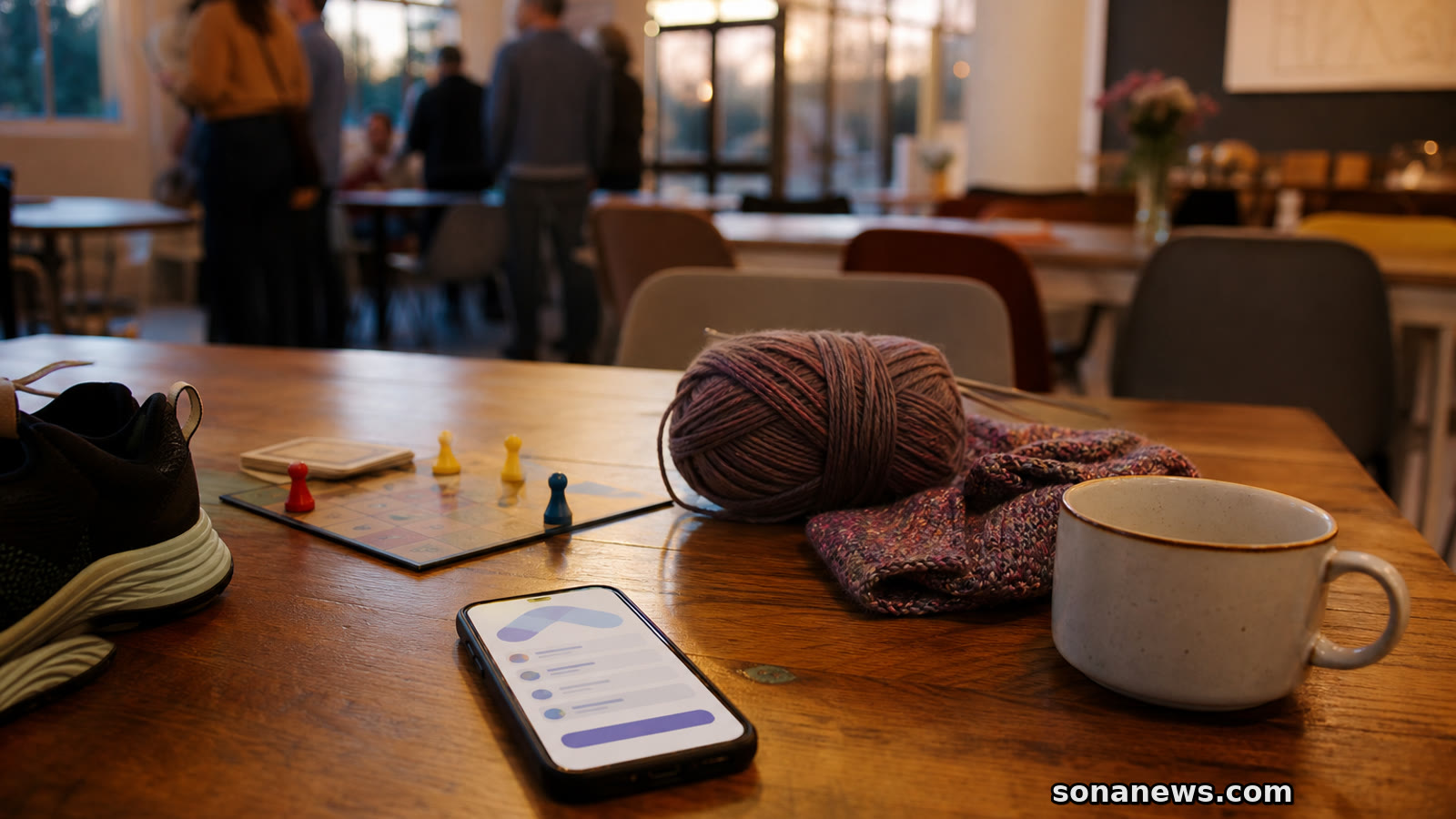

A friendship now often begins with a booking link. Not the dramatic sort of friendship, the one that gets a film montage, but the ordinary kind: a supper club seat, a board-game night, a run club route, a crochet class in the back of a cafe. The plan has a host, a time, a price or a free ticket, and a small script for walking into a room where nobody quite knows what to say first.
That is the behaviour hiding inside Eventbrite's 2025 "Fourth Spaces" report. The company surveyed 4,051 people aged 18 to 35 in the US and UK and found that 95% were interested in exploring online interests through in-person events. Among people who had attended interest-based events, Eventbrite said 84% had developed close friendships through those gatherings. The company also reported sharp growth on its own platform in running events, sober-curious gatherings, board-game events and craft formats.
Treat that as a platform survey, not a census of modern friendship. Eventbrite has a commercial reason to see event-going as the answer. Still, the pattern is useful because it names something many people already recognise. The online interest is not staying online. It is becoming a calendar entry.
The timing matters. The World Health Organization's Commission on Social Connection said in 2025 that one in six people worldwide is affected by loneliness, and that 17% to 21% of people aged 13 to 29 report feeling lonely. In the United States, the CDC's 2026 community connection dashboard shows that 30.8% of adults reported always or usually feeling lonely in 2024, down from 34.0% in 2023 but still high enough to make loneliness feel like part of the social weather. Pew Research Center's January 2025 report found that 16% of US adults felt lonely or isolated all or most of the time, with 24% among adults aged 18 to 29.
None of that proves a craft class fixes loneliness. It does explain why low-stakes, interest-led gatherings are attractive. A traditional third place, the pub, church hall, library, gym or cafe, asks people to arrive and somehow become regulars. A sign-up event does more of the awkward work up front. It gives the room a reason to exist. Everyone is there for the same walk, recipe, zine workshop or matcha tasting. Conversation has somewhere to start.
That small script can matter more than the branding around it. The point is not that young adults have invented friendship. They have inherited a world where casual contact is harder to rely on: hybrid work, expensive nights out, smaller households, migration, heavy screen habits and cities where people can live close together without sharing much. A scheduled event is one way to reduce the risk of a social plan that collapses into "we should do something soon" and then disappears.
There is a consumer story here as well. Social life is being packaged into formats that are easier to buy, list, share and repeat. Some are cheap or free: a community run, a library workshop, a volunteer clean-up, a neighbourhood board-game night. Others are clearly part of the experience economy, with ticketing fees, branded hosts and carefully photographed tables. The same structure that lowers the barrier to entry can also turn belonging into a product.
That is the tension. If connection depends on a booking page, it may exclude people without spare cash, flexible hours, safe transport or the confidence to walk into a themed room alone. It may also reward groups that are good at marketing themselves rather than groups that are good at making newcomers feel welcome. A sold-out supper club looks lively on social media. A quiet weekly library group may do more durable work.
The American Time Use Survey offers a useful brake on the hype. The Bureau of Labor Statistics said that in 2024, 94% of people aged 15 and over engaged in some sort of leisure or sports activity on an average day, and that watching TV accounted for more than half of average leisure time. People are not short of leisure in the abstract. The harder problem is turning available hours into the kind of social contact that leaves a person feeling known rather than merely occupied.
That is where the best version of the sign-up social life is less shiny than the trend language around it. It is not the immersive pop-up or the perfectly lit table. It is repetition. Same time next week. Same route. Same host. Enough structure to make showing up simple, enough looseness to let people talk if they want to.
For venues, organisers and platforms, the signal is clear enough. Social events that used to sit at the edges of lifestyle culture are moving closer to the centre: running without racing, crafts without mastery, food without a formal restaurant plan, games without a private living room, alcohol-free nights without the apology. For readers, the more modest point may be the more useful one. The future of social life is not necessarily louder or more spontaneous. Sometimes it starts with a booking confirmation and a room full of people relieved that someone else chose the time.
Editorial note. This article discusses social connection and loneliness as lifestyle and public-health context. It is general information, not mental-health, medical or therapeutic advice. Anyone in crisis should use local emergency services or a trusted crisis support service.
Sources
- World Health Organization - "Social connection linked to improved health and reduced risk of early death" - - extracted 2026-06-07. Verified: WHO Commission on Social Connection report release, one-in-six global loneliness estimate, 17% to 21% loneliness among people aged 13 to 29, and the distinction between loneliness and social isolation
- CDC - "Community & Connection" - - extracted 2026-06-07. Verified: May 27, 2026 data page, definitions of loneliness and social connection, 2022 to 2024 adult loneliness trend and 30.8% of adults always or usually lonely in 2024
- Pew Research Center - "Men, Women and Social Connections" - - extracted 2026-06-07. Verified: January 2025 release, Sept. 3 to 15, 2024 survey dates, 6,204 adult sample, 16% of US adults lonely or isolated all or most of the time, and 24% among adults aged 18 to 29
- Eventbrite - "Fourth Spaces Emerge As Gen Z and Millennials Look to Bridge Their Digital and Physical Worlds" - - extracted 2026-06-07. Verified: 2025 US/UK survey of 4,051 people aged 18 to 35, 95% interest in in-person events tied to online interests, 84% close-friendship finding among interest-based event attendees, and platform growth categories
- U.S. Bureau of Labor Statistics - "American Time Use Survey - 2024 Results" - - extracted 2026-06-07. Verified: June 26, 2025 release for 2024 annual averages, 94% leisure and sports participation on an average day, and TV accounting for more than half of average leisure time
- U.S. Surgeon General - "Our Epidemic of Loneliness and Isolation" - - extracted 2026-06-07. Verified: 2023 advisory framing of social infrastructure, social connection and community-level response
Help us improve
Was this article useful?
One anonymous tap helps Sona improve future reporting, headlines and source context.
Up next

Across 11 experiments, people were more willing to give when invited to continue a run of donors. The effect offers a useful lesson about social signals, and a warning about how easily momentum can be staged.
Continue readingMore in Lifestyle