Artemis III now has a crew. The mission is a test before the Moon
NASA has named Randy Bresnik, Luca Parmitano, Andre Douglas and Frank Rubio for Artemis III. The careful part is what they are being asked to prove in Earth orbit before later lunar landings.

NASA has put four names on Artemis III: Randy Bresnik, Luca Parmitano, Andre Douglas and Frank Rubio. That sounds, at first pass, like the crew announcement many space watchers have been waiting for. The more useful reading is a little quieter.
This is not being sold by NASA as the lunar landing itself. NASA's current Artemis III mission page describes a crewed demonstration planned for 2027 in low Earth orbit, built to test systems needed for future lunar landings. The agency says Artemis IV is where the return of Americans to the Moon begins in its present sequence.
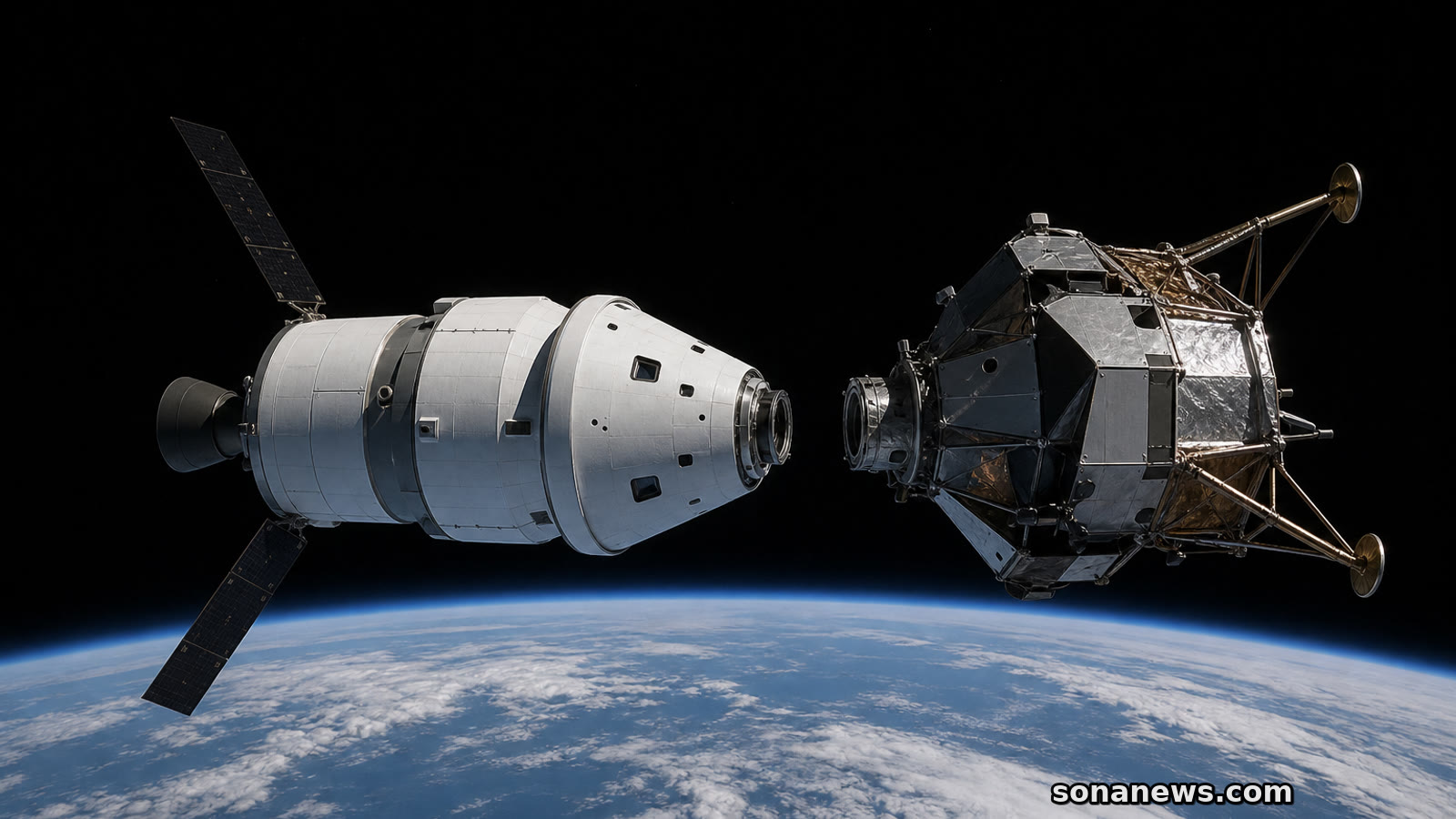
That distinction matters because crew announcements can flatten a messy engineering programme into a single heroic photograph. The photograph is real. So is the history around Artemis. But the assignment NASA has now described is closer to a rehearsal in full costume: launch Orion with astronauts aboard, check the spacecraft in orbit, then prove that Orion can meet and dock with test versions of commercial lunar landers.
The prime crew gives the mission a deliberately experienced shape. Bresnik is commander. Parmitano, an ESA astronaut from Italy, is pilot. Douglas and Rubio are mission specialists in NASA's release. NASA also named Bob Hines as the backup crew member. ESA's own announcement describes Parmitano as pilot and says his test-pilot and spaceflight background is relevant to a mission built around demanding spacecraft operations rather than a simple out-and-back profile.
The hardware plan is the part worth watching. NASA says Artemis III will use the Space Launch System rocket and Orion spacecraft from Kennedy Space Center in Florida. It also says the flight will test integrated operations between Orion and test versions of commercial human landing systems from Blue Origin and SpaceX. In plain English, the agency wants to reduce the risk of asking future crews to do this near the Moon by first doing the hard choreography closer to home.
That choreography is not trivial. Rendezvous and docking sound tidy on a programme slide. In orbit, they mean separate vehicles finding each other, matching speeds, staying within tight safety rules, linking systems and proving that astronauts can move through procedures without the benefit of forgiving margins. NASA's release describes a multi-launch campaign and says the exact duration will depend on launches, rendezvous timing and docked operations.
There is a political story in the background, but there is also a practical one. Artemis is no longer just a NASA capsule and rocket. It is an American programme with commercial landers, European hardware and international crew. ESA is supplying the third European Service Module for Orion. ESA describes that module as the part of Orion that provides power, propulsion, thermal control, air and water. Its broader service-module page says it provides electricity, water, oxygen and nitrogen while keeping the spacecraft on course and at the right temperature.
That European contribution is easy to miss because it sits under the capsule rather than in the crew portrait. It is not decorative. Orion depends on the service module for the unglamorous work that keeps a crewed spacecraft alive and manoeuvrable. For Artemis III, that matters because the mission is explicitly about operations: approach, alignment, docking, crew procedures and integrated checks with lander test articles.
The crew announcement also gives the public a cleaner way to think about the next few Artemis steps. Artemis II put astronauts around the Moon in 2026. Artemis III, as now described by NASA, is a crewed test flight in Earth orbit. Artemis IV is the planned lunar South Pole landing step in 2028. If that sounds less cinematic than a direct jump to bootprints, it is also more honest about how complex lunar return has become.
That complexity is not a failure by itself. Modern lunar architecture has more moving parts because NASA is trying to combine Orion, SLS, commercial landing systems and partner hardware into one operational chain. The risk is that public language turns every milestone into "the Moon mission" and then leaves readers confused when the next flight is actually a test in Earth orbit.
So the clean headline is this: Artemis III has a crew, and their job is to make the later Moon attempt less experimental. The mission will still be high-stakes. It will put people on Orion, coordinate with lander test articles and ask several organisations to make one flight plan work. But the value is not in pretending the landing has arrived early. It is in watching the awkward middle step, the one that proves whether the next promise is ready to leave the poster.
Sources
- Source: "NASA Marches Toward Artemis III Mission in 2027, Names Crew Members", Extracted 2026-06-10. Verified: 9 June 2026 crew announcement, prime crew roles, backup crew member, 2027 timing, low Earth orbit test-flight framing, Orion rendezvous and docking tests with commercial lander test systems, and Artemis IV lunar South Pole context
- Source: "Artemis III", Extracted 2026-06-10. Verified: NASA's mission-page description of Artemis III as a crewed demonstration in low Earth orbit using SLS and Orion from Kennedy Space Center to demonstrate systems needed for future lunar landings
- Source: "Artemis III Crew Announced", Extracted 2026-06-10. Verified: crew names, announcement date, NASA image context and concise mission summary that Artemis III will test integrated operations between Orion and one or both commercial landers
- Source: "ESA astronaut Luca Parmitano joins NASA's Artemis III mission as pilot", Extracted 2026-06-10. Verified: Parmitano's assignment as pilot, ESA's third European Service Module contribution, and ESA's framing of Artemis III as an Earth-orbit test mission ahead of future Moon landings
- Source: "European Service Module", Extracted 2026-06-10. Verified: ESM functions including electricity, water, oxygen, nitrogen, thermal control, propulsion and course control for Orion
Help us improve
Was this article useful?
One anonymous tap helps Sona improve future reporting, headlines and source context.
Up next
Hubble data trace a 10-sided atmospheric wave from faint 2023 hints to a clearer 2025 pattern. Its slow drift and 32-day wobble do not yet explain why it formed.
Continue readingMore in Space