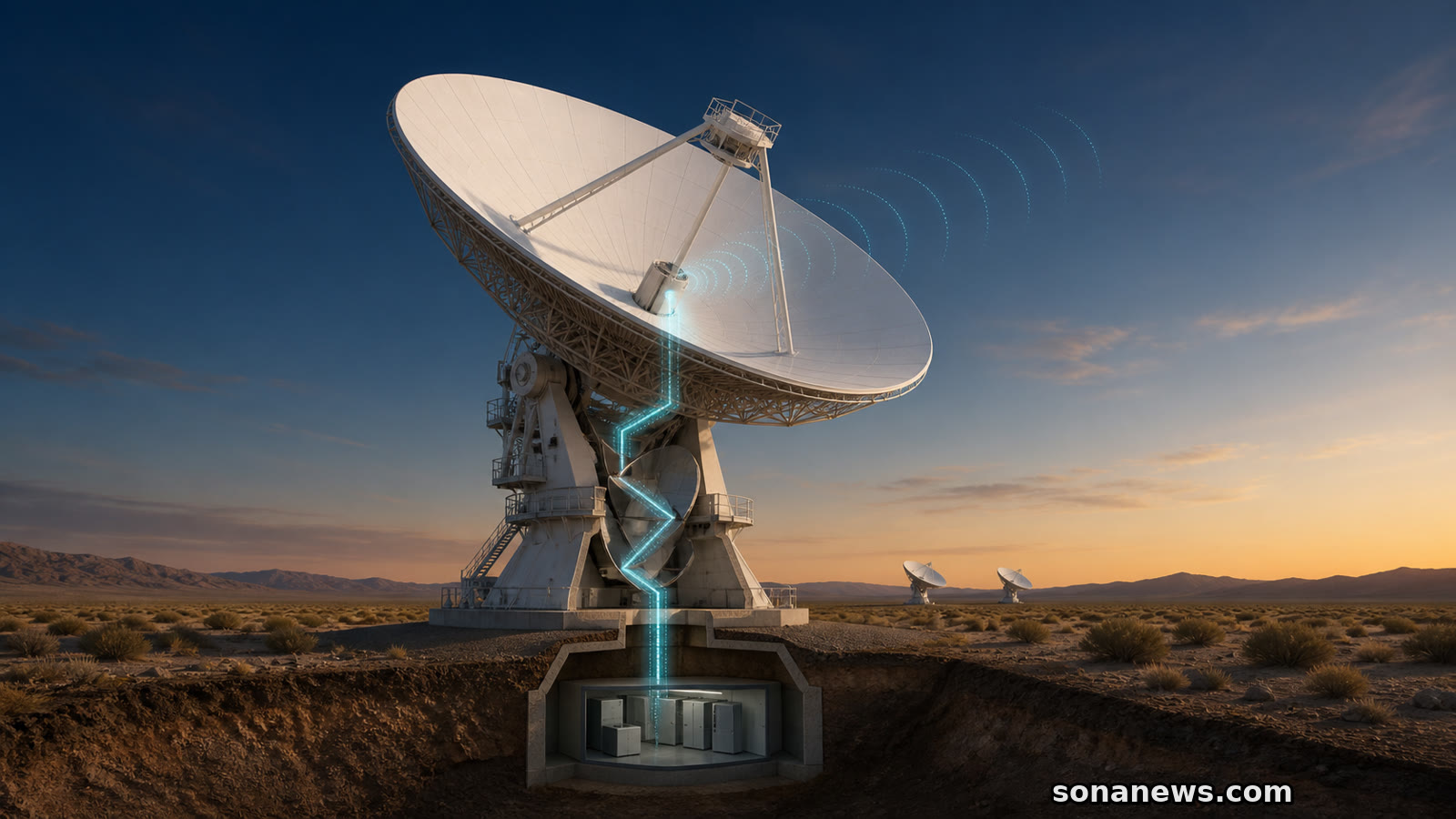
NASA’s Roman telescope is almost ready. The real story is how wide it can look
After a final mirror inspection, NASA says Roman is slated for a 30 August launch. Its promise is not one spectacular target, but a wider survey of galaxies and distant worlds.

Space telescopes usually reach the public as finished icons: Hubble’s pillars, Webb’s gold mirror, a spiral galaxy sharpened into something that looks almost too clean. Roman is at a less glamorous stage. NASA engineers have been checking whether dust fell on a mirror.
That is exactly why the update matters.
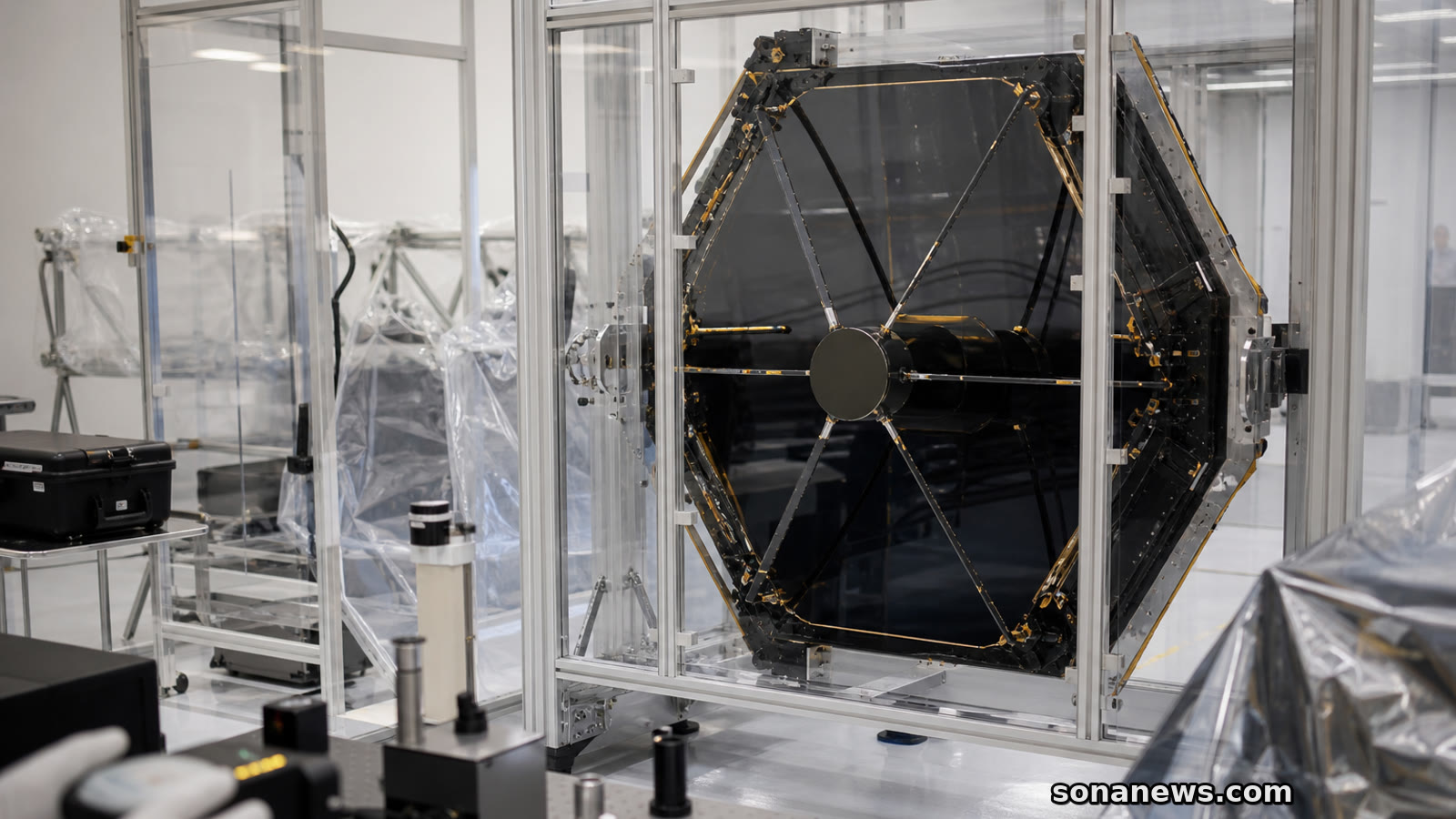
NASA says engineers at Goddard Space Flight Center completed the final inspection of the Nancy Grace Roman Space Telescope’s primary mirror on 20 and 21 May. The check came after environmental testing, including a shake test. Engineers used a high-resolution camera and a powerful zoom lens to look for contaminants and alignment changes. NASA says no specks had fallen onto the mirrors during testing, and the mirror path and alignment had not changed.
It sounds like a small housekeeping note. For a space observatory, it is closer to a passport stamp. The mirror will not be cleaned or adjusted by hand once Roman leaves the ground. A flaw that looks minor in a cleanroom can become a permanent limitation in space.
Roman is now moving from assembly story to launch story. NASA’s new Roman mission blog says the telescope is slated to launch on 30 August 2026, eight months ahead of schedule. Teams are preparing the observatory to travel from Goddard in Maryland to Kennedy Space Center in Florida later this month. At Kennedy, NASA says engineers will inspect the observatory after transport, run powered tests and rehearsals, load about 290 gallons, or roughly 1,100 litres, of hydrazine fuel, and install Roman on the adapter for a SpaceX Falcon Heavy rocket.
After launch, Roman is expected to travel to the second Sun-Earth Lagrange point, known as L2. NASA describes that location as about four times farther from Earth than the Moon. It is the same broad neighbourhood used by the James Webb Space Telescope: cold, distant and stable enough for the kind of patient observing Roman was built to do.
The temptation is to treat Roman as the next famous telescope in a straight line from Hubble to Webb. That is tidy, but it misses the practical difference. Roman’s mirror is Hubble-sized, 7.9 feet or 2.4 metres across. Its field of view is the part that changes the story. NASA’s mission page says Roman will have a field of view at least 100 times larger than Hubble’s, with the potential to measure light from a billion galaxies over its lifetime.
That does not mean Roman will make Webb obsolete, or that every image will look more dramatic than what came before. It means Roman is designed to cover sky quickly. Where a narrow telescope can study a small patch in exquisite detail, Roman can survey broad regions of the infrared universe with the same discipline repeated again and again. The result should be less like one postcard and more like a statistical map.
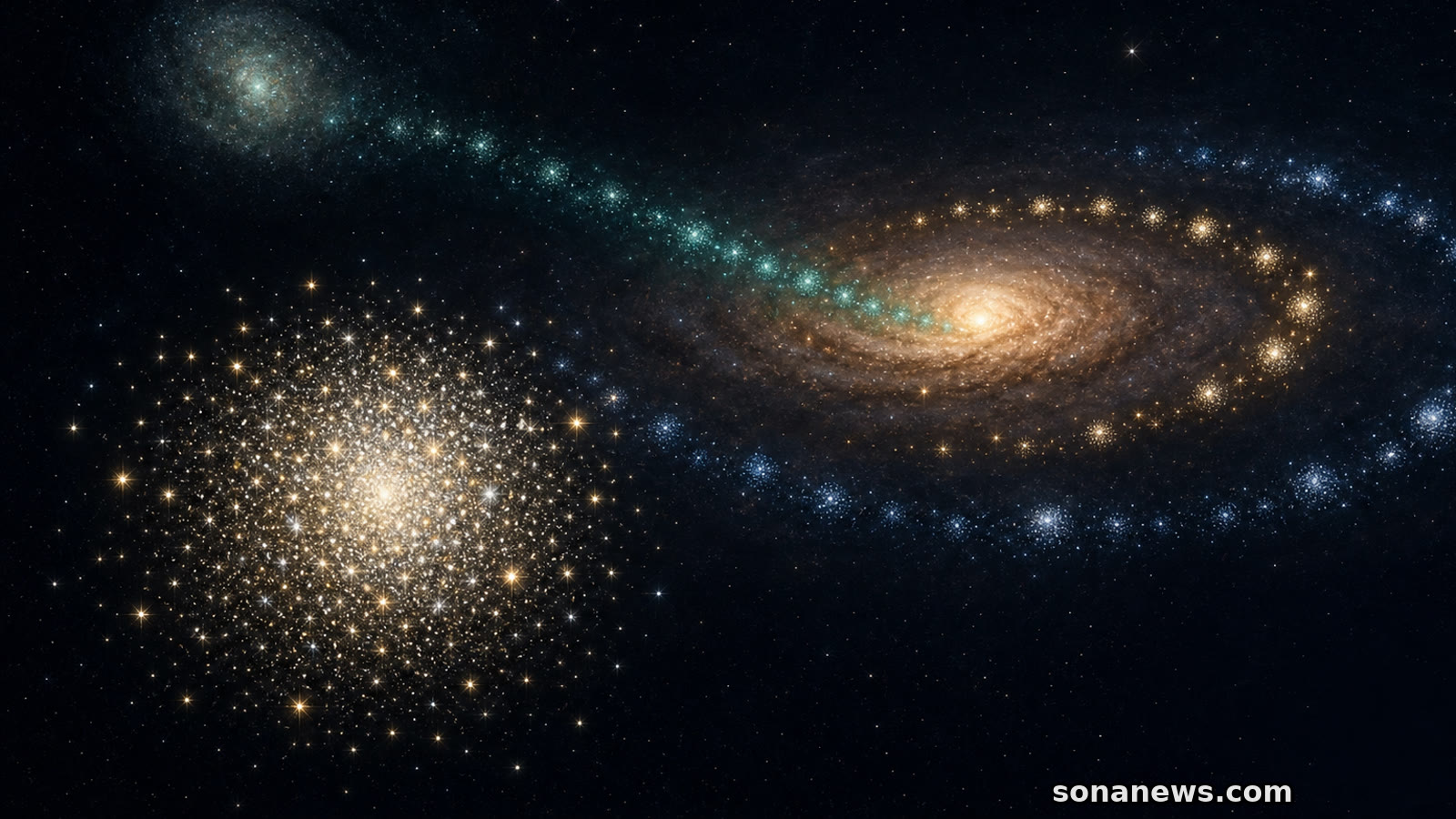
That matters for dark energy, the shorthand name for whatever is driving the accelerating expansion of the universe. It matters because large surveys let astronomers compare galaxy shapes, distances and clustering across huge samples. A single spectacular galaxy can inspire a poster. A billion measurements can test whether a cosmological model is bending under the weight of better data.
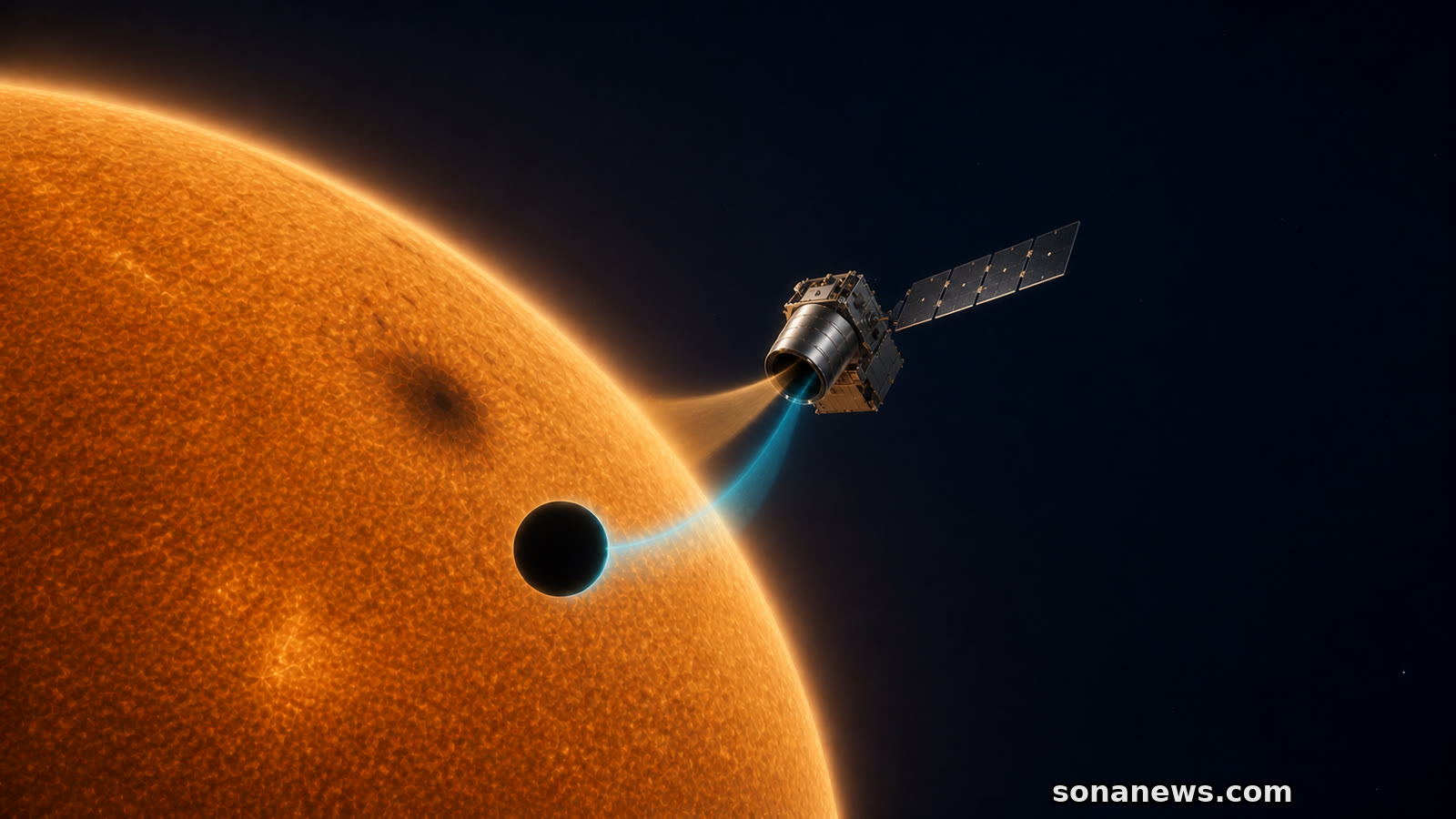
Roman’s other public hook is exoplanets. NASA says scientists expect the mission to reveal around 100,000 transiting worlds and more than 1,000 planets through microlensing. Those are estimates, not guarantees. They are still striking because of the observing strategy. Roman’s Galactic Bulge Time-Domain Survey is expected to monitor around 100 million stars in a crowded region toward the centre of the Milky Way.
Transit searches find planets when a world passes in front of its star and causes a tiny dip in brightness. Microlensing is stranger to explain, but useful: the gravity of a foreground star and any planets around it can briefly magnify the light from a more distant background star. Together, the methods give Roman a way to look beyond the solar neighbourhood that has dominated much of the planet census so far.
This is the careful version of an exciting claim. Roman will not tell us whether those worlds have cities, oceans or anyone looking back. NASA notes that Webb is better suited to detailed atmospheric work on selected targets. Roman’s job is broader. It can make the list longer and less parochial, giving scientists a better way to ask how common different kinds of planets are in different parts of the galaxy.
The mirror inspection is therefore not a side note to the science. It is the science becoming possible. The silver coating on Roman’s mirror is designed to reflect near-infrared light well. NASA says the coating is less than 400 nanometres thick, about 200 times thinner than a human hair, and the mirror surface is polished so smoothly that the average bump is only 1.2 nanometres tall. Those numbers are not decoration. They are the difference between a survey instrument that behaves as expected and one that spends years being corrected around a flaw.
There will be louder Roman stories if the launch stays on schedule: rollout, countdown, first light, first images. Some of those moments will deserve the attention. But the quiet checks are worth noticing because they set the terms for everything after. A space telescope is not only a mirror and a rocket. It is a chain of tolerances, each one boring until it fails.
Roman’s appeal is that it may make the universe feel less hand-picked. Instead of showing us only a few famous targets, it is meant to gather enough sky to let patterns emerge. If the mirror stays clean, the launch campaign holds and commissioning goes well, the most important Roman image may not be one picture at all. It may be a database large enough to make old assumptions look provincial.
Sources
- NASA - “NASA’s Roman Space Telescope Primary Mirror Gets Last Look” - - extracted 2026-06-07. Verified: final mirror inspection on 20 and 21 May 2026; no debris or alignment changes; 2.4 m mirror; silver coating and surface precision; early September launch track
- NASA Science - “Hello, World! NASA Shares New Home for Roman Space Telescope Updates” - - extracted 2026-06-07. Verified: 30 August 2026 launch date; shipment from Goddard to Kennedy later in June; Falcon Heavy; hydrazine loading; L2 destination
- NASA Science - “Nancy Grace Roman Space Telescope” mission page - - extracted 2026-06-07. Verified: field of view at least 100 times larger than Hubble’s; potential to measure light from a billion galaxies; dark energy, exoplanet and infrared astrophysics goals
- NASA - “NASA’s Roman Mission Preps to Unveil New Populations of Faraway Worlds” - - extracted 2026-06-07. Verified: expected exoplanet yields, around 100,000 transiting worlds and more than 1,000 microlensing planets; around 100 million stars in the galactic bulge survey; Roman compared with Webb’s atmospheric follow-up role
- NASA Goddard Roman interactive - “Primary Mirror Assembly” - - extracted 2026-06-07. Verified: primary mirror assembly includes the main mirror and supporting structure; 7.9 ft / 2.4 m mirror diameter
Help us improve
Was this article useful?
One anonymous tap helps Sona improve future reporting, headlines and source context.
Up next
Hubble data trace a 10-sided atmospheric wave from faint 2023 hints to a clearer 2025 pattern. Its slow drift and 32-day wobble do not yet explain why it formed.
Continue readingMore in Space