NOAA’s new solar storm lookout is now on duty
SOLAR-1 sits about one million miles upstream of Earth, turning the Sun’s changing output into faster operational warnings rather than sci-fi drama.

Space weather has a way of sounding either too remote or too cinematic. Most days, it is neither. It is a practical forecasting problem: charged particles leave the Sun, move through interplanetary space and sometimes arrive with enough force to disturb systems people use without thinking about them. NOAA’s newest observatory is important because it treats that problem less like a spectacle and more like an operational service.
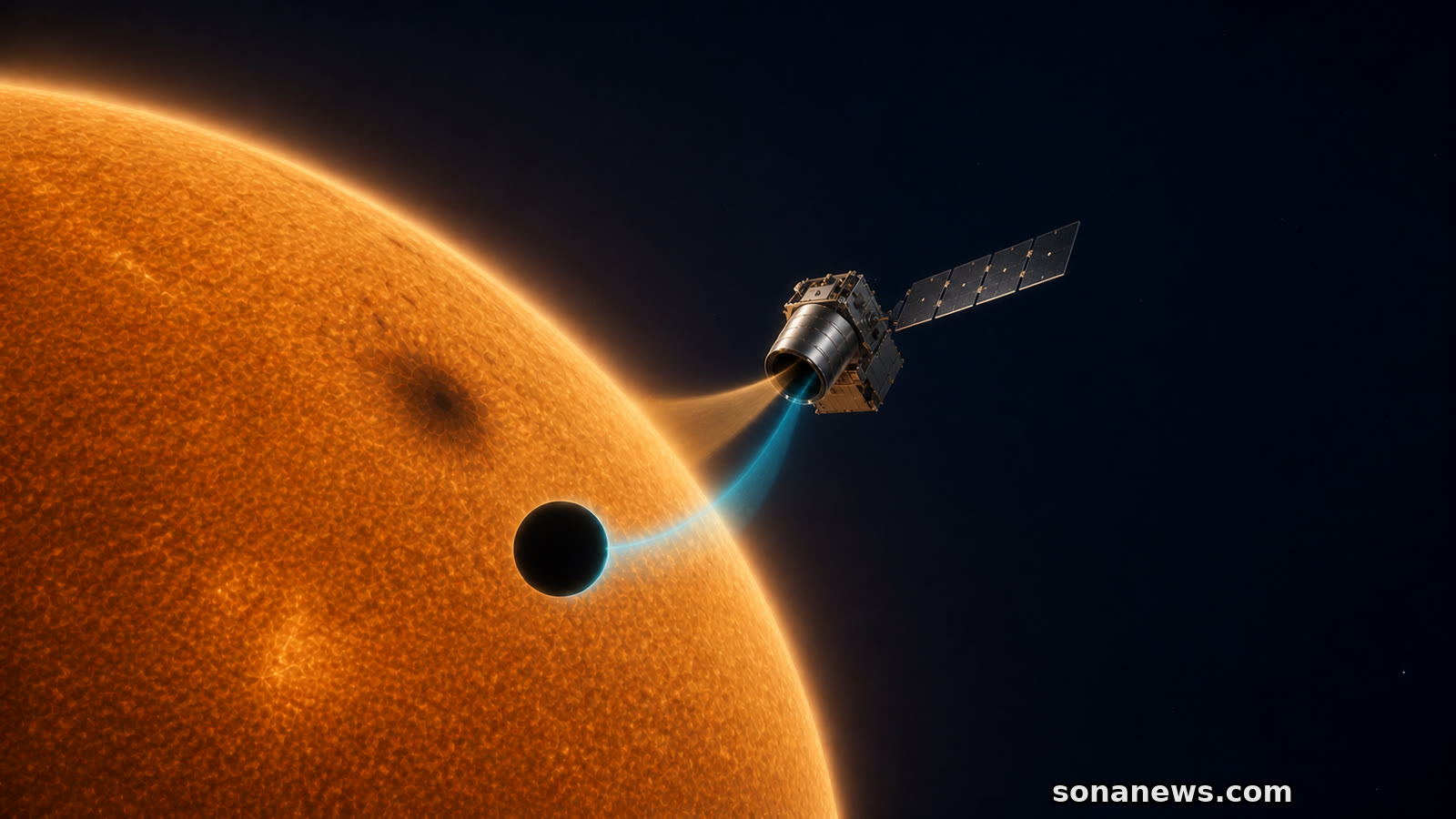
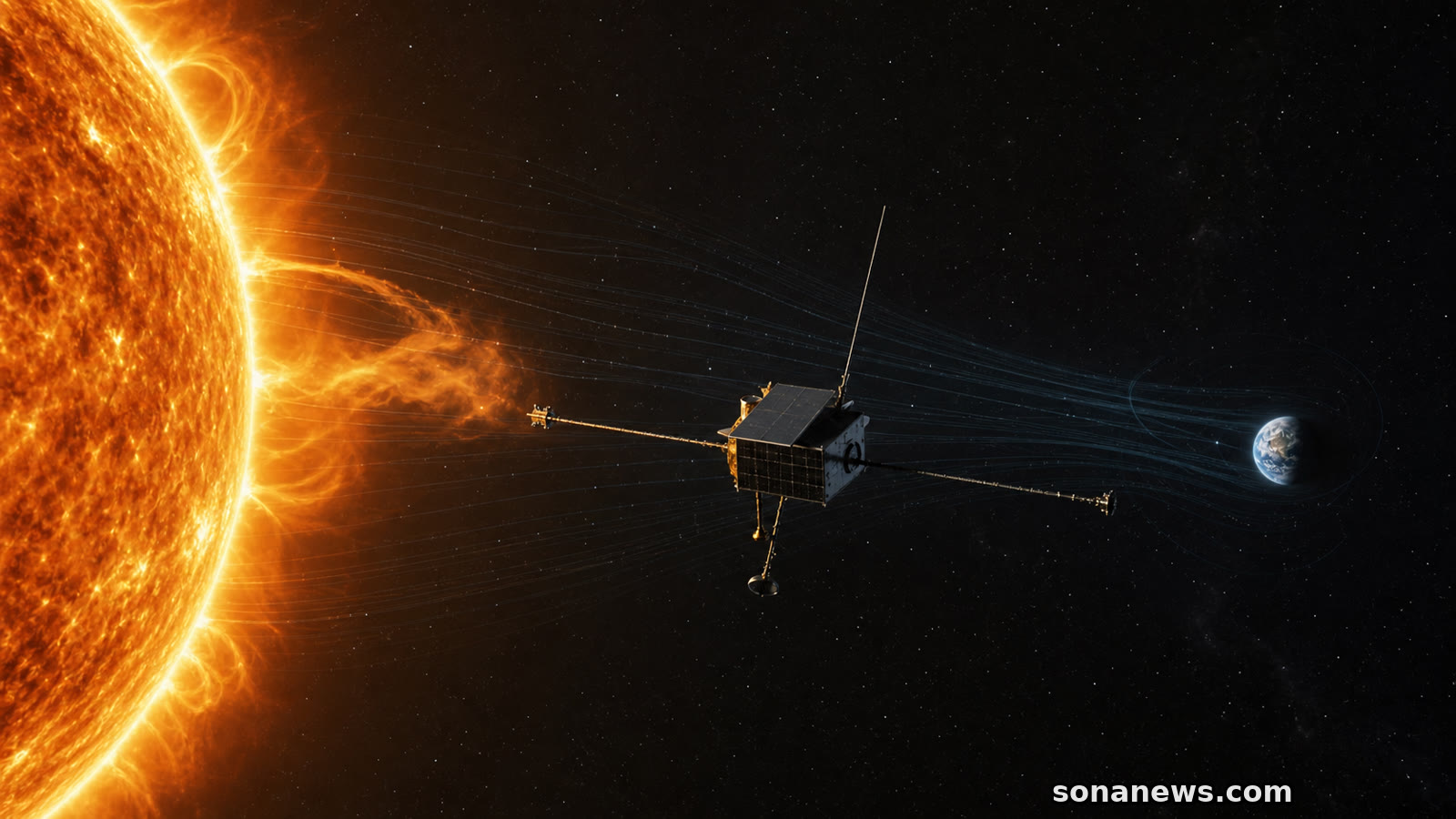
NOAA said on 10 June that SOLAR-1 had entered operational service for space weather monitoring. The spacecraft, formerly known as SWFO-L1, is stationed near the Sun-Earth Lagrange point 1, about one million miles from Earth in the direction of the Sun. From there it watches conditions upstream of the planet, where solar wind and eruptions can be measured before they reach the near-Earth environment.
The useful word in NOAA’s announcement is not “storm”. It is “operational”. SOLAR-1 is described by the agency as the first US satellite designed exclusively for continuous operational space weather observations. That distinction matters. Research missions can produce excellent science, but forecasters also need regular data streams, known delivery paths and instruments built around watch, warning and alert work.
The spacecraft’s job is to help NOAA’s Space Weather Prediction Center turn observations into practical notice. Solar wind measurements describe the stream of charged particles flowing out from the Sun. Magnetic-field readings help forecasters judge whether that stream is likely to couple strongly with Earth’s magnetic environment. Coronagraph imagery can show coronal mass ejections, the large expulsions of solar material that sometimes drive geomagnetic storms.
NOAA says SOLAR-1 will provide coronal mass ejection imagery to forecasters and users within 30 minutes of capture in space. The agency contrasts that with research observatories and instruments, including the ESA-NASA Solar and Heliospheric Observatory coronagraph, where similar imagery can take up to eight hours to reach users. That is not a glamorous difference, but it is the sort of difference that turns a space mission into infrastructure.
There is a launch story behind it, but not a sudden miracle. NASA and NOAA launched SOLAR-1 on 24 September 2025 from Kennedy Space Center on a SpaceX Falcon 9, alongside NASA’s IMAP and Carruthers Geocorona Observatory missions. NOAA says SOLAR-1 then went through months of post-launch testing and commissioning before being declared ready for operations. Instruments, power, propulsion, attitude control, communications and data handling all had to be checked before the satellite could become part of the warning chain.
The timing also reflects a quieter continuity problem. The SWPC solar-wind product page says SOLAR-1 and NASA’s IMAP I-ALiRT data will replace legacy measurements from ACE and DSCOVR. Those older sources have been central to real-time monitoring, but space-weather forecasting cannot depend forever on ageing spacecraft. A new observatory at L1 is partly about better data and partly about making sure there is data at all. It also gives forecasters a cleaner handover path, so a better viewer or model does not have to begin with a gap in the measurements.
For the public, the effects of space weather are usually indirect. Severe events can affect satellites, power-grid operations, radio communications, aviation routes, GPS and spacecraft safety. For most people, the right response to a better solar observatory is not anxiety. It is an understanding that modern systems have weather above them as well as weather around them, and that forecasters need instruments in the right place to read it.
That is why the SWPC’s scales matter. NOAA uses separate G, S and R scales for geomagnetic storms, solar radiation storms and radio blackouts, each running from minor to extreme. The language is deliberately impact-focused. It is meant to give operators, officials and the public a way to understand what a solar event might do, not just what the Sun looked like when the event began.
SOLAR-1 also fits into a larger programme rather than standing alone. NOAA’s Space Weather Next material describes a future observing system that uses L1, L5, geostationary orbit and low Earth orbit to maintain and extend space-weather observations into the 2030s. L1 gives forecasters an upstream view on the Sun-Earth line. L5, planned with ESA’s Vigil mission, would add a side-viewing perspective. The broader theme is resilience, not a single heroic satellite.
That is the calmer way to read this mission. The Sun has not become newly dangerous because a new spacecraft is watching it, and SOLAR-1 will not make solar storms vanish. It gives forecasters a more dedicated lookout, closer to the incoming stream, with data designed for the people who have to make decisions when space weather becomes an earthly concern.
Sources
- Source: “NOAA’s SOLAR-1 enters operational service for space weather monitoring”, NOAA, Extracted 2026-06-18. Verified: 10 June 2026 operational-service announcement, SOLAR-1 former SWFO-L1 name, L1 location about one million miles from Earth, continuous operational purpose, affected sectors, commissioning and 30-minute coronagraph delivery claim
- Source: “SOLAR-1 is Now Operational and Data is Available!”, NOAA / NWS Space Weather Prediction Center, Extracted 2026-06-18. Verified: SWPC public notice, 10 June 2026 publication time, operational status and link to solar-wind observations
- Source: “Solar Wind Observations - Experimental Display”, NOAA / NWS Space Weather Prediction Center, Extracted 2026-06-18. Verified: real-time L1 solar-wind data use, operational-quality caveat, ACE and DSCOVR legacy context, planned SOLAR-1 and IMAP I-ALiRT replacement role, January 1998 historical coverage
- Source: “NASA, NOAA Launch Three Spacecraft to Map Sun’s Influence Across Space”, NASA, Extracted 2026-06-18. Verified: 24 September 2025 launch, Falcon 9, Kennedy Space Center, co-manifested IMAP, Carruthers and SWFO-L1 missions, broader heliophysics and space-weather readiness purpose
- Source: “NOAA Space Weather Scales”, NOAA / NWS Space Weather Prediction Center, Extracted 2026-06-18. Verified: G, S and R scale categories, public impact-focused purpose and scale framing from minor to extreme
- Source: “Space Weather Next”, NOAA NESDIS, Extracted 2026-06-18. Verified: L1 and L5 observing architecture, Space Weather Next continuity objective, SOLAR-A and SOLAR-B context and ESA Vigil collaboration
Help us improve
Was this article useful?
One anonymous tap helps Sona improve future reporting, headlines and source context.
Up next
Hubble data trace a 10-sided atmospheric wave from faint 2023 hints to a clearer 2025 pattern. Its slow drift and 32-day wobble do not yet explain why it formed.
Continue readingMore in Space