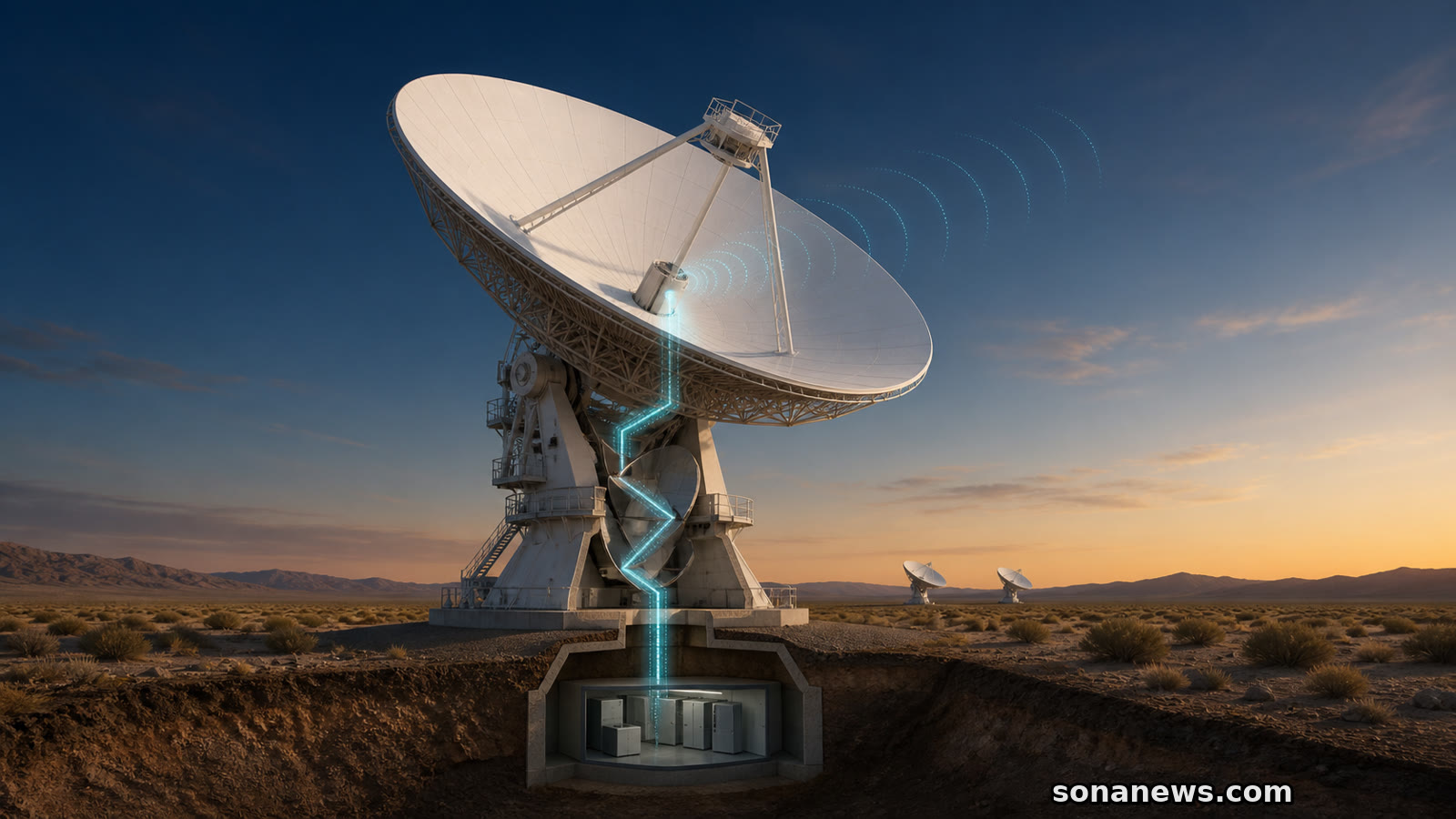
Swift’s rescue mission has reached the rocket
NASA says Katalyst’s LINK spacecraft has been installed inside a Pegasus XL rocket for a late-June attempt to raise the ageing Swift observatory. The hard part comes after launch: finding, catching and lifting a telescope that has no propulsion to save itself.
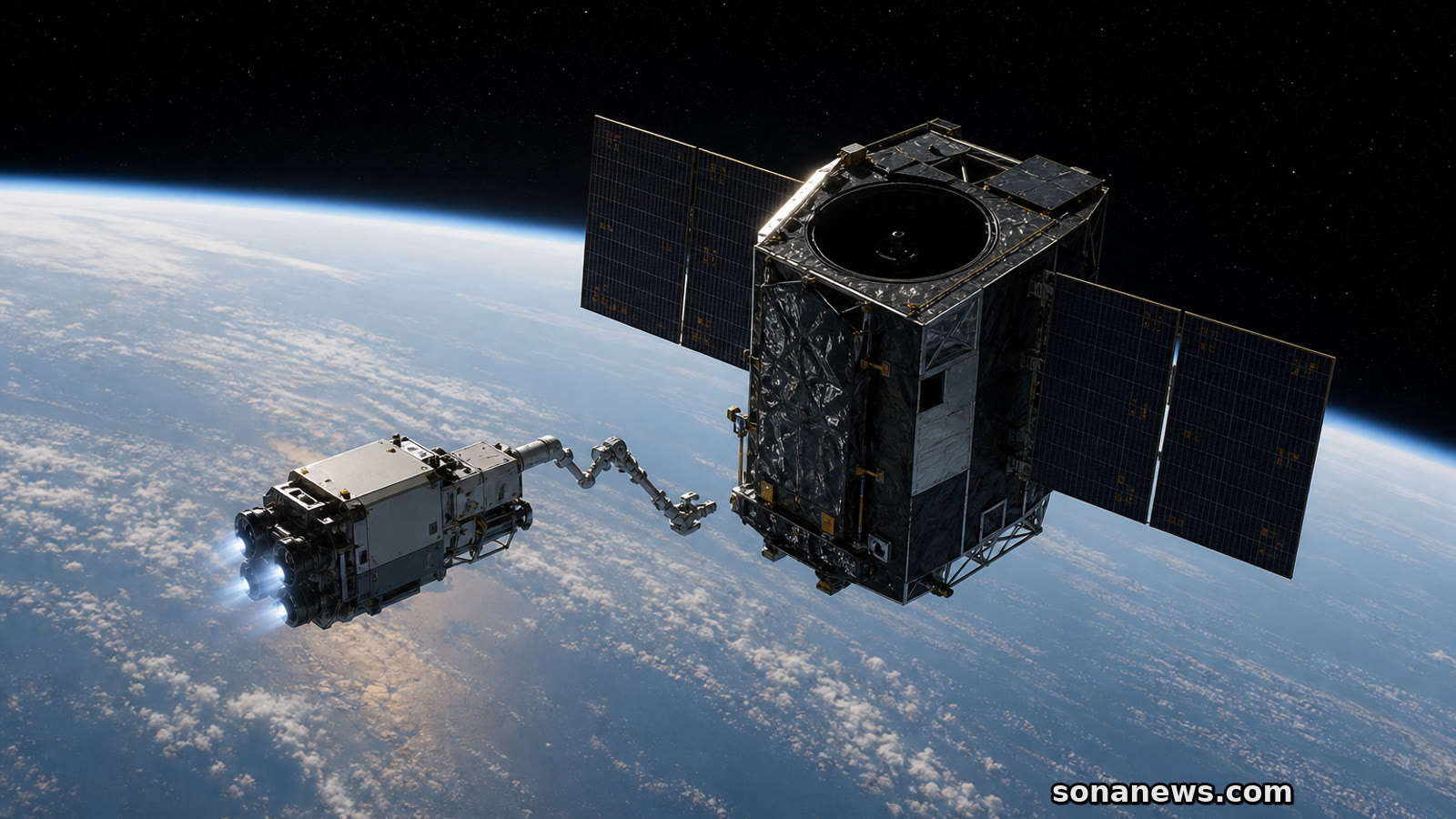

The rescue mission for NASA’s Swift observatory has moved from workshop to rocket.
NASA said this week that engineers finished installing Katalyst Space’s LINK robotic servicing spacecraft inside a Northrop Grumman Pegasus XL rocket on 9 June at Wallops Flight Facility in Virginia. Launch is expected later in June. If the mission works, LINK will go after the Neil Gehrels Swift Observatory, grab it, and raise its orbit over several months.
That sounds like a tidy plan only because the hard parts are hidden inside the verbs. Rendezvous. Capture. Lift. Swift is a working space telescope in low Earth orbit, not a car waiting on the shoulder with a tow hook. NASA is careful to call this an attempt, and that caution is the right tone for the story.
Swift is worth the trouble because it does a job few spacecraft can do so quickly. Launched in November 2004, it studies gamma-ray bursts and other fast-changing cosmic events using visible, ultraviolet, X-ray and gamma-ray instruments. NASA’s Swift site says the observatory can send burst locations to ground stations within seconds, giving other telescopes a chance to catch the afterglow before it fades. That rapid alert role is the point: Swift is useful because it reacts while the universe is still changing.
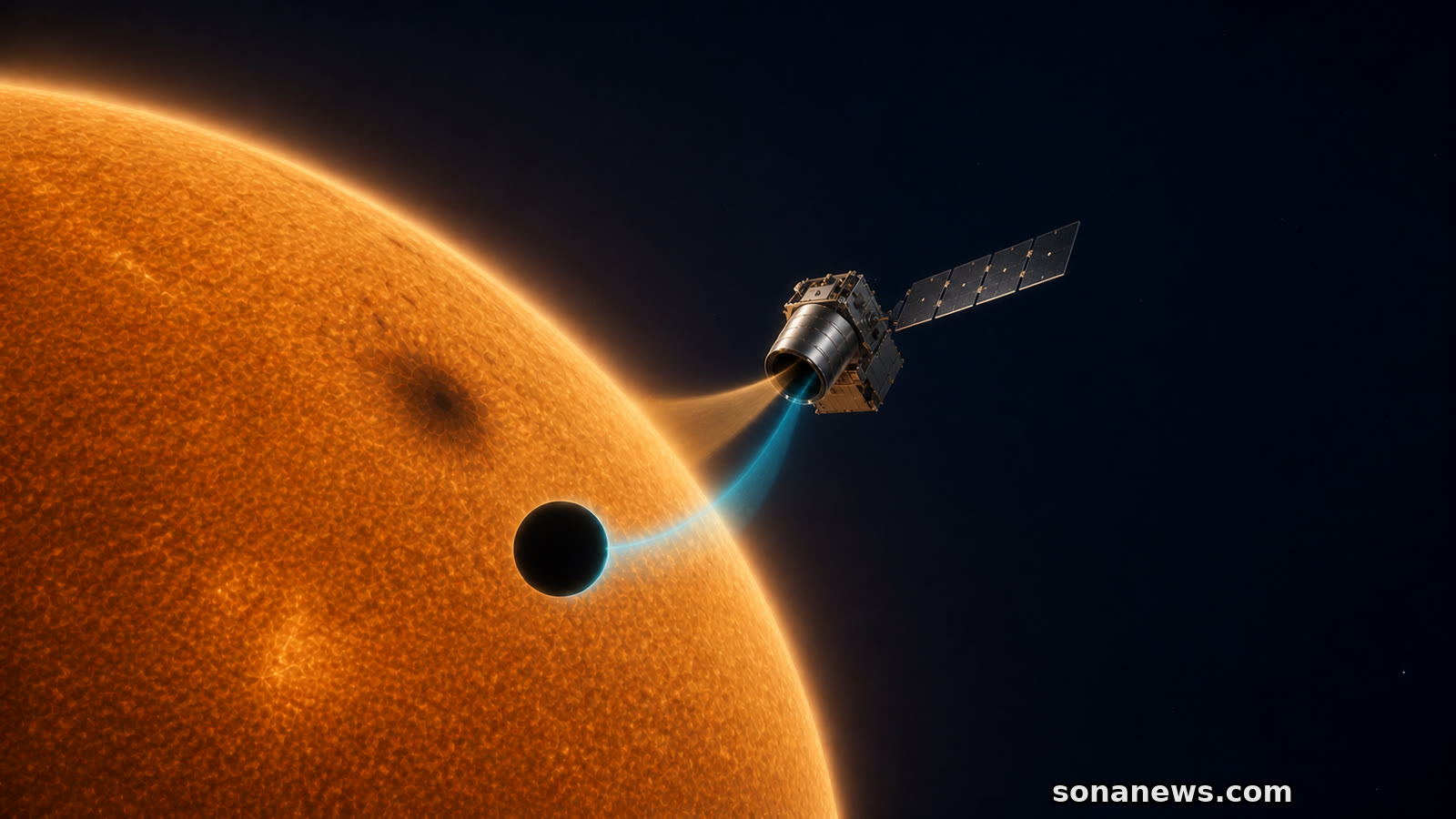
For most readers, the science can sound remote. The engineering problem is easier to picture. Swift orbits low enough that thin traces of Earth’s upper atmosphere still tug on it. Spacecraft without propulsion slowly lose altitude in that environment. Recent solar activity made the drag problem worse, NASA says, and Swift began sinking faster than expected.
This is one of the less cinematic effects of an active Sun. NOAA and NASA announced in 2024 that the Sun had reached the solar maximum period of Solar Cycle 25. That does not mean every satellite is in immediate trouble, but it does mean space weather is more active. When storms heat and expand the upper atmosphere, objects in low Earth orbit can feel more drag. For Swift, that extra drag turned a slow problem into a schedule problem.
NASA’s flight dynamics team has been trying to buy time. In a May update, the agency said analysts were using orbital data, solar activity research and Swift operations details to predict where the spacecraft would be for the boost mission. The team has also adjusted Swift’s orientation to reduce drag. NASA gave a plain operational target: keep Swift at least 185 miles, or 300 kilometres, above Earth to give the boost the best chance of success.
The new mission is not only about saving one telescope. NASA awarded Katalyst Space the contract in September 2025, leaving less than a year to design, build, test and launch a spacecraft that can meet Swift in orbit. LINK arrived at Wallops on 5 June. By 9 June it was inside Pegasus XL. That pace is part of the experiment.
Pegasus is an unusual choice compared with the large vertical rockets that dominate launch coverage. It is carried under Northrop Grumman’s modified L-1011 aircraft, Stargazer, and released in flight. NASA says the rocket will be transported from Wallops to Kwajalein Atoll in the Republic of the Marshall Islands, where Stargazer will carry it for launch over the South Pacific. Katalyst selected Pegasus because the mission’s orbit and timing left little room for a slower campaign.
There is a useful restraint in this story. It would be easy to write it as a last-minute rescue drama. But the better version is more specific: a 21-year-old observatory has been managed carefully enough to give a new robotic servicing craft a shot at extending its life. If LINK succeeds, Swift could resume the science observations it has paused while operators preserve orbital lifetime. If it fails, the mission still says something blunt about spacecraft design: orbit is not a permanent address.
The broader lesson is not that every old satellite can be saved. Many cannot. Servicing depends on orbit, shape, timing, cost and whether a robotic vehicle can safely approach without making the situation worse. Swift is a demanding test because the window is narrow and the target is valuable.
So the milestone this week is real, but it is not the finish line. The spacecraft is integrated with the rocket. The launch still has to happen. LINK still has to reach Swift, match its motion, capture it and raise it. Only then does this stop being a rescue attempt and become a rescued observatory.
For now, the honest headline is enough: Swift’s rescue mission has reached the rocket.
Sources
- Source: "Rocket Integration Complete for Katalyst-NASA Swift Boost", Extracted 2026-06-11. Verified: LINK was integrated into a Pegasus XL rocket on 9 June at NASA Wallops; launch is anticipated later in June; Stargazer will carry Pegasus from Wallops to Kwajalein for launch; the mission aims to raise Swift’s altitude
- Source: "Swift Boost Mission", Extracted 2026-06-11. Verified: NASA contracted Katalyst Space to boost Swift; LINK will attempt to capture and raise Swift over several months; Swift has no propulsion system for orbit maintenance; recent solar storms magnified atmospheric drag; Katalyst had less than one year after the September 2025 contract
- Source: "NASA Predicts Swift Spacecraft’s Location for Boost Mission", Extracted 2026-06-11. Verified: NASA’s flight dynamics team is tracking Swift’s declining orbit; the 185-mile, 300-kilometre altitude target; prediction inputs include orbital data, solar activity research and spacecraft operations; early 2025 forecasts pointed to summer 2026 re-entry risk
- Source: "Swift", Extracted 2026-06-11. Verified: Swift launched on 20 November 2004; it is an active NASA mission studying gamma-ray bursts and other cosmic events with visible, ultraviolet, X-ray and gamma-ray instruments; NASA links Swift to the current boost mission
- Source: "The Neil Gehrels Swift Observatory", Extracted 2026-06-11. Verified: Swift relays gamma-ray burst locations within seconds; the mission site says Swift has suspended science observations to prioritise orbital lifetime in support of the reboost mission
- Source: "Joint Solar Maximum Announcement from NASA and NOAA", Extracted 2026-06-11. Verified: NOAA and NASA announced that the Sun had reached the solar maximum period of Solar Cycle 25 in October 2024
Help us improve
Was this article useful?
One anonymous tap helps Sona improve future reporting, headlines and source context.
Up next
Hubble data trace a 10-sided atmospheric wave from faint 2023 hints to a clearer 2025 pattern. Its slow drift and 32-day wobble do not yet explain why it formed.
Continue readingMore in Space