TESS has found two giant planets so airy they test how worlds inflate
TOI-791 b and c are roughly Jupiter-sized but only a few per cent of Jupiter's mass. The useful story is not the candy-floss comparison, it is the awkward physics behind keeping such large worlds so light.

The easy phrase is candy floss. The better question is harder: how can a planet grow to roughly Jupiter's size while carrying only a few per cent of Jupiter's mass?
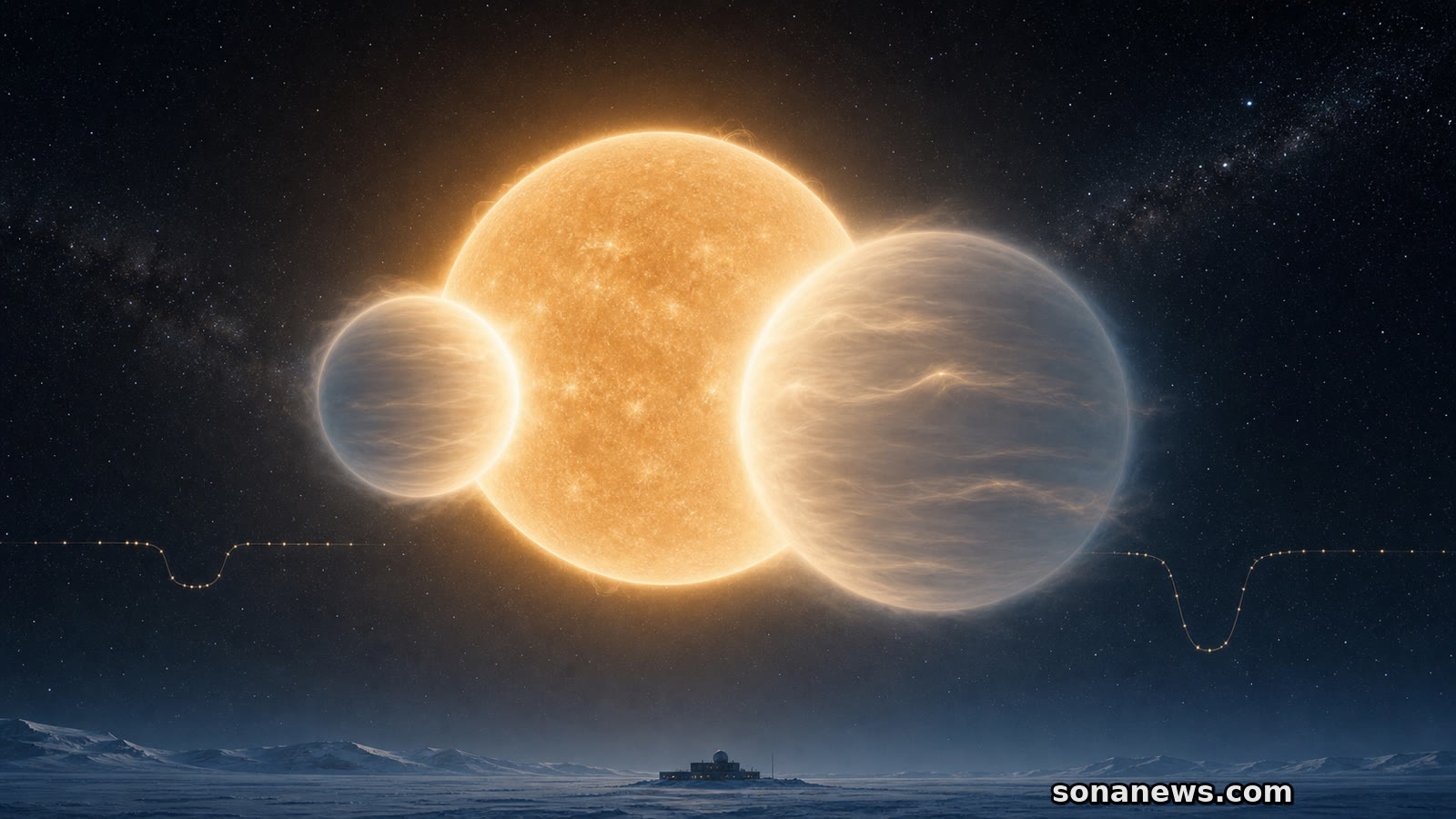
NASA's TESS mission has helped confirm two such worlds around TOI-791, a star about 1,110 light-years away in the southern constellation Volans. They are called TOI-791 b and TOI-791 c. Both are giant in outline and startlingly light in substance, putting them in the rare class astronomers call super-puff planets.
NASA's 24 June summary says the inner planet is nearly the same size as Jupiter but about 3.0% of Jupiter's mass, while the outer planet is larger than Jupiter but about 5.9% of its mass. Oxford's release, published with the peer-reviewed Monthly Notices of the Royal Astronomical Society study, gives densities of 0.038 and 0.047 grams per cubic centimetre. For comparison, Jupiter is about 1.33 grams per cubic centimetre and Earth is about 5.5. The cotton-candy or candy-floss comparison is useful because it gives the public a scale. It should not make the result sound cute or simple.
The point is that these worlds are physically awkward. A planet's measured size comes from how much starlight it blocks when it passes in front of its star. Its mass can be measured when gravity leaves a timing or motion signature. Put those two numbers together and the TOI-791 pair look less like ordinary gas giants and more like enormous atmospheres stretched over small amounts of material.
That is why the discovery is more than another entry in the exoplanet catalogue. Super-puffs are uncommon, and Oxford says only four other known systems contain more than one. Finding two in the same system gives researchers a cleaner comparison than two unrelated one-offs. These planets likely formed from the same disc of gas and dust, so their differences and similarities may say something about how such inflated worlds survive.
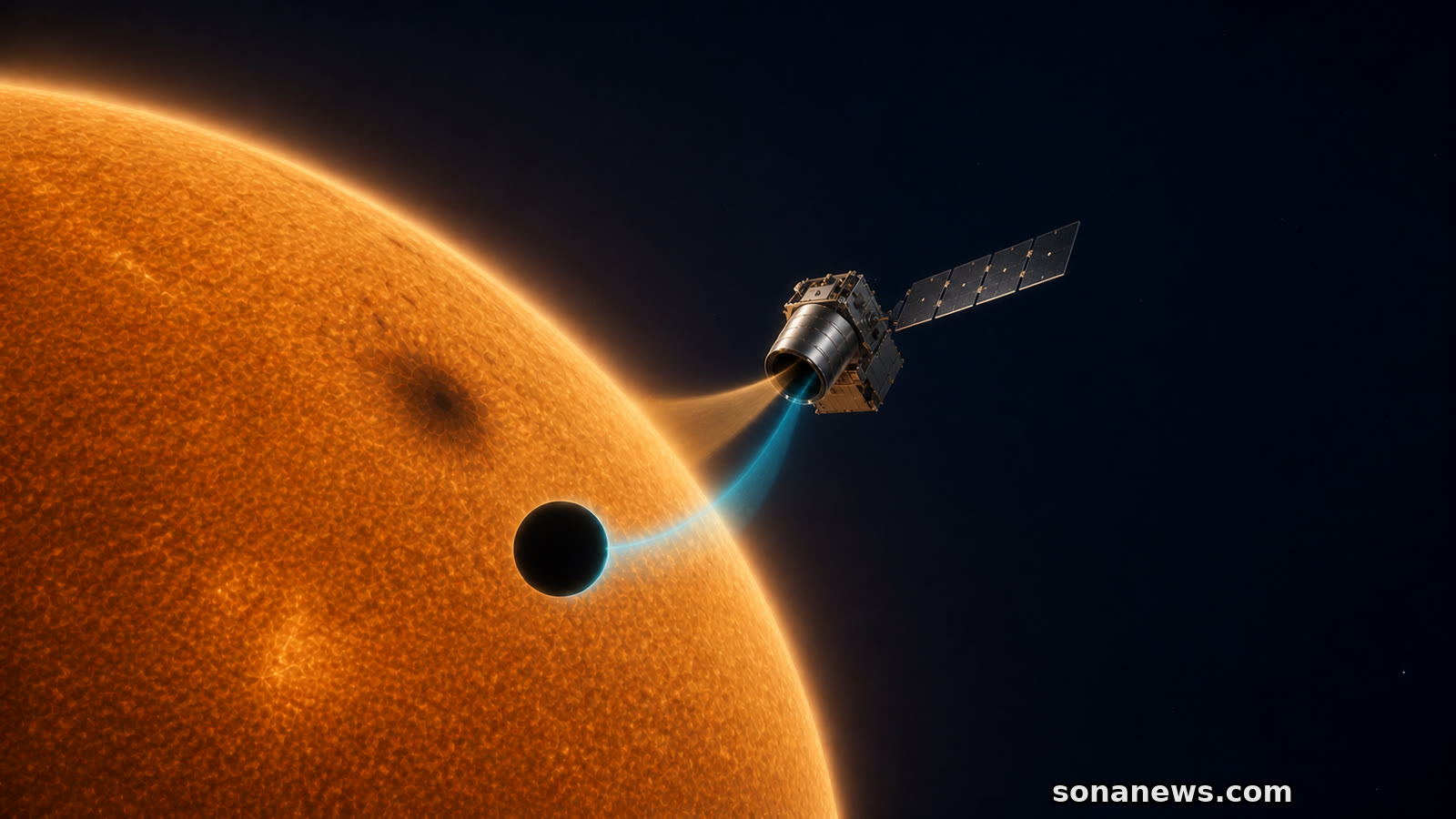
The confirmation also shows why TESS is not merely a planet counter. The Transiting Exoplanet Survey Satellite searches for tiny dips in starlight as planets cross their stars from our point of view. NASA says the TOI-791 analysis drew on 1,122 days of TESS data collected over seven years. Long-period planets are harder to confirm than worlds that whip around their stars every few days because astronomers need repeated transits and enough patience to catch them.
TOI-791 b and c take about 139 and 232 days to orbit. That spacing matters. The two appear to sit near a 5:3 mean-motion resonance: for about every five orbits of the inner planet, the outer one completes three. Their mutual gravity shifts the timing of their transits. Those transit timing variations helped researchers estimate the planets' masses, which in turn made the low densities stand out.
Ground observations were not a decorative extra. The Oxford and EurekAlert summaries describe an eight-year confirmation campaign involving telescopes across several continents, with the Antarctic Search for Transiting ExoPlanets, or ASTEP, playing an important role from Concordia Station in Antarctica. The long polar winter gives observers unusually extended darkness, useful when a single transit lasts more than 11 hours. The result is a good reminder that modern space discoveries often depend on both orbital survey telescopes and unglamorous follow-up from Earth.
There are still several ways to be wrong about a super-puff, which is why the cautious parts of the story matter. One possibility is that these planets have large hydrogen and helium envelopes. Another is that haze or rings can affect how big a planet appears during transit. The current result does not settle the origin of super-puffs. It gives astronomers a sharper system to test.
The next useful step may be atmospheric work. Oxford quotes University of Birmingham astronomer Amaury Triaud saying the team wants space-based observations with the James Webb Space Telescope to look for carbon-, nitrogen- and oxygen-bearing species in the puffy atmospheres. That would not be a hunt for life. It would be a chemical and structural test of how these planets formed, migrated and retained such extended envelopes.
For readers, the durable lesson is not that space has found another oddity. It is that odd measurements are often the most productive ones. TOI-791 b and c sit in the uncomfortable gap between familiar giant planets and the models used to explain them. If astronomers can work out why two sibling worlds are so airy, the answer may refine how they understand ordinary giant planets as well as the rare puffy ones.
Sources
- Source: "NASA's TESS Mission Reveals the 'Puffiest' Planets Ever Found", NASA Science, Extracted 2026-06-25. Verified: 24 June 2026 publication, TOI-791 b and c names, 1,113 light-year distance, 3.0% and 5.9% Jupiter-mass values, 139-day and 232-day orbits, TESS transit method, 1,122 days of data over seven years, and the caution that the planets are a formation puzzle
- Source: "Researchers discover pair of giant 'super-puff' planets lighter than candy floss", University of Oxford, Extracted 2026-06-25. Verified: lead institutions, MNRAS publication link and DOI, F7-type dwarf host, Volans location, densities of 0.038 and 0.047 g/cm³, 5:3 resonance, rarity of multiple super-puff systems, Planet Hunters TESS candidate history, and ASTEP follow-up
- Source: "'Super-puff' planets lighter than candy floss discovered by international team", EurekAlert, Extracted 2026-06-25. Verified: eight-year observation campaign, ASTEP at Concordia Station, more than 11-hour transits, transit timing variations, candidate identification in 2019 and 2023, and scientific questions about hydrogen and helium envelopes
- Source: "TESS (Transiting Exoplanet Survey Satellite)", NASA Science, Extracted 2026-06-25. Verified: TESS mission purpose, active extended-mission context, April 2018 launch, visible-light transit survey role, and NASA's broader exoplanet discovery framing
Help us improve
Was this article useful?
One anonymous tap helps Sona improve future reporting, headlines and source context.
Up next
Hubble data trace a 10-sided atmospheric wave from faint 2023 hints to a clearer 2025 pattern. Its slow drift and 32-day wobble do not yet explain why it formed.
Continue readingMore in Space