Webb has turned an interstellar comet into a chemistry map
3I/ATLAS has already done the dramatic part by coming from outside the solar system. Webb’s useful work is quieter: mapping water, carbon dioxide and carbon monoxide before the visitor fades.

The easy way to write about an interstellar comet is to make it sound like an omen. A visitor from beyond the solar system, passing once through the neighbourhood, gives headline writers all the drama they need. The more useful story around 3I/ATLAS is less theatrical. NASA’s James Webb Space Telescope has turned a fleeting object into a chemistry map, and that map is starting to describe a place and time far older than the Sun.
NASA said on 22 June that Webb observed 3I/ATLAS after the comet had already made its closest pass by the Sun and was moving outward again. The timing mattered. Solar heating had warmed ancient ice enough to create a bright coma of gas, but the object was still close enough for detailed infrared study. Webb’s Near-Infrared Spectrograph, NIRSpec, mapped water, carbon dioxide and carbon monoxide around the comet rather than simply taking a pretty picture.
That difference is the point. A comet’s coma can act like a release valve for material that has been frozen into it for a long time. If the object formed around another star, then its gases are not just comet vapour. They are a sample of chemistry from another planetary system, delivered briefly into ours. Webb is not reading a label on 3I/ATLAS, but it is measuring clues that are difficult to get any other way.
The strongest clue in NASA’s release is isotopic. NIRSpec found exceptionally high levels of deuterium, or heavy hydrogen, in the comet’s water, about 30 times higher than values seen in solar system comets. Webb also found an unusual carbon isotope pattern, with carbon-13 scarce compared with carbon-12. NASA’s account says those measurements suggest that 3I/ATLAS formed in a very cold, dense environment and may date from 10 to 12 billion years ago, during the era astronomers call cosmic noon.
Those words need the usual scientific caution. “May” is doing real work here. The new Nature-linked study does not mean anyone knows the comet’s home star, nor does it turn the object into evidence of life elsewhere. It does show why interstellar comets are valuable. The solar system gives scientists one well-studied recipe for planets, comets and prebiotic chemistry. An interstellar object gives them a rare comparison case, made from different raw material and shaped by a different history.
3I/ATLAS was already a rare target before Webb took this latest look. NASA’s comet page identifies it as the third known object from outside the solar system to be discovered passing through our neighbourhood. It was first reported on 1 July 2025 by the NASA-funded ATLAS survey telescope in Rio Hurtado, Chile, and follow-up observations found earlier sightings back to 14 June. Its hyperbolic orbit is what marks it as interstellar: it is not looping around the Sun like a normal comet.
For readers on Earth, the safety note is refreshingly dull. NASA says 3I/ATLAS posed no threat. Its closest approach to Earth was about 1.8 astronomical units, or roughly 170 million miles, and it reached its closest point to the Sun around 30 October 2025 at about 1.4 astronomical units. That distance put it just inside the orbit of Mars, which is close enough for an unusual observing campaign but not close in any everyday sense.
Webb had already added one piece to the story earlier in June. A NASA 3I/ATLAS blog reported that Webb’s Mid-Infrared Instrument directly detected methane gas on the comet, the first such direct detection on an interstellar visitor. That result also found unusually high methane relative to water and confirmed that 3I/ATLAS was rich in carbon dioxide compared with typical solar system comets. As the object moved farther from the Sun, its gas production fell, especially water vapour.
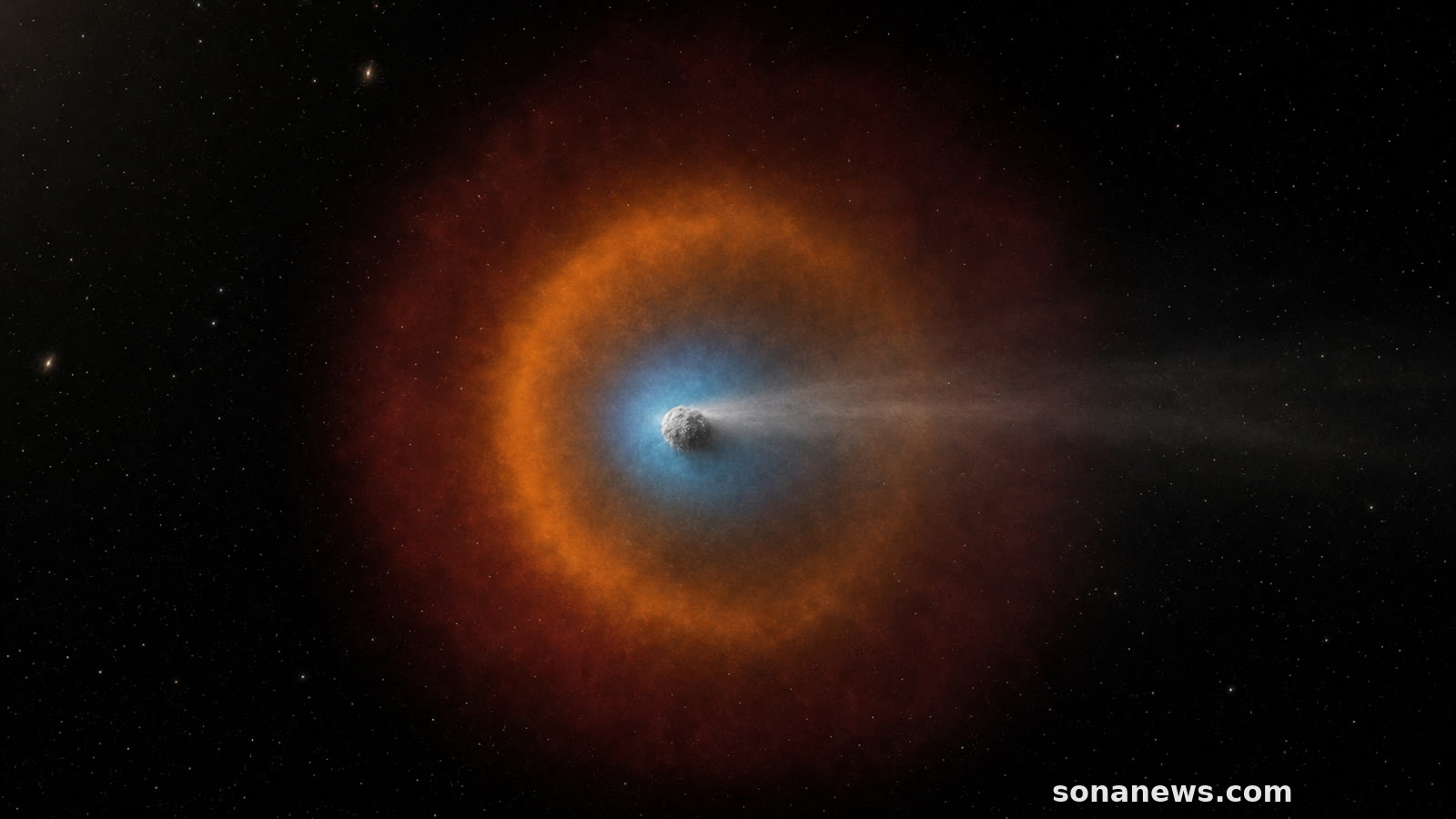
Put together, the observations are a reminder that space news is often strongest when it resists spectacle. The Webb image products matter because they are not just views of a bright smudge. NIRSpec’s integral field unit provides a spectrum for each image pixel, letting researchers map where specific molecules appear across the coma. NASA’s asset page shows those maps as three molecular views: compact water, broader carbon dioxide and still broader carbon monoxide.
The public hook is that 3I/ATLAS came from outside. The scientific hook is that Webb can compare its chemistry with the family of comets that formed here. If the comet really preserves material from a cold, ancient system, it becomes a small archive of galactic history, not a prophecy and not a threat. The visitor will leave. The measurements will stay, giving scientists one more way to ask whether our own solar system is ordinary, odd, or somewhere in between.
Sources
- Source: “NASA’s Webb Finds Clues to Ancient, Distant Origin of Comet 3I/ATLAS”, NASA Science, Extracted 2026-06-22. Verified: 22 June 2026 publication, NIRSpec observation, H2O, CO2 and CO mapping, high deuterium finding, carbon isotope context, possible 10 to 12 billion year origin and cautious Nature-linked interpretation
- Source: “Comet 3I/ATLAS”, NASA Science, Extracted 2026-06-22. Verified: third known interstellar object status, ATLAS discovery report date, hyperbolic orbit explanation, no threat to Earth, closest Earth and Sun distances, and wider NASA observation campaign
- Source: “NASA’s Webb Detects Methane on Interstellar Comet 3I/ATLAS”, NASA Science, Extracted 2026-06-22. Verified: Webb MIRI methane detection, high methane relative to water, carbon dioxide richness and post-perihelion observing context
- Source: “Interstellar Comet 3I/ATLAS (NIRSpec IFU)”, NASA Science asset page, Extracted 2026-06-22. Verified: NIRSpec IFU composition mapping, blue H2O, orange CO2 and red CO visual channels, proposal 5094, exposure dates and science release link
Help us improve
Was this article useful?
One anonymous tap helps Sona improve future reporting, headlines and source context.
Up next
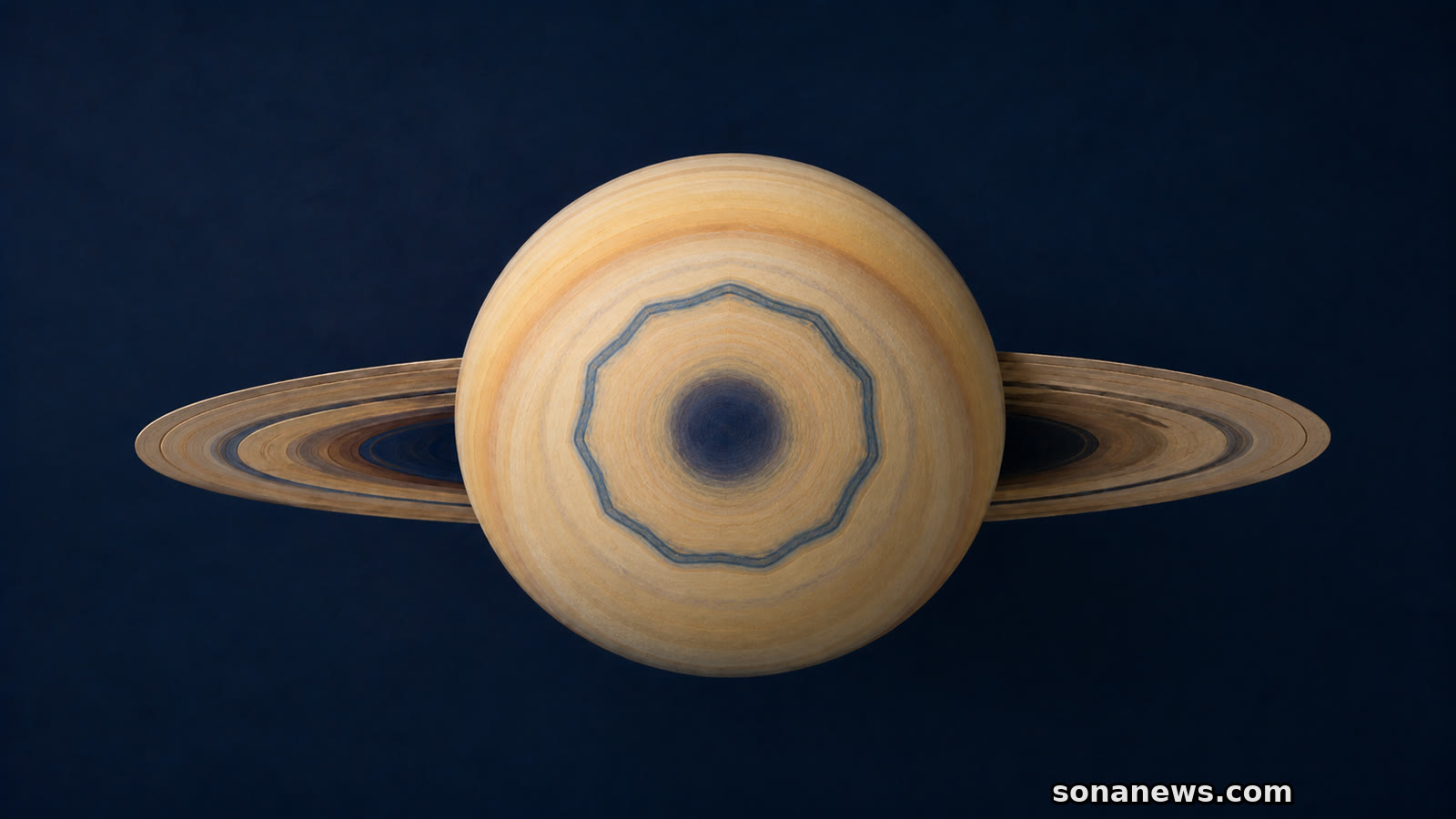
Hubble data trace a 10-sided atmospheric wave from faint 2023 hints to a clearer 2025 pattern. Its slow drift and 32-day wobble do not yet explain why it formed.
Continue readingMore in Space