The Mount Fuji climb now starts before the trailhead
For the 2026 season, route choice now means fees, app registration, gate hours and hut rules before anyone reaches the 5th Station.
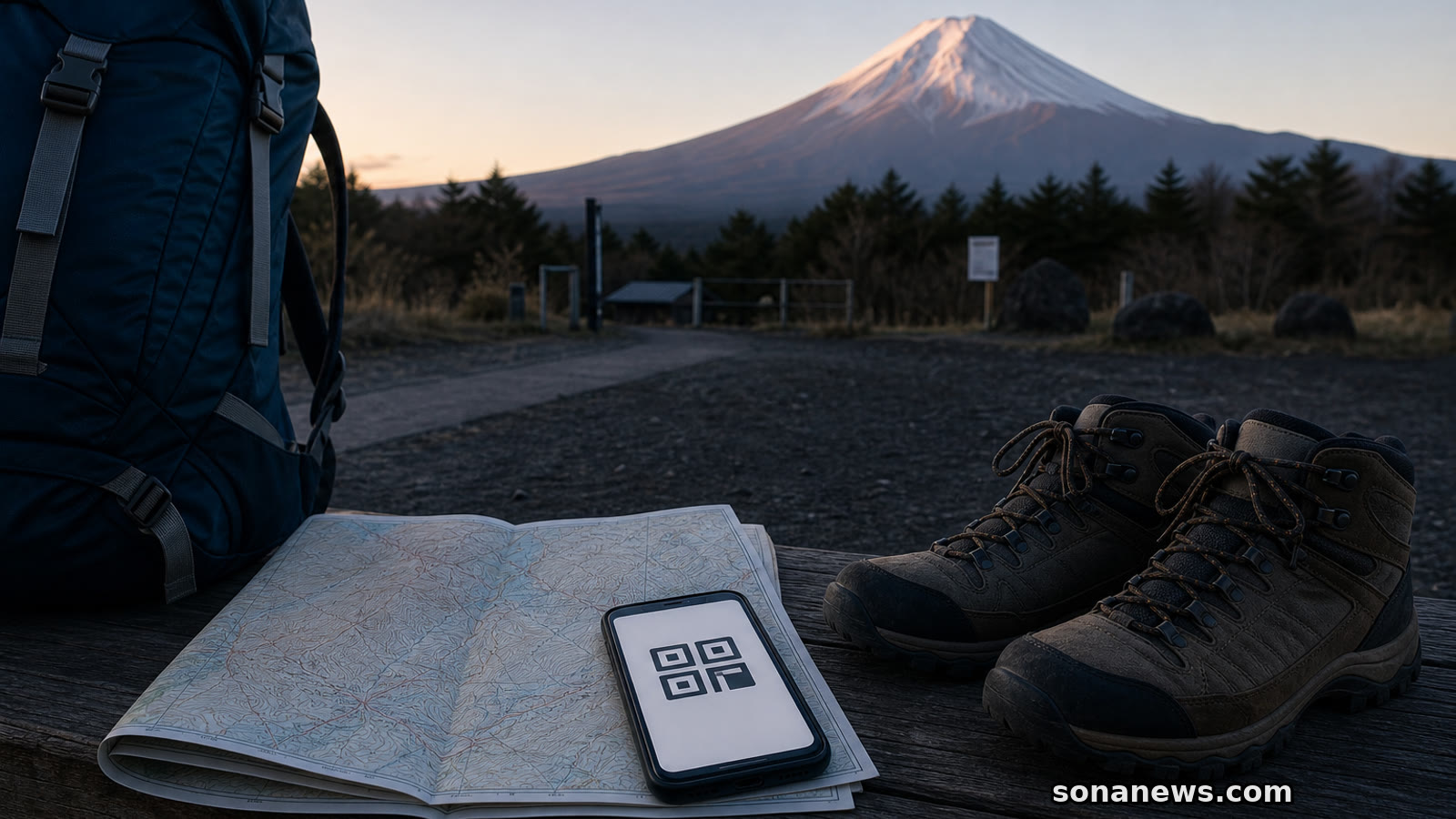

The first decision on a Mount Fuji climb used to sound geographic: which side of the mountain, which trail, which bus to the 5th Station. For 2026, that decision has become administrative too. Before the first switchback, climbers now have to match the route to a fee system, registration or reservation, gate hours and, in some cases, proof of a mountain hut booking.
Japan's official Mount Fuji climbing site says the Yoshida and Subashiri trails are scheduled to open on July 1, 2026. The Fujinomiya and Gotemba trails, along with the summit and crater rim walk, are scheduled for July 10. The season runs to September 10, but the site adds the usual mountain caveat: opening dates can move if snow removal or weather gets in the way.
That matters because "Mount Fuji is open" is no longer a useful enough sentence. Early July is different on Subashiri than on Gotemba. A sunrise plan is different from a daylight ascent. A hut guest is treated differently from someone trying to push through overnight without stopping. The mountain has not changed shape, but the access system around it has become more precise.
The shared baseline is now clear. The official pre-climb guidance lists a mandatory 4,000 yen hiking fee and a restriction on entering the mountain between 2 pm and 3 am the following day, unless the climber is staying at a mountain hut. It also repeats the practical reason behind the rules: Mount Fuji is a 3,776 metre isolated peak, not a scenic staircase with a famous view at the top.
On the Yamanashi side, the Yoshida Trail has its own gate logic. The official Yamanashi notice says a passage reservation is for moving through the gate, not for staying in a hut. It says reservations are optional, but useful if a climber wants to secure passage in advance. The 4,000 yen hiking fee is paid in advance for that reservation, and reservations close when the daily climber limit is reached. Even a paid reservation does not make the day infinitely flexible: those who do not pass the 5th Station gate by 2 pm can still be subject to restrictions, unless they are staying at a mountain hut.
The Shizuoka side is different, and that difference is the point. Fujinomiya, Gotemba and Subashiri climbers are told to use the Shizuoka Prefecture FUJI NAVI app for advance registration, e-learning, payment and a QR-code mountain entry pass. The notice says all hikers are required to register in advance and present the permit at each trailhead. People without smartphones can complete the process on site at the 5th Station, but the official page says that means prior learning, documents, fee payment and roughly 30 minutes of procedure. Shizuoka also says it has not set a daily climber cap.
So the mistake is to flatten the two systems into one vague travel tip. Yoshida has reservation pressure and a daily limit. Shizuoka has app registration and no daily cap. Both use the 4,000 yen fee. Both restrict afternoon and overnight entry without a hut. Both separate trail access from mountain hut accommodation. A booking for one part of the trip does not automatically solve the others.
The official FAQ is blunt about one habit the rules are trying to curb: the "bullet climb", an overnight push aimed at seeing sunrise without staying in a hut. The FAQ says this can cause altitude sickness and hypothermia. That is not a marketing warning. It is a reminder that the most photogenic version of the climb is also the version that tempts people into bad timing, cold waits and crowded summit approaches.
For international travellers, the most useful change may be psychological. Mount Fuji still looks like a bucket-list mountain, but its 2026 access system now behaves more like a managed public service under stress. It asks for e-learning, QR codes, timed gates, fee payment and route-specific reading before anyone starts walking. That can feel fussy from a distance. On the mountain, it is the difference between a plan and a queue at the wrong gate.
The volcano status is worth keeping in proportion too. Japan's Meteorological Agency currently lists Mount Fuji at Volcanic Alert Level 1, with no current warning items. That does not turn an active volcano into a casual hill. It simply says there is no current volcanic warning while the ordinary risks of altitude, weather, crowding, fatigue and route confusion remain.
The better 2026 question is no longer, "Can I climb Fuji?" It is narrower and more useful: which route, which date, which gate system, which payment step, which hut rule and which official page has changed since the trip was first planned. The climb begins at the trailhead. The paperwork begins before that.
Editorial note. This article is general travel-planning information, not official climbing guidance. Route openings, gate rules, fees, hut policies, weather conditions and volcanic information can change. Use the linked official Mount Fuji and Japan Meteorological Agency pages before booking or travelling.
Sources
- Official Website for Mt. Fuji Climbing - home page - - extracted 2026-06-08. Verified: 2026 scheduled opening dates, official route framing, current caution status, route differences and warning that opening dates may shift with snow removal
- Official Website for Mt. Fuji Climbing, Yamanashi Prefecture notice - - extracted 2026-06-08. Verified: Yoshida Trail 2026 season dates, summit access prohibition until June 30, passage reservation mechanics, 4,000 yen hiking fee, daily limit closure, 2 pm gate rule and refund caveats
- Official Website for Mt. Fuji Climbing, Shizuoka Prefecture notice - - extracted 2026-06-08. Verified: Shizuoka-side trail rules for Fujinomiya, Gotemba and Subashiri, FUJI NAVI registration, QR permit, e-learning, 4,000 yen fee, no daily climber cap and smartphone-free on-site procedure
- Official Website for Mt. Fuji Climbing, things to know before climbing - - extracted 2026-06-08. Verified: common hiking fee, 2 pm to 3 am restriction, mountain hut exception, 3,776 metre elevation, weather and preparation context
- Official Website for Mt. Fuji Climbing, FAQ - - extracted 2026-06-08. Verified: mountain hut booking and trail access are separate, bullet climbing definition and altitude sickness or hypothermia warning, late July to late August crowding pattern
- Japan Meteorological Agency, Mount Fuji volcanic activity page - - extracted 2026-06-08. Verified: current Volcanic Alert Level 1, no current warning items, active volcano framing
Help us improve
Was this article useful?
One anonymous tap helps Sona improve future reporting, headlines and source context.
Up next

A new official warning says ham sandwiches, pork dumplings and inflight leftovers should be discarded or declared before customs.
Continue readingMore in Travel