Europe can map the mosquito. Controlling it is the harder job
A new ECDC survey finds that surveillance has spread further than control in responding countries, while funding, evidence and responsibility remain uneven.
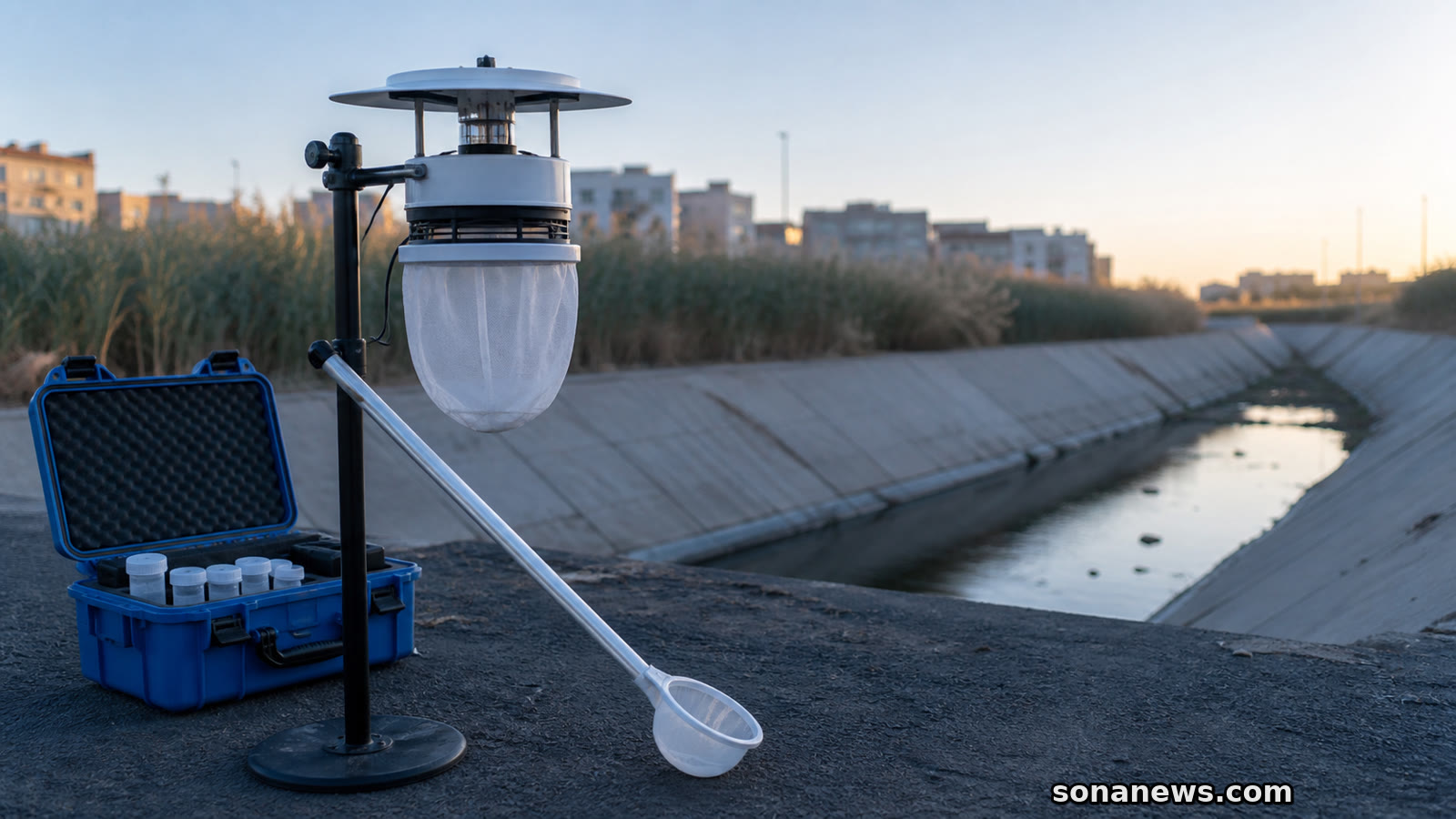

A mosquito trap can answer a narrow question: what is here, and when? It cannot hire an entomologist, secure a multi-year budget or decide which local authority is responsible for acting on the result.
That gap between seeing and doing is the useful finding in a new European Centre for Disease Prevention and Control report. Published on 20 August, the survey describes a patchwork of mosquito surveillance and control across the countries that responded. The map may be getting sharper, but the public-health machinery behind it is not equally mature.
The denominator matters. ECDC sent a questionnaire to official contacts in 30 EU and European Economic Area countries, seven EU enlargement-policy countries and the United Kingdom. It received 26 replies, a 68% response rate. The findings cover those respondents, not every country in Europe, and a missing reply is not evidence that a country lacks a programme.
Within that response set, 17 countries reported surveillance of Culex mosquitoes between 2020 and May 2025, while 12 reported Culex control. These mosquitoes include vectors of West Nile virus. For invasive Aedes mosquitoes, 20 respondents reported surveillance and 17 reported control. Aedes albopictus, often called the Asian tiger mosquito, can transmit dengue and chikungunya viruses under suitable conditions.
Those counts are not a league table. Surveillance can range from active field trapping to passive reports, and control can range from planned measures against immature mosquitoes to action after a locally acquired human case. National agencies, municipalities, universities, private contractors and landowners may each hold a piece of the work. A country saying that it does both does not mean every district has the same service or that each intervention has been evaluated in the same way.
The report's most revealing detail is therefore not a single total. It is the repeated appearance of short-term funding, unclear responsibility and limited long-term planning. For Culex control, 11 of the 12 responding countries with measures said they used reactive control after cases were detected, while six reported preventive control. ECDC says reactive programmes are often ad hoc. That is a difficult position for a seasonal system: expertise, procurement and local coordination cannot always be assembled as quickly as a mosquito population changes.
The timing is not abstract. ECDC said that 429 locally acquired West Nile virus infections had been reported in nine European countries by 13 August 2026. Six regions reported local infections for the first time. The agency also noted that transmission usually peaks during August and early September, so the figure was a dated seasonal snapshot rather than a final total.
It is equally important not to turn that snapshot into a personal risk forecast. A regional case count does not say that any particular neighbourhood, journey or mosquito bite carries infection. Reporting practices, mosquito species, weather, bird populations and local control all vary. The current numbers explain why preparedness is being tested now, but they do not replace local public-health guidance or clinical assessment.
Control is also more complicated than sending out a spray vehicle. The ECDC report describes measures aimed at larvae as well as adults, with biocidal and non-biocidal methods, environmental management and community involvement used in different combinations. The accompanying Eurosurveillance analysis says evidence on the cost-effectiveness of many methods remains limited. It also points to a narrow authorised toolbox, insecticide resistance and the need to examine ecological and safety effects.
That makes “more control” an incomplete demand. The practical question is which method is appropriate for which species, habitat and stage of an outbreak, under which legal authority, and how its effect will be measured. An intervention that reduces nuisance is not automatically evidence that disease transmission has been reduced. A method suitable for a storm drain may not be suitable for a wetland. Newer approaches, including sterile-insect techniques, remain limited-scale pilots in parts of Europe rather than universal replacements for established work.
The workforce is part of the story too. The survey identifies needs for long-term investment, training, harmonised methods, better data integration and clearer links between surveillance and control. It also calls for coordination across public health, veterinary health, environmental management and urban planning. That One Health language can sound bureaucratic until the setting is considered: West Nile virus circulates between birds and mosquitoes, Aedes habitats sit in built environments, and control products can affect ecosystems as well as target insects.
Individuals and communities still have a role. ECDC includes covering or removing stagnant water around homes, protective clothing, suitable repellents and mosquito-proofing among its public-health measures. But a household routine is not a substitute for trained surveillance, laboratory capacity, local authority and sustainable funding. The new report is valuable precisely because it keeps both scales in view.
Europe's mosquito story is often presented as a climate map or a rising case line. The operational story is less dramatic and more consequential. A trap has to be placed, collected and identified. A signal has to reach the right decision-maker. A response needs an authorised method, a budget and a way to judge whether it worked. Mapping the mosquito is real progress. It is not the same thing as being ready to control it.
Editorial note. This article provides general public-health information and is not medical advice. Mosquito-borne disease risk varies by place, season, species, travel, health history and current local surveillance. Use current local public-health guidance for prevention or exposure questions, and seek advice from a qualified health professional for symptoms or individual health concerns.
Sources
- Source: ECDC, “World Mosquito Day 2026: Europe must upgrade control tools as disease risks rise”, Published 20 August and extracted 21 August 2026. Verified: 429 locally acquired West Nile virus cases in nine countries as of 13 August, six first-reporting regions, seasonal timing, Aedes albopictus establishment and integrated-control framing
- Source: ECDC, “Surveillance and control of Culex mosquitoes and Aedes invasive mosquitoes in Europe: questionnaire findings on current practice and needs”, Published 20 August and extracted 21 August 2026. Verified: questionnaire scope, response denominator, 2020 to May 2025 activity period, Culex and Aedes surveillance/control counts, funding pattern, responsibility, training and evaluation gaps
- Source: Briët et al., Eurosurveillance, “Strengthening mosquito control to manage emerging mosquito-borne diseases”, Published and extracted 20 to 21 August 2026. Verified: limits in cost-effectiveness evidence, authorised tools, resistance, environmental trade-offs, newer-method status and One Health coordination
- Source: ECDC, “Weekly updates: Seasonal surveillance in humans in 2026 for West Nile virus”, Updated and extracted 21 August 2026. Verified: current weekly surveillance remains active; the article retains the explicit 13 August cut-off from the dated ECDC release rather than presenting it as a live total
Help us improve
Was this article useful?
One anonymous tap helps Sona improve future reporting, headlines and source context.
Up next
Tap water, sterile saline and disinfecting solutions do different jobs. Guidance from US health agencies and a UK eye hospital explains why the distinction matters.
Continue readingMore in Health