The health-facility sanitation gap is bigger than a missing toilet
A new WHO and UNICEF report shows why usable, accessible toilets and trained environmental cleaning belong inside the definition of safe care.
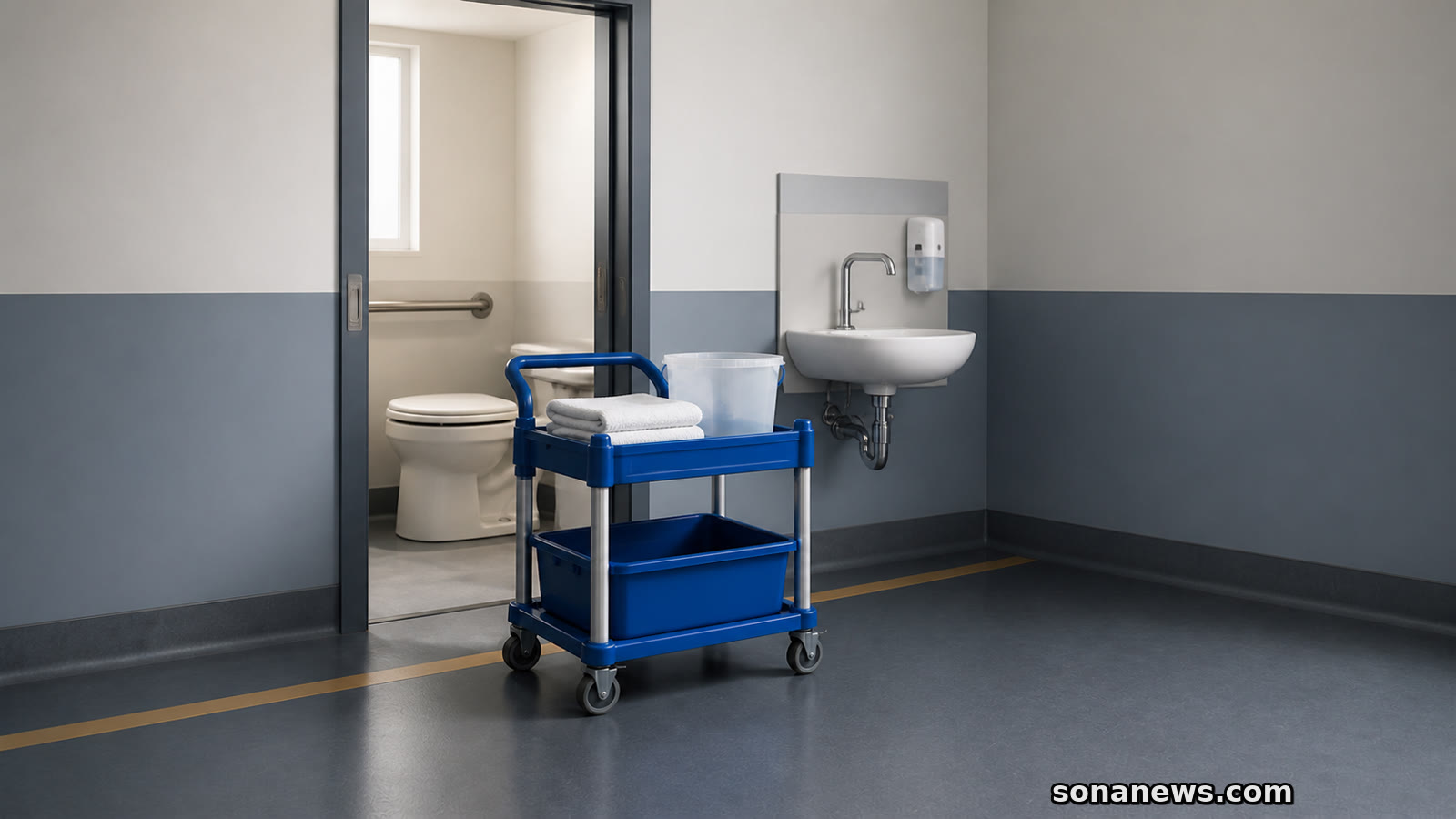

A health clinic can have a working toilet and still fall short of a basic sanitation service. That is not a statistical trick. It is the point of a new global report that asks whether the facility works for patients and staff, rather than merely whether a fixture exists.
The joint WHO and UNICEF monitoring update, published on 18 August, brings water, sanitation, hand hygiene, environmental cleaning and health-care waste management into one picture. Its headline gap is stark: an estimated 40% of health-care facilities met the basic sanitation standard in 2025, while 59% met the basic environmental cleaning standard.
Those percentages need careful reading. The report says 89% of facilities had some form of sanitation and 85% had usable toilets. The 40% figure does not mean that six in ten facilities had no toilet. It means many did not meet every part of the international definition of a basic service.
For sanitation, an improved toilet must be usable, private and functional. Facilities also need separate provision for patients and staff, a sex-separated toilet with facilities for menstrual hygiene, and a toilet accessible to people with limited mobility. Missing any part can move a facility below the basic category. WHO and UNICEF say only about half of facilities had sex-separated toilets, accessible toilets or facilities for menstrual hygiene.
That distinction changes what the number describes. It is not only a construction count. It is a test of whether a person can reach the toilet, use it safely and privately, and find provision suited to their needs. A locked door, broken flush, inaccessible layout or missing menstrual-hygiene facility can make a nominal toilet inadequate in practice.
Environmental cleaning is measured differently, but the same lesson applies. Under the Joint Monitoring Programme definition, a basic service requires cleaning protocols and training for all staff with cleaning responsibilities. A facility with a protocol but only some trained staff is classed as limited. A facility with neither protocols nor trained cleaning staff is classed as having no service.
This indicator does not certify that every surface is clean at every moment. The JMP notes that observed cleanliness can be part of a more advanced national measure. The global basic indicator instead checks whether the system for routine cleaning exists. That makes the 59% estimate a measure of organised capacity, not a photograph of a ward on survey day.
The report says 18% of facilities met neither of the two basic cleaning requirements, corresponding to facilities serving about 1.5 billion people. In the least developed countries, only 24% met the basic environmental cleaning standard. These are population-level estimates, not a diagnosis of any named hospital or a prediction of what will happen to an individual patient.
The other service areas show why a single number cannot summarise the whole facility. In 2025, an estimated 85% of facilities had a basic water service, 72% had basic hygiene services and 71% had basic waste-management services. A facility can meet one threshold and miss another. Water on the premises does not by itself guarantee soap at the point of care, an accessible toilet, trained cleaners or safe segregation of sharps and infectious waste.
That chain matters because infection prevention is operational. WHO describes water, sanitation, hygiene, waste management and environmental cleaning as foundations of safe, quality care. They support hand hygiene, maternity and newborn care, patient dignity, staff safety and the control of health-care-associated infections. They also form part of the response to antimicrobial resistance. None of this means a person can infer their own infection risk from a global coverage estimate.
There are important limits in the new data. This is the first report to publish global estimates for all five basic service areas, including sanitation and environmental cleaning. The number of countries with estimates across all five rose from 29 in the previous update to 39 in 2025, but gaps remain. WHO and UNICEF say global trends could not yet be calculated for sanitation or environmental cleaning. The report can establish a current baseline more confidently than a direction of travel for those two indicators.
Global averages also conceal wide differences between countries, regions and facility types. The JMP combines facility surveys, censuses and administrative sources, then harmonises them against common definitions. That allows a global picture, but it does not turn every clinic into an identical unit. National systems may use additional advanced standards, and local conditions still need local evidence.
The practical value of the report is therefore not a ranking of bathrooms. It is a correction to the habit of counting hardware and calling the job finished. Safe sanitation is a service: the toilet has to work, remain private, be accessible and meet the needs of different users. Cleaning is a service too: staff need an agreed process, training, supplies and support to carry it out repeatedly.
A tap, toilet or trolley is visible. Reliability, inclusion and routine maintenance are harder to photograph. The new global baseline makes them harder to ignore.
Editorial note. This article provides general public-health information and is not medical advice. Global service estimates cannot determine the safety of a particular facility or an individual's infection risk. For concerns about care, symptoms or personal health circumstances, use current local health-system information and consult a qualified health professional.
Sources
- Source: WHO, “WHO/UNICEF report highlights gaps in health facility sanitation”, Published 18 August and extracted 25 August 2026. Verified: 2025 global service estimates; the distinction between some sanitation, usable toilets and the full basic standard; cleaning requirements; least-developed-country figure; data coverage and trend limitations
- Source: WHO and UNICEF, “Progress on water, sanitation, hygiene, environmental cleaning and waste management in health care facilities 2015-2025”, Published and extracted 18 to 25 August 2026. Verified: report scope, publication ownership, five service areas, launch-version status and global overview
- Source: WHO/UNICEF Joint Monitoring Programme, 2026 report portal, Published August and extracted 25 August 2026. Verified: global estimates, interactive-data context and the first availability of estimates for all five basic service areas
- Source: WHO/UNICEF Joint Monitoring Programme, “Health care facilities”, Extracted 25 August 2026. Verified: exact basic-service definitions for sanitation, hygiene, waste management and environmental cleaning; source types and harmonisation caveats
- Source: WHO, “WASH and waste in health care facilities”, Extracted 25 August 2026. Verified: health-care facility scope and the role of WASH services in infection prevention, quality care, maternal and newborn health, antimicrobial resistance and emergencies
Help us improve
Was this article useful?
One anonymous tap helps Sona improve future reporting, headlines and source context.
Up next
Tap water, sterile saline and disinfecting solutions do different jobs. Guidance from US health agencies and a UK eye hospital explains why the distinction matters.
Continue readingMore in Health