FeederWatch counts birds together, not every feeder visit
The winter bird-counting project in the United States and Canada has begun its 40th season. Its most useful beginner rule is not to add up arrivals.
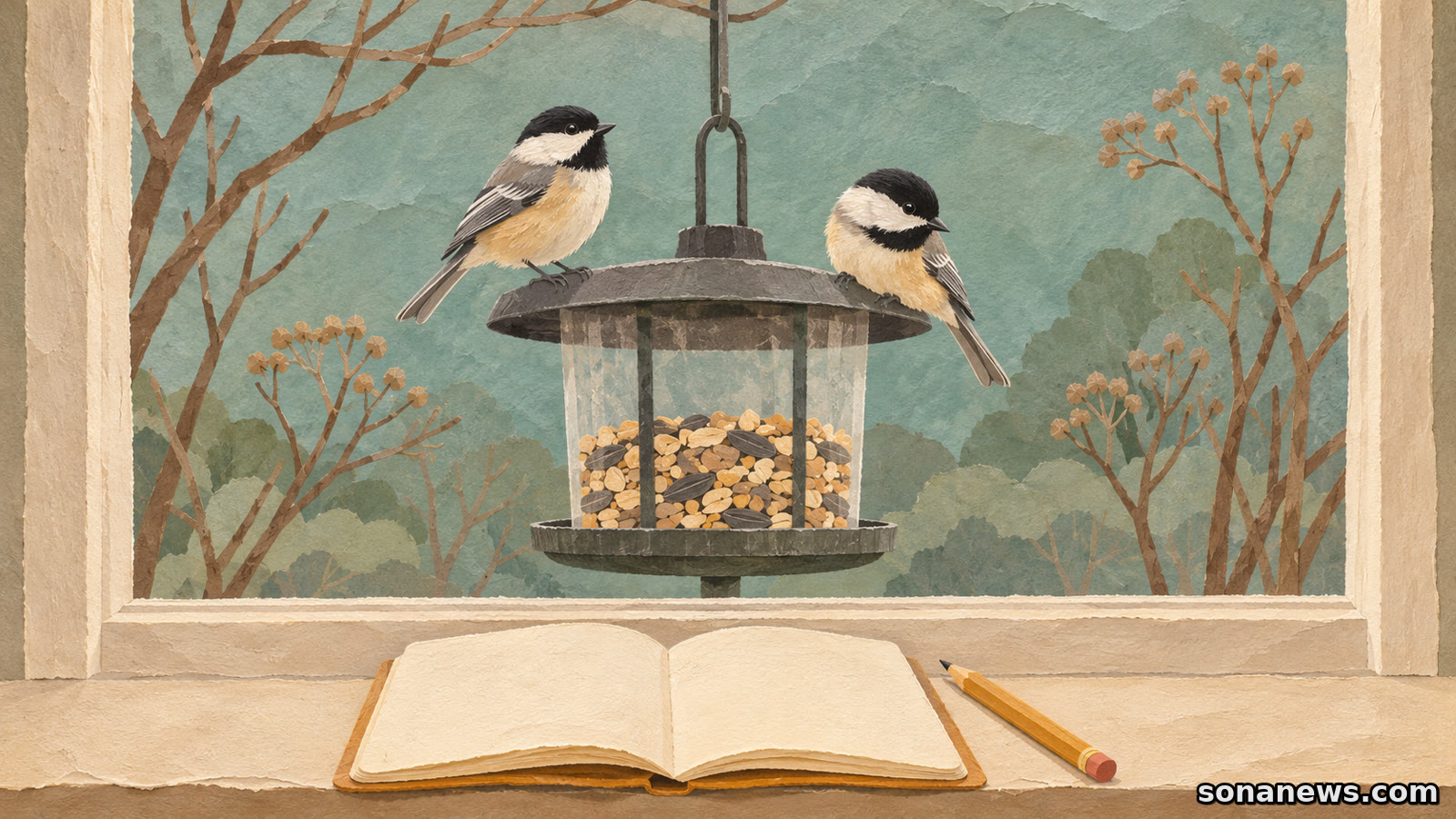

A chickadee can make a feeder look busy without bringing any company. If it returns repeatedly, recording every arrival turns one bird's movements into a much larger tally. Project FeederWatch asks participants to do something different: record the most birds of each species visible at the same time.
That distinction is worth learning as the project begins its 40th season in the United States and Canada. The Cornell Lab of Ornithology announced on 2 November that the season runs from 1 November 2026 to 30 April 2027. Run jointly with Birds Canada, it turns observations at a regular count site into records researchers can use to study winter birds.
The attraction is an ordinary activity with a specific purpose, not a competition to find the rarest visitor or fill a notebook. For someone starting this winter, the key preparation is understanding what a count means. A busy afternoon, a high simultaneous count and a long species list are different things.
Keep the highest number, not a running total of visits
FeederWatch's quick-start guide gives a useful example. Suppose you see two chickadees together in the morning and four together in the afternoon. The tally becomes four, not six. If you see a larger group together on the second day, replace the earlier number with that higher one.
The same record covers both days. You do not start a second total and add it to the first. At the end, submit the largest number of each species you saw simultaneously during that two-day count.
This is also why recognising a returning individual does not change the basic method. The guide says that a male cardinal seen at one time and a female seen later still produce a tally of one if they were never visible together. The project does not keep separate male and female tallies: it needs species counted consistently, including those whose sexes cannot easily be distinguished by appearance.
Nor does the final figure claim to identify every different bird that passed through the garden. It is a maximum simultaneous count under a shared protocol, not a complete census of individual visitors. That limit is part of how the record should be read, not a mistake for an enthusiastic observer to correct by adding more sightings.
Two count days do not mean two days at the window
The count is scheduled across two consecutive days, but watching need not be continuous. The instructions allow participants to look as much or as little as they can, including before or after work. If only one of the two days is available, the project says to observe on that day.
Keep track of actual watching time. An hour spent working in a kitchen with a view of the feeder is not automatically an hour of observation. The detailed guidance says to record only the portion spent looking at the count site. The quick-start guide also asks participants to note whether they watched in the morning, afternoon or both.
The project recommends no more than one two-day count per week, with at least five non-counting days between counts. It also says that infrequent participation is useful, even if someone counts only once during the season. This is a flexible schedule, not a requirement to maintain an unbroken weekly streak.
Pick the days in advance where possible. Do not switch to a count day simply because an unusual bird or a large flock has arrived. That would favour exceptional moments over the more ordinary conditions the project also needs to record.
Count the site, not just the feeder perch
Choose an area you can observe consistently, preferably from one vantage point, and return to the same area through the season. A feeder is not compulsory. The project's guidance includes resources such as bird baths, trees, gardens and other maintained plantings.
The count can therefore include birds attracted to those resources without landing on a feeder. If some birds of a species are feeding while others are visible in a nearby bush within the count site, count the individuals visible together. Looking only at the perch would miss part of the group.
There are boundaries. Birds merely flying over do not count. Neither do birds only heard, observations outside the chosen count days, or birds recorded solely by a camera that the participant did not see personally. These are FeederWatch's rules, not a universal definition of a valid bird sighting for every recording project.
Identification matters more than making the list look complete. If a bird is unfamiliar, the instructions suggest a sketch or photograph, attention to field marks and notes about the sighting, followed by checking a guide. Those notes can support adding the observation later if the species can be identified. They are not a reason to guess at a name before submitting.
A quiet count is still a count
There is a temptation to treat a familiar sparrow or an empty feeder as having nothing to report. FeederWatch explicitly asks for ordinary observations, including reports from people who watched but saw no birds. Ignoring low counts would distort the picture towards unusually busy sites or days.
A zero after watching is different from a day when nobody looked. The detailed instructions provide a specific option for reporting that the feeders were watched but no birds were present. Missing a session should not be turned into a zero observation.
Participants can keep a tally in the FeederWatch mobile app or on paper. The website's data-entry screens are intended for submitting paper tallies, not keeping a live tally throughout the day; the project warns that unfinished entries may not save properly. At the end of the count, make sure the record is submitted rather than merely noted.
For a new participant, the practical sequence is modest: sign up, read the full instructions, define a repeatable site and choose the count days. Then watch what is actually there. The useful record is not the most impressive number a garden can produce. It is the number gathered in the same way as the other records beside it.
Editorial note. This article summarises Project FeederWatch's published counting instructions. Follow its full current protocol and local wildlife guidance; the article is not a bird-feeding or wildlife-handling guide.
Sources
- Cornell Lab of Ornithology, FeederWatch Turns 40: New Film Series Celebrates Why Participants Keep Counting, 2 November 2026
- Project FeederWatch, Instruction summary
- Project FeederWatch, Quick-Start Instruction Guide
- Project FeederWatch, Detailed Instructions
- Project FeederWatch, All Counts are Important
Help us improve
Was this article useful?
One anonymous tap helps Sona improve future reporting, headlines and source context.
Up next

Gallery drawing policies differ in London, New York and Melbourne. The materials, paper size and room you choose can all change what is allowed.
Continue readingMore in Lifestyle