Taking a sketchbook to a museum? Check more than the pencil rule
Gallery drawing policies differ in London, New York and Melbourne. The materials, paper size and room you choose can all change what is allowed.
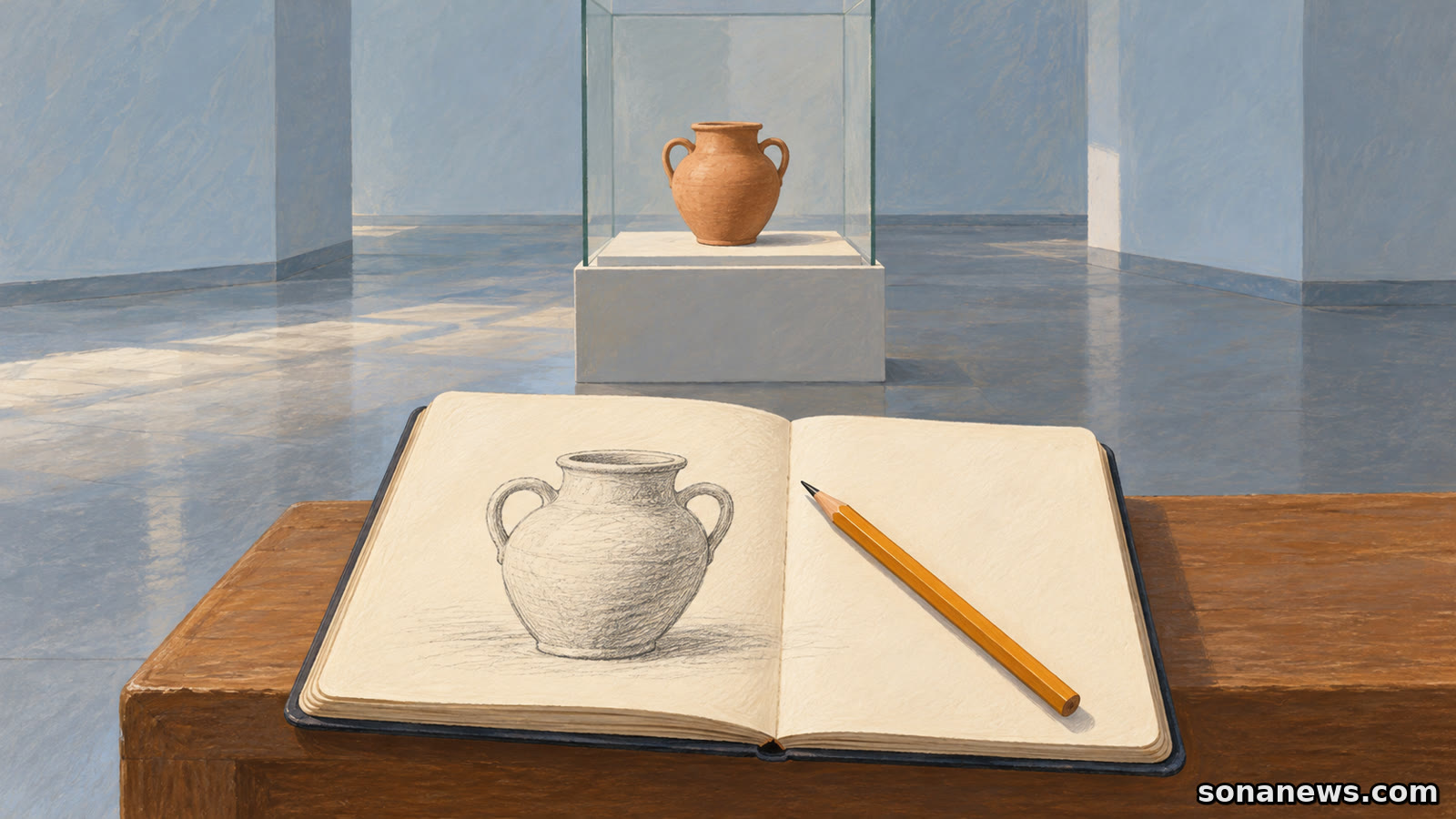

A pencil and a small sketchbook can be enough equipment for a drawing visit to a museum. They are not, however, a universal permission slip. The rules can change between institutions and even between a permanent collection and a temporary exhibition inside the same building.
At New York's Metropolitan Museum of Art, visitors may draw or take notes in pencil, but other marking materials are prohibited. London's National Gallery explicitly allows a wider range, including some pens. Melbourne's National Gallery of Victoria welcomes pencil sketching in its permanent galleries, while warning that loan conditions can rule out writing implements in temporary exhibitions.
The useful question is therefore not simply whether a museum welcomes drawing. It is whether your materials, paper and intended room fit that museum's current arrangements. These three published policies offer a practical way to plan a visit, not evidence of a new restriction or a worldwide rule.
The Met's visitor guidelines are unusually direct: visitors can write, draw or take notes with pencil. Paint, charcoal and markers are not allowed. Its list of things to leave at home also excludes marking materials while making an exception for pencils.
That matters at the packing stage. Permission to sketch should not be read as permission to bring a full studio kit and negotiate over it once inside. The Met says prohibited items cannot be left at its coat check either. A bag containing materials for an outdoor session later in the day could therefore complicate the museum visit before any drawing begins.
London's National Gallery shows why the Met's wording should not become shorthand for every gallery. Its sketching guidance permits pencils, crayons, graphite sticks, ballpoint pens, medium or hard charcoal, fountain pens with an internal reservoir and non-permanent felt-tip pens in rooms displaying paintings.
That is a specific list, not permission for every kind of ink or paint. Someone who normally draws in pen can check their actual tool against it, rather than assuming that all pens are forbidden or that all drawing materials are interchangeable. Permission at one institution does not travel with the pencil case to the next.
The National Gallery of Victoria, or NGV, makes a distinction that is easy to miss when planning around a headline exhibition. Its permanent-collection guidelines require pencils rather than pens, prohibit spray fixatives and varnishes, and limit sketchbooks or paper to A3 size. Easels and paints require written permission in advance.
Temporary exhibitions are a separate question. NGV explains that lenders or insurers regularly impose conditions excluding pens, pencils or other writing implements. Where those restrictions apply, it says they will be signposted at the ticketing desk and exhibition entrance.
This is not a statement that every temporary exhibition bans drawing. It is a reason to check the specific exhibition instead of relying on the permanent gallery's general welcome. A pencil may comply with the usual materials rule and still be unusable in the room you came to see.
If drawing is the main purpose of the trip, ask about that room before buying a ticket or making a long journey. Keep an alternative in mind within the permitted collection. A general visit page cannot confirm that a particular borrowed work will be available to sketch on your chosen day.
Paper size is another condition to check, not a question of how serious an artist you are. London's National Gallery also sets an A3 maximum for sketchbooks or notepaper. A smaller book may be easier to manage, but it does not override rules about where to stand, sit or stop.
The London guidance asks sketchers to move aside when someone else wants to view the painting. It says to spend no more than ten minutes in front of any painting, forbids sketching in doorways or access routes, and warns that visitors may be asked to move to another painting or room when it is particularly busy.
That ten-minute instruction belongs to this gallery's published policy. It is not a recommended concentration span, a scientific threshold or a limit that applies to the Met and NGV. It also changes what sort of drawing session is realistic: an extended study in front of one painting is different from a brief sketch under these conditions.
At the Met, visitors must keep doorways, stairs and hallways accessible and must not sit on the floor. NGV asks sketchers not to obscure works from other visitors or groups and to be mindful of congestion. Finding a good angle on an object is only part of choosing a place to draw; other people still need to see and pass it.
Before leaving, check the museum's current visitor policy and any separate sketching or exhibition guidance. Look for four things: permitted materials, maximum paper size, room-specific restrictions and conditions on positioning or time. If a requirement is unclear, ask the museum rather than treating silence as permission.
For a first attempt, a modest kit and a drawing you can pause are practical choices. That is a planning suggestion, not a claim that any of these institutions requires visitors to be beginners or to finish quickly everywhere. There is no need to pack materials you will not be permitted to use.
The distinction worth keeping is simple: being welcome to draw does not mean being free to set up anywhere with anything. Checking the details leaves the visit focused on the object and the page, rather than on a preventable conversation about what is in the bag.
Editorial note. This article explains the named museums' published visitor policies. Check current arrangements for your intended room and follow staff instructions during the visit.
Sources
- The Metropolitan Museum of Art, Visitor Guidelines. Checked 31 October 2026. Primary New York museum policy: pencil drawing and note-taking allowed; other marking materials prohibited; listed prohibited items excluded from the building and coat check; clear routes and no floor sitting. These are this museum's rules, not a global standard
- National Gallery, London, Sketching. Checked 31 October 2026. Primary London policy: specific permitted drawing materials including some pens and medium/hard charcoal; A3 maximum; no more than ten minutes before a painting; doorways/access routes kept clear and movement when busy. The time limit is reported as an operational rule, not cognitive evidence. Cookie-banner text was excluded from the substantive source review
- National Gallery of Victoria, Sketching and Note-taking Guidelines. Checked 31 October 2026. Primary Melbourne policy distinguishes permanent collection from temporary exhibitions: pencils, A3 maximum, no fixatives/varnishes, advance written permission for easels/paints, consideration for other visitors, and possible lender/insurer restrictions signed at entry. The page describes general arrangements, not permission for a particular current exhibition
Help us improve
Was this article useful?
One anonymous tap helps Sona improve future reporting, headlines and source context.
Up next
The winter bird-counting project in the United States and Canada has begun its 40th season. Its most useful beginner rule is not to add up arrivals.
Continue readingMore in Lifestyle