June’s sky show is low on the horizon
NASA’s June sky guide points to Venus, Jupiter, Mercury, a Moon-Venus occultation and the solstice. The useful lesson is less glamorous: location, daylight and a clear western view decide what anyone actually sees.
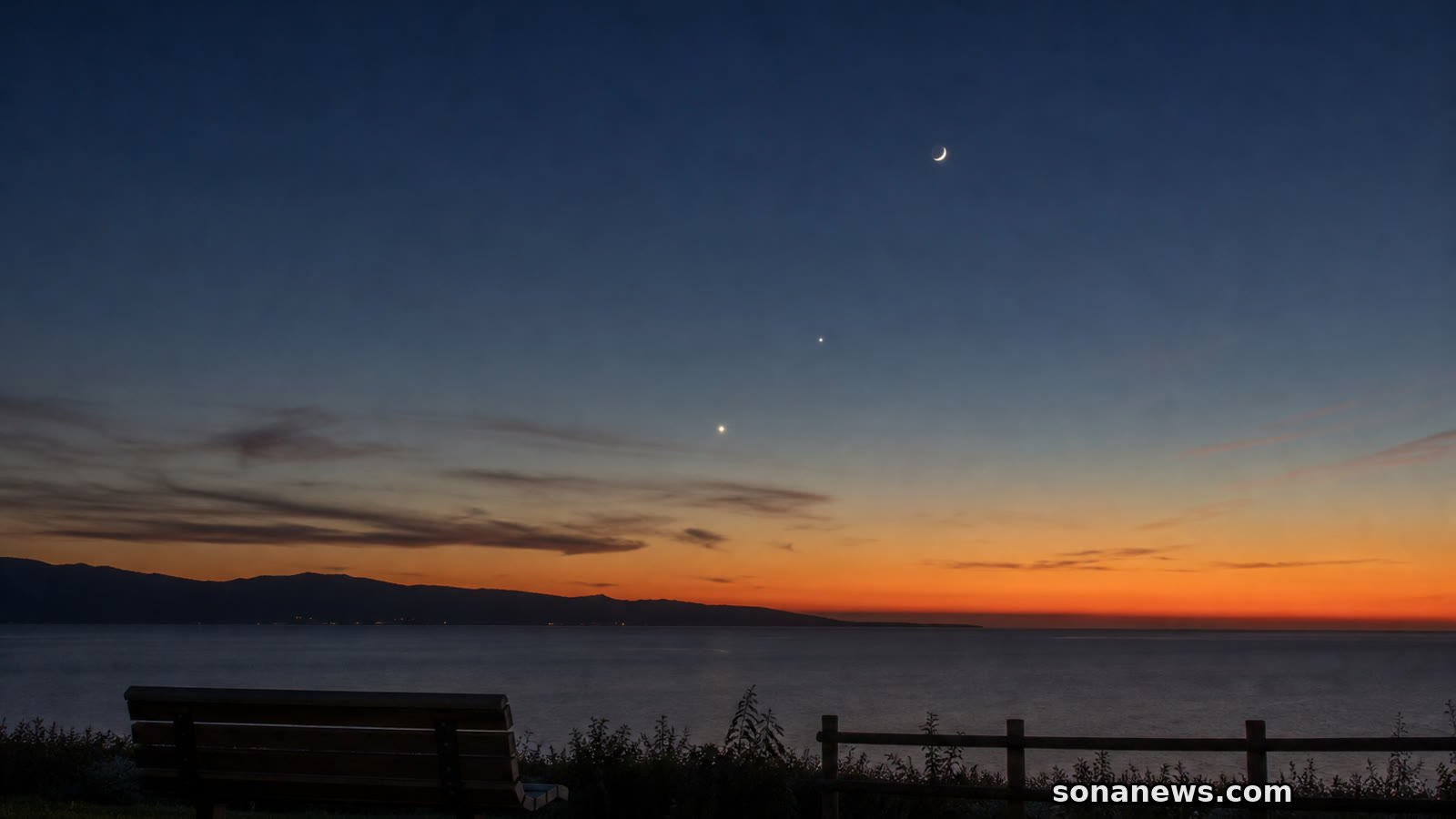

The useful thing about June’s sky is not that it promises a once-in-a-lifetime spectacle. It asks a more ordinary question: can you see the western horizon after sunset?
NASA’s June skywatching guide puts Venus and Jupiter close together low in the west around 9 June. Mercury then joins the scene from 11 to 15 June, making a small evening line-up in twilight. On 17 June, the Moon passes in front of Venus for viewers in some locations. Four days later, the June solstice arrives.
That is enough to produce a lot of breathless sky content. It does not need it. The month is interesting because it shows how astronomy becomes practical the moment a person walks outside. A planet can be bright and still be hard to catch if it is low, the sky is not dark yet, or a building blocks the view.
The Venus-Jupiter conjunction is the simplest part of the story. NASA says the two bright planets appear near each other after sunset around 9 June. They are not physically close in space. A conjunction is a line-of-sight effect: two objects that orbit the Sun at different distances happen to sit near the same direction in our sky. That distinction matters because it keeps a pretty view from being inflated into a cosmic event it is not.
Venus does most of the work for casual observers. It is bright enough to appear soon after sunset. Jupiter should be nearby. Mercury is the more demanding one. NASA notes that Mercury is lower toward the horizon and harder to see, so the June 11 to 15 view depends on a clear western horizon and a short window between sunset glow and planet-set.
That is where the useful reader lesson sits. A person does not need a telescope to enjoy the line-up. They need timing, weather and a place where the western sky is not cut off by trees, flats, hills or a neighbour’s roof. The phrase “planet parade” can make these events sound like a grand procession across the whole sky. This one is smaller and more delicate: bright points gathered low in fading light.
The Moon-Venus event on 17 June is more exacting. NASA says viewers in the right path will see Venus disappear behind the Moon and reappear later, a lunar occultation. It lists parts of the United States, Canada, Brazil and Venezuela among places where the event is visible. In-The-Sky.org’s occultation page gives a wider mapped path, including Mexico, the Caribbean and parts of northern South America, while also showing why the experience changes sharply by location.
The reason is parallax. The Moon is close enough to Earth that its apparent position shifts depending on where the observer stands. A person inside the occultation path may see Venus slip behind the lunar edge. Someone outside it may see only a close Moon-Venus pairing. Both views can be worth noticing, but they are not the same event.
There is also a safety catch, and it is not small print. NASA warns that for many observers the occultation happens during daytime. In-The-Sky.org carries the same basic caution: pointing binoculars or telescopes near the Sun can cause permanent eye damage. The calm version is simple. If the Sun is up or nearby in the sky, unaided eyes and proper solar-safety knowledge matter more than chasing a difficult view through optics.
The solstice gives the month a steadier anchor. NASA’s Night Sky Network says the 2026 June solstice occurs on 21 June at 08:24 UTC, or 1:24 a.m. PDT. The U.S. Naval Observatory seasons service gives the same 08:24 UTC time. In the Northern Hemisphere it is the start of astronomical summer. In the Southern Hemisphere it marks the start of winter.
The mechanism is not mysterious, but it is easy to flatten into calendar trivia. Earth’s axis is tilted, so one hemisphere receives more direct sunlight for part of the year while the other receives less. Around the June solstice, the Sun reaches its northernmost position relative to Earth’s equator. Northern latitudes get their longest days and shortest nights; southern latitudes move the other way.
Even there, the lived detail is less tidy than the date on the calendar. NASA’s June guide notes that the earliest sunrise and latest sunset do not always land exactly on the solstice. In Los Angeles, for example, the earliest sunrise comes before it and the latest sunset after it. The solstice is the astronomical turning point, not a switch that makes every daylight marker move at once.
After the bright planet work, June’s slower sky takes over. NASA points to the Summer Triangle, the pattern formed by Vega, Altair and Deneb, rising into evening view. It also points readers toward deep-sky targets that become better placed as summer evenings settle in. That part of the month has less instant drama, but it may be more forgiving. Stars do not vanish behind the first roofline five minutes after sunset.
So the honest June forecast is modest and rather good. Look west after sunset if the horizon is open. Treat the Moon-Venus occultation as location-specific, not global. Respect the Sun if optics are involved. Let the solstice explain why the evenings feel stretched. The sky is doing several interesting things this month, but the best guide is still the oldest one: stand in the right place, at the right time, and check what is actually above you.
Editorial note. This article is for general skywatching information. If the Sun is above the horizon or close to the target area, do not point binoculars, telescopes or cameras near it unless proper solar safety equipment and observing practice are in place. Follow local astronomy-club or observatory guidance for daytime occultation viewing.
Sources
- NASA Science - "What’s Up: June 2026 Skywatching Tips from NASA" - - extracted 2026-06-08. Verified: Venus-Jupiter conjunction around 9 June; Mercury joining from 11 to 15 June; Moon passing in front of Venus on 17 June for viewers in the right path; June solstice timing; Summer Triangle and deep-sky targets
- NASA Science - "Skywatching Tips From NASA" - - extracted 2026-06-08. Verified: NASA’s skywatching hub, naked-eye and beginner observing context, monthly What’s Up series, planet-parade background and general skywatching framing
- In-The-Sky.org - "Lunar occultation of Venus" - - extracted 2026-06-08. Verified: 17 June 2026 occultation of Venus; location-specific visibility; daylight caution; Moon parallax explanation; mapped regions including the contiguous United States, Canada, Mexico, the Caribbean and parts of northern South America
- NASA Science Night Sky Network - "Tropical Solstice Shadows" - - extracted 2026-06-08. Verified: 2026 June solstice at 08:24 UTC; northernmost Sun position relative to Earth’s equator; Northern Hemisphere astronomical summer and Southern Hemisphere winter; Earth’s axial tilt as the mechanism
- U.S. Naval Observatory - seasons API for 2026 - - extracted 2026-06-08. Verified: official 2026 June solstice entry on 21 June at 08:24 UTC
Help us improve
Was this article useful?
One anonymous tap helps Sona improve future reporting, headlines and source context.
Up next
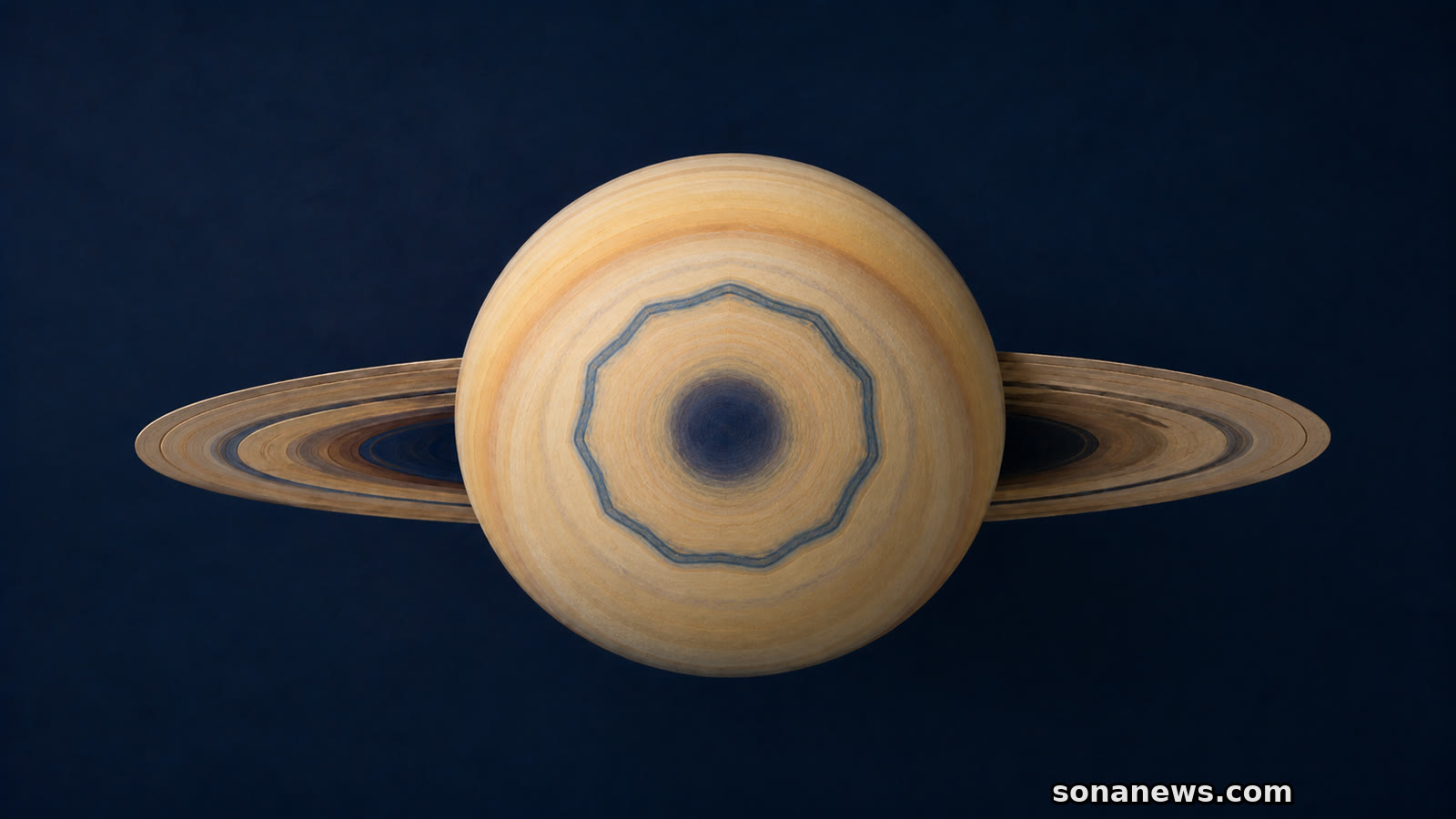
Hubble data trace a 10-sided atmospheric wave from faint 2023 hints to a clearer 2025 pattern. Its slow drift and 32-day wobble do not yet explain why it formed.
Continue readingMore in Space