The airport liquids rule now depends on the airport
New scanners are changing cabin-bag security unevenly, so the familiar 100ml habit is being replaced by a check of the airport, transfer point and return journey.
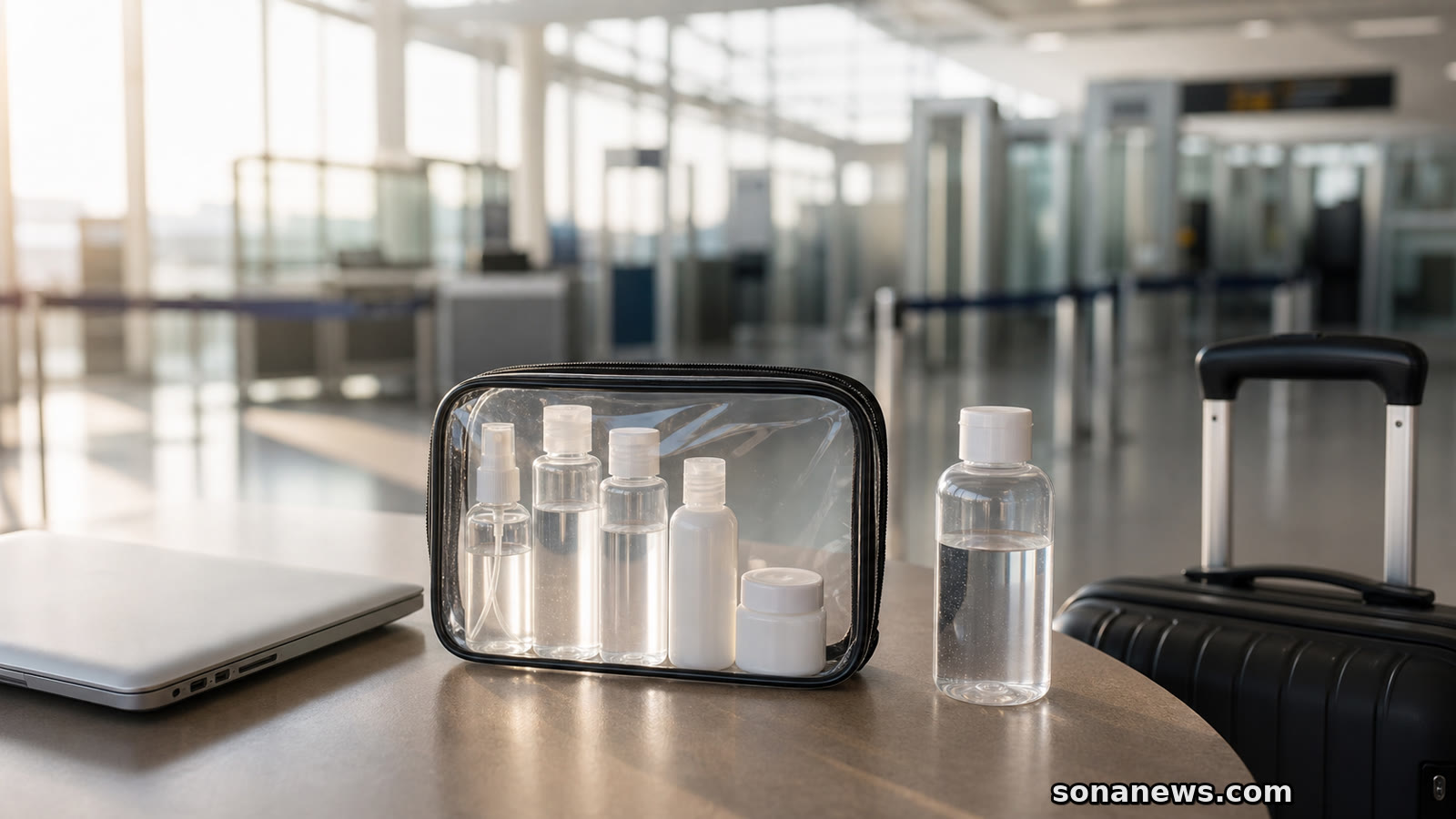

The old airport ritual was annoying, but at least it was simple. Small bottles. Clear plastic bag. Laptop out. Water bottle emptied or binned before the queue. A traveller could dislike the rule and still know roughly what the security table was going to demand.
That certainty is now fraying. Official UK guidance says the rules for taking liquids through security in hand luggage depend on the airport. At most airports, containers larger than 100ml still cannot go through security, even if they are only part full. At some airports, containers holding up to 2 litres may be allowed. The important word is not “scrapped”. It is “some”.
This is the awkward middle stage of an airport technology change. Newer security scanners can build more detailed images of bags and, when airports are authorised to use the changed process, can reduce the old need to separate liquids and large electrical items. The Department for Transport described the programme as one that could eventually spell the end of tiny toiletries at major airports. It also granted extensions to some airports that needed more time to install the equipment, citing the complexity of the work and urging passengers to keep checking rules before travel.
For travellers, the result is a rule that no longer fits neatly on a single packing list. The bottle that passes through one airport may not pass through another. A departure airport may be using one process while a transfer point uses another. The return journey may be different again, especially outside the UK. GOV.UK makes that practical point clearly: check the airport you are flying from, any other airports you will travel through, and the return journey.
The problem is not only the size of a shampoo bottle. It is the mental shortcut. Once people hear that scanners have changed, it is easy to translate that into “the liquid rule has gone”. The official wording is more cautious. Some airports may allow larger containers. Some may no longer require a separate transparent bag. Others still apply the familiar 100ml limit, one resealable bag per person, and a visible bag at the security point if requested.
That unevenness is why the safest public explanation is boring rather than dramatic: airport security is in transition. It does not help readers to pretend the old rule is dead everywhere. It also does not help to ignore the change, because many passengers will increasingly meet airports where the security lane looks and feels different from the one they remember.
There are exemptions that sit outside the ordinary toiletries problem. GOV.UK says liquid containers up to 2 litres can be taken through security at all UK airports when they are for essential medical purposes, special dietary requirements, or baby food and baby milk, with the relevant screening and documentation expectations applying. Duty-free liquids can also pass through when sealed in the required security bag with the receipt visible. Those exceptions matter, but they do not turn a full-size cosmetic bottle into a universal carry-on item.
The international piece is just as important. The UK guidance warns that countries outside the UK may have different rules for liquids, including for transit or transfer passengers. Northern Ireland’s official nidirect guidance frames it in the same practical way: liquid rules depend on the airport, including departure, transit and return airports. That is a small sentence with large consequences for anyone building a cabin-bag-only trip around one airport’s new scanner policy.
The change also exposes a broader travel habit. People often pack for the airline first: bag dimensions, weight limit, personal item, overhead space. Security is treated as a nuisance at the end. The new liquids landscape reverses that order slightly. The airport security page now belongs next to the airline baggage page, not as an afterthought opened in the taxi.
Carry-on-only trips feel the change most sharply. A family sharing toiletries, a traveller with specialist skincare, or someone trying to avoid checked-bag fees may all build the bag around one set of assumptions. The official guidance does not turn those assumptions into permission. It asks for a route-by-route check. That is less convenient than a universal rule, but it is also more honest about how airport security changes in real life: one terminal, one scanner installation and one local process at a time.
None of this makes the queue more romantic. A 100ml bag is still a silly-looking object in a world of biometric gates and long-haul aircraft. But the rule is becoming less uniform before it becomes simpler. Until the transition is genuinely finished and consistent, the practical question is not “Has the 100ml rule ended?” It is “Which airport am I actually using, including on the way home?”
Editorial note. This article is general travel information based on official sources available at publication time. Airport security rules can change, and individual itineraries can involve multiple airports and jurisdictions. Travellers should check the official pages of their departure, transfer and return airports, plus airline guidance, before packing cabin baggage.
Sources
- Source: "Hand luggage restrictions at UK airports: Liquids", GOV.UK, Extracted 2026-06-19. Verified: liquid definitions, airport-dependent rules, 100ml limit at most airports, possible 2 litre allowance at some airports, transparent bag rules and exemptions
- Source: "Hand luggage restrictions at UK airports: Overview", GOV.UK, Extracted 2026-06-19. Verified: general UK hand-luggage framework, instruction to check liquid rules before travel and warning that rules have changed at some UK airports
- Source: "Air travel hand baggage and hold luggage rules", nidirect, Extracted 2026-06-19. Verified: official Northern Ireland guidance that liquid rules depend on airport, with departure, transit and return journeys needing checks
- Source: "Airports granted extensions to install cutting-edge security technology", Department for Transport via GOV.UK, Extracted 2026-06-19. Verified: scanner rollout context, case-by-case extensions, transition complexity and passenger advice to check airport and airline restrictions
- Source: "Passengers to benefit from biggest shake-up of airport security rules in decades", Department for Transport via GOV.UK, Extracted 2026-06-19. Verified: policy aim of new CT screening technology, expected 2 litre future allowance at upgraded airports, gradual rollout and continued need to check specific airport rules
Help us improve
Was this article useful?
One anonymous tap helps Sona improve future reporting, headlines and source context.
Up next
A new official warning says ham sandwiches, pork dumplings and inflight leftovers should be discarded or declared before customs.
Continue readingMore in Travel