China’s 10-day transit stay now starts with the port check
China’s 240-hour visa-free transit policy can make a stopover feel like a short trip, but eligibility still turns on nationality, a third-country route and designated ports.
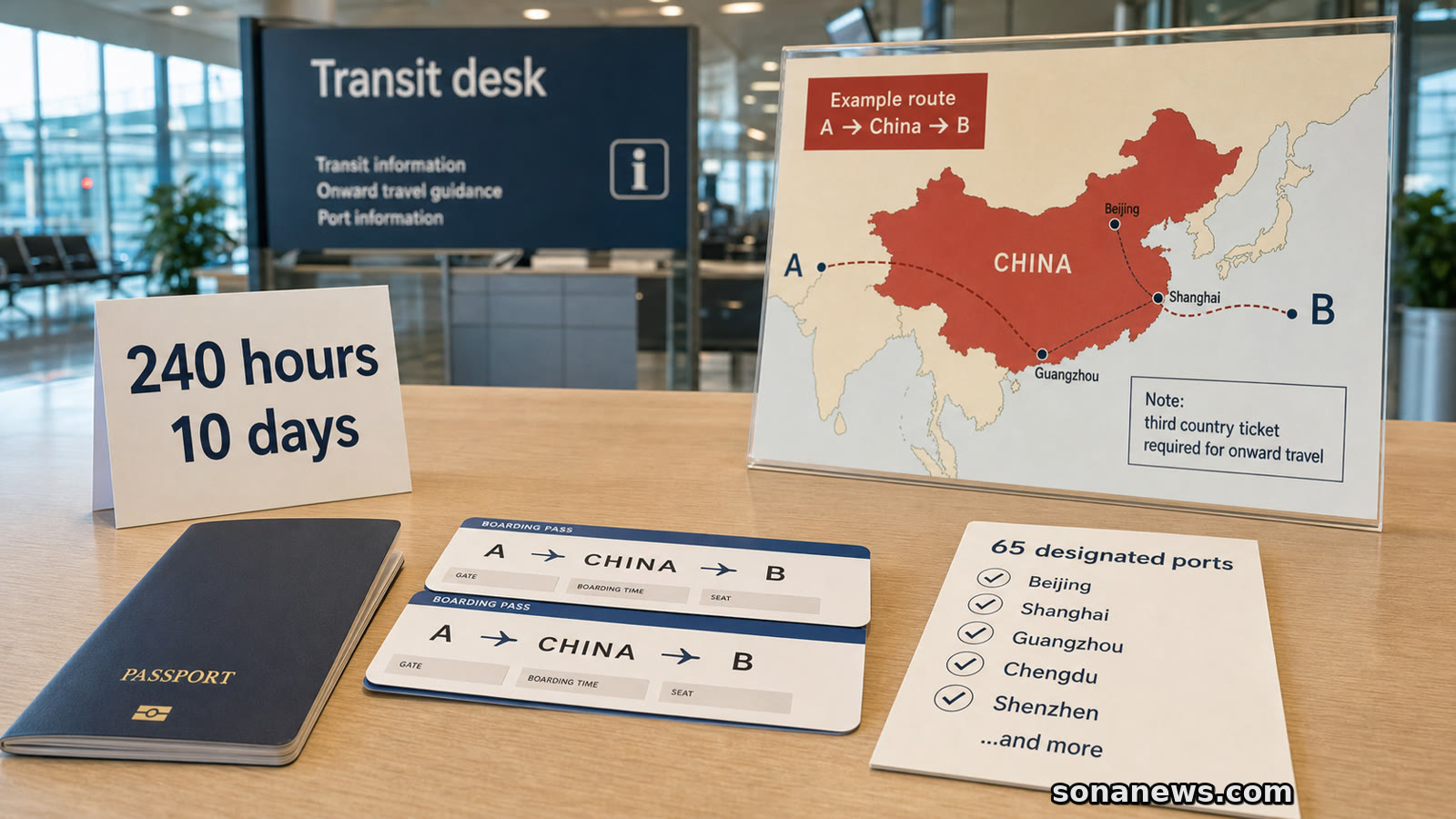

China’s 240-hour visa-free transit policy sounds, at first, like a simple travel invitation. Ten days is long enough to turn a long connection into a proper city break, a family visit or a short business detour. The important word, though, is still transit. The official rules are not framed as a blanket visa-free holiday. They are built around a particular route, a designated port, a permitted area and an onward ticket to a third country or region.
The current National Immigration Administration policy interpretation says China is implementing the 240-hour policy for nationals of 55 countries, including the United Kingdom and the United States. Those travellers may enter visa-free through designated open exit-entry ports in 24 provincial-level areas and stay in the permitted areas for no more than 10 days, provided they hold valid international travel documents and onward tickets with confirmed seats and departure dates. That sentence carries most of the practical story.
The first check is not how many hours are available. It is whether the itinerary is genuinely a transit itinerary. Official NIA wording repeatedly ties the policy to people passing through China to a third country or region. A traveller flying from Paris to Shanghai and then on to Singapore sits in a different category from a simple out-and-back city break. The route, the onward ticket and the port conversation come before the sightseeing plan.
That route-based logic can make a stopover behave less like a normal city break and more like a connection with conditions. A hotel booking, train ticket or meeting schedule does not fix a weak transit chain. If the onward segment changes, the eligibility question may change too, because the official wording is tied to confirmed departure arrangements rather than an open-ended intention to leave. That is why the port and carrier document check can feel like part of the journey, not a bit of paperwork after it.
The second check is the port. In November 2025, the NIA announced five additional Guangdong entry points for the 240-hour policy: Guangzhou Pazhou Ferry Terminal, Hengqin Port, the Hong Kong-Zhuhai-Macao Bridge Port, Zhongshan Port for passengers and West Kowloon Station on the Guangzhou-Shenzhen-Hong Kong Express Rail Link. The same announcement said the number of applicable entry ports rose from 60 to 65. That matters because the expanded map makes some Hong Kong, Macao and Greater Bay Area routings look more practical, while still leaving the policy tied to specific entry points rather than any convenient border crossing.
The third check is geography after entry. The December 2024 expansion moved the maximum stay from the earlier 72-hour and 144-hour systems to 240 hours and expanded the covered provincial-level areas from 19 to 24. It also allowed cross-province travel within approved areas. That last phrase is easy to flatten in casual travel chatter. Cross-province travel is not the same as free movement across the whole country in any pattern. The official framing remains travel within the allowed areas for visa-free transit travellers.
There is also a separate 24-hour transit rule, and it is worth keeping it mentally separate. The same November 2025 NIA package expanded a 24-hour visa-free direct-transit process at 10 airports for people with international interline tickets who transit to a third country or region without leaving the airport. That is a different, narrower airport-transfer scenario. A passenger staying airside for a same-day connection is not making the same administrative bet as a passenger entering China for several days under the 240-hour policy.
Paperwork is becoming more digital, but it is not disappearing. From 20 November 2025, the NIA says foreigners may fill in relevant entry information online before coming to China through the official website, government service platform, NIA 12367 app, WeChat or Alipay mini programme, or by scanning a QR code. People who cannot fill it in before arrival may complete the process at the port by mobile phone, smart device or paper Arrival Card. That online card is a useful process layer, not a substitute for the route, nationality and port conditions.
For trip planning, the reader-service value is in reducing the policy to four moving parts: passport nationality, designated entry port, allowed stay area and onward third-country or regional ticket. Airlines may also make their own document checks before boarding, and immigration decisions are made by the relevant authorities at the port. A bargain fare with a 10-day gap is only attractive if those pieces line up cleanly.
The broader travel shift is real. China has made the stopover more usable for many visitors by stretching the clock to 240 hours, expanding the port map and adding online entry information. Yet the policy is still exact. The calm way to read it is not “visa-free China”, but “a time-limited transit entry when the route and paperwork fit”. For a stopover, that difference is the trip.
Editorial note. This article is general travel and immigration-system information based on official sources available at publication time. It is not personalised legal, immigration, customs, safety or financial advice. Eligibility, routing, documents, port procedures and permitted areas can change and can depend on nationality, itinerary, tickets and border decisions, so travellers should verify their own position through official Chinese guidance, their carrier and relevant consular channels before relying on visa-free transit.
Sources
- Source: "Visa-Free Transit Policies", National Immigration Administration of China, Extracted 2026-06-26. Verified: 24-hour transit framing, current 240-hour policy for nationals of 55 countries, designated 65 open exit-entry ports in 24 provincial-level areas, no more than 10 days, valid international travel documents, onward tickets with confirmed seats and departure dates, permitted activities and activities requiring visas
- Source: "Announcement on Implementing 10 New Measures to Support the Expansion of Opening-up and Serve High-quality Development", National Immigration Administration of China, Extracted 2026-06-26. Verified: five Guangdong ports added from 5 November 2025, 240-hour port count increased from 60 to 65, eligible travellers need valid documents and onward arrangements to a third country or region, online Arrival Card from 20 November 2025 and available completion routes
- Source: "China Extends 240-hour Visa-Free Transit Policy Coverage to 55 Countries with New Addition of Indonesia", National Immigration Administration of China, Extracted 2026-06-26. Verified: Indonesia added from 12 June 2025, 55 eligible countries total, valid travel documents, interline tickets with confirmed dates and seats, up to 10 days and permitted travel, business, exchange and family-visit activities
- Source: "China's visa-free transit policy fully relaxed and optimized", State Council of China, Extracted 2026-06-26. Verified: December 2024 expansion from 72 or 144 hours to 240 hours, increase from 39 to 60 ports at that time, expansion from 19 to 24 provincial-level areas and cross-province travel within approved areas
Help us improve
Was this article useful?
One anonymous tap helps Sona improve future reporting, headlines and source context.
Up next

A new official warning says ham sandwiches, pork dumplings and inflight leftovers should be discarded or declared before customs.
Continue readingMore in Travel