The flight power bank now comes with a cabin rule
ICAO’s 2026 specifications limit personal power banks to two per passenger and stop them being recharged in flight, turning a small charger into a check-before-boarding item.
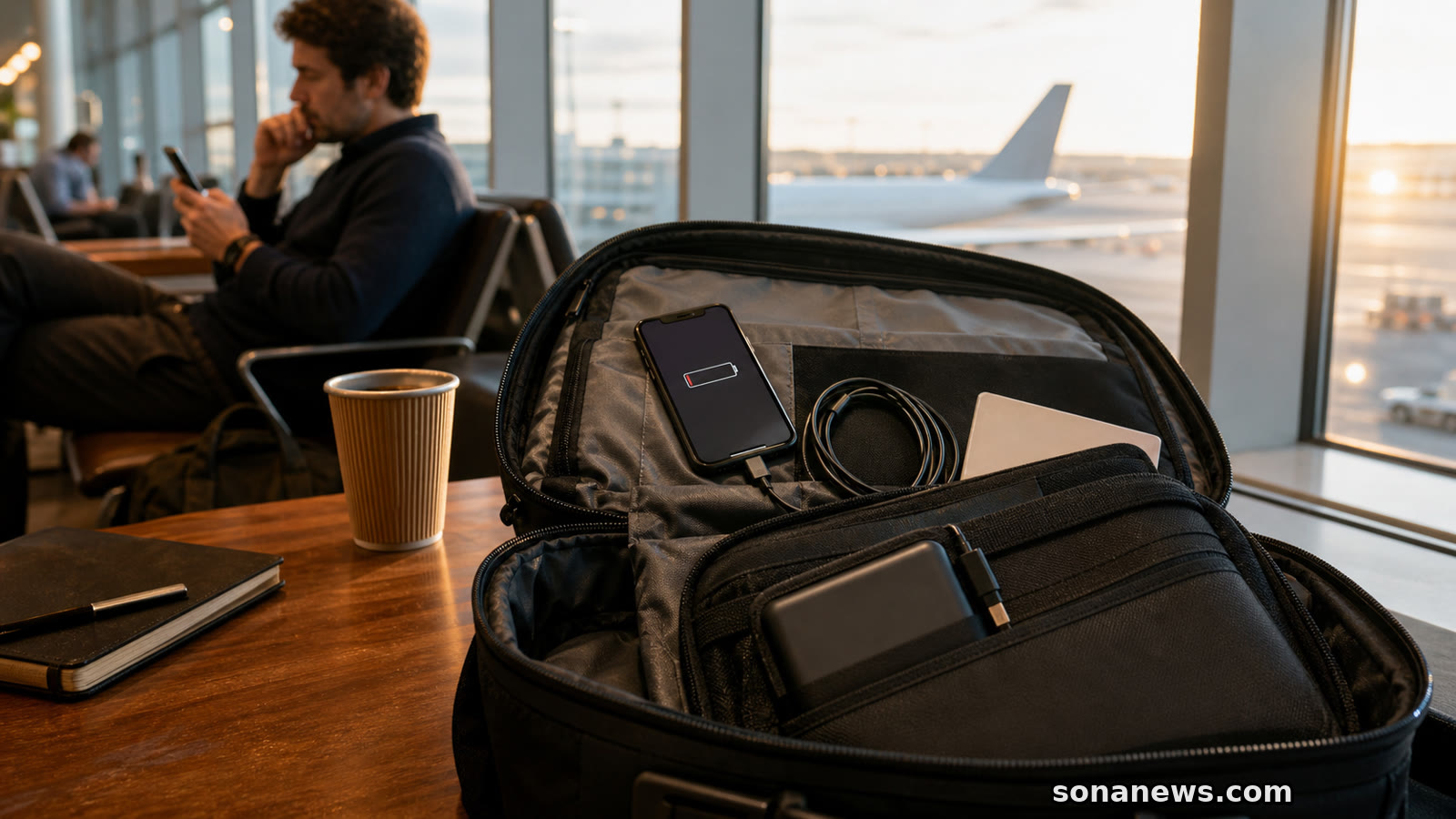

For years, the travel power bank sat in the same mental drawer as lip balm and headphones: useful, slightly annoying to find at the bottom of a bag, and not worth much thought until a phone battery turned red. That casual status is changing. The portable charger is becoming a cabin item with its own rules, its own quantity limit and a growing list of airline habits around where it can be kept.
The formal shift came from the International Civil Aviation Organization. On 27 March 2026, ICAO said new specifications for lithium battery-powered power banks would take effect, limiting these devices to two per passenger and prohibiting passengers from recharging the power banks during flights. ICAO framed the change as a response to emerging expertise around risks presented by passengers’ lithium batteries, with its Dangerous Goods Panel and Air Navigation Commission involved in amendments to the Technical Instructions for the Safe Transport of Dangerous Goods by Air.
This is a small rule with a large practical reach. A power bank is not simply another electronic accessory once it is on an aircraft. It is a spare lithium battery in a consumer-friendly case, often bought cheaply, sometimes poorly labelled, and sometimes carried loose with cables, keys or coins. Aviation regulators care about where those batteries are because a battery problem in the cabin can be seen and managed more quickly than one buried in checked baggage.
IATA’s 2026 operator guidance makes the practical outline clearer. For passengers and crew carrying power banks for personal use, the guidance says power banks must be in carry-on baggage, must not be recharged onboard, no more than two may be carried per person, and each one must be individually protected against short circuits when not in use. It also says power banks should not be used to recharge a portable electronic device onboard. That last point is worded as a recommendation in the IATA summary, but individual airlines may turn similar safety concerns into stricter onboard rules.
For travellers, the result is not a single universal airport script. It is a new reason to read the airline page before assuming the old routine still works. Some carriers may focus on the ICAO baseline: two power banks, cabin only, no recharging the charger. Others may be more restrictive about using a power bank to charge a phone during the flight, or about keeping it in an overhead bin rather than under the seat or in a visible pocket. The broad direction is still legible: a portable charger belongs somewhere accessible, not lost in checked luggage or sealed away where crew cannot quickly respond.
The familiar watt-hour number still matters. U.S. checkpoint guidance from TSA says spare lithium batteries, including power banks and portable rechargers, must be carried in carry-on baggage only. It lists a 100 watt-hour limit for lithium ion rechargeable batteries in the common category and notes that the final checkpoint decision rests with the TSA officer. In plain terms, a typical pocket charger may be routine, but the rating, labelling and airline policy are not decorative details.
The rule also exposes a weakness in how people pack for flights. Many travellers build the electronic side of a trip at the last minute: one charger in a checked suitcase, one cable in a laptop sleeve, one battered battery pack in a coat pocket, and no clear idea of the capacity printed on the case. That worked badly enough when the worst outcome was a flat phone at arrivals. It works even worse when the object is part of a dangerous-goods rule.
There is a calm way to understand the change. This is not a ban on ordinary travel chargers. It is the aviation system moving power banks out of the invisible background and into the same category as other items that need to be packed intentionally. The power bank should be countable. Its rating should be readable. Its terminals or ports should be protected from short circuit. It should not be treated as something that can disappear into a checked bag simply because the carry-on is full.
There is also a Discover lesson here beyond batteries. Modern travel is increasingly dependent on small pieces of personal infrastructure: phones for boarding passes, banking apps, hotel messages, eSIMs, maps and arrival forms. The power bank became popular because that dependence is real. Now the charger that protects the trip from a flat phone has become part of the safety routine itself.
The most useful travel rules are often the ones that look boring before they matter. In 2026, the power bank is one of them. It is still a small rectangle in a bag, but it now sits in a larger chain: manufacturer quality, watt-hour marking, carry-on screening, airline cabin policy and crew access in flight. The next time a traveller packs one, the question is not only whether it will save a phone at the gate. It is whether it is packed as cabin equipment, not as an afterthought.
Editorial note. This article is general travel-planning information based on official aviation and screening sources available at publication time. It is not legal, immigration or personalised safety advice. Airline policies, national screening rules, battery capacity limits and onboard crew instructions can change, so travellers need to check the current rules for their route, airline and airport before flying.
Sources
- Source: "New power bank restrictions will safeguard international aviation", International Civil Aviation Organization, Extracted 2026-06-16. Verified: ICAO decision date, 27 March 2026 effective date, two-power-bank limit, prohibition on recharging power banks during flights, Dangerous Goods Panel and Air Navigation Commission context, and distribution of the addendum to ICAO Member States
- Source: "Passengers Travelling with Lithium Batteries: IATA Guidance on Power Banks", IATA PDF, Extracted 2026-06-16. Verified: carry-on-only requirement, no onboard recharging of power banks, recommendation against using power banks to recharge devices onboard, two per person, short-circuit protection and distinction between power banks and spare batteries
- Source: "Lithium batteries with 100 watt hours or less in a device", Transportation Security Administration, Extracted 2026-06-16. Verified: spare lithium batteries including power banks must be carried in carry-on baggage only, 100 Wh lithium ion limit in the common category, and final TSA officer discretion at the checkpoint
- Source: "Doc 9284", International Civil Aviation Organization, Extracted 2026-06-16. Verified: Doc 9284 is ICAO’s Technical Instructions for the Safe Transport of Dangerous Goods by Air and the 2025-2026 edition lists Addendum No. 1 dated 27 March 2026
Help us improve
Was this article useful?
One anonymous tap helps Sona improve future reporting, headlines and source context.
Up next

A new official warning says ham sandwiches, pork dumplings and inflight leftovers should be discarded or declared before customs.
Continue readingMore in Travel