Japan’s Shinkansen luggage racks do not replace oversized-bag booking
Some train-deck storage is available without a reservation, but a suitcase over 160 cm in total dimensions still needs the right seat on the Tokaido-Sanyo-Kyushu route.
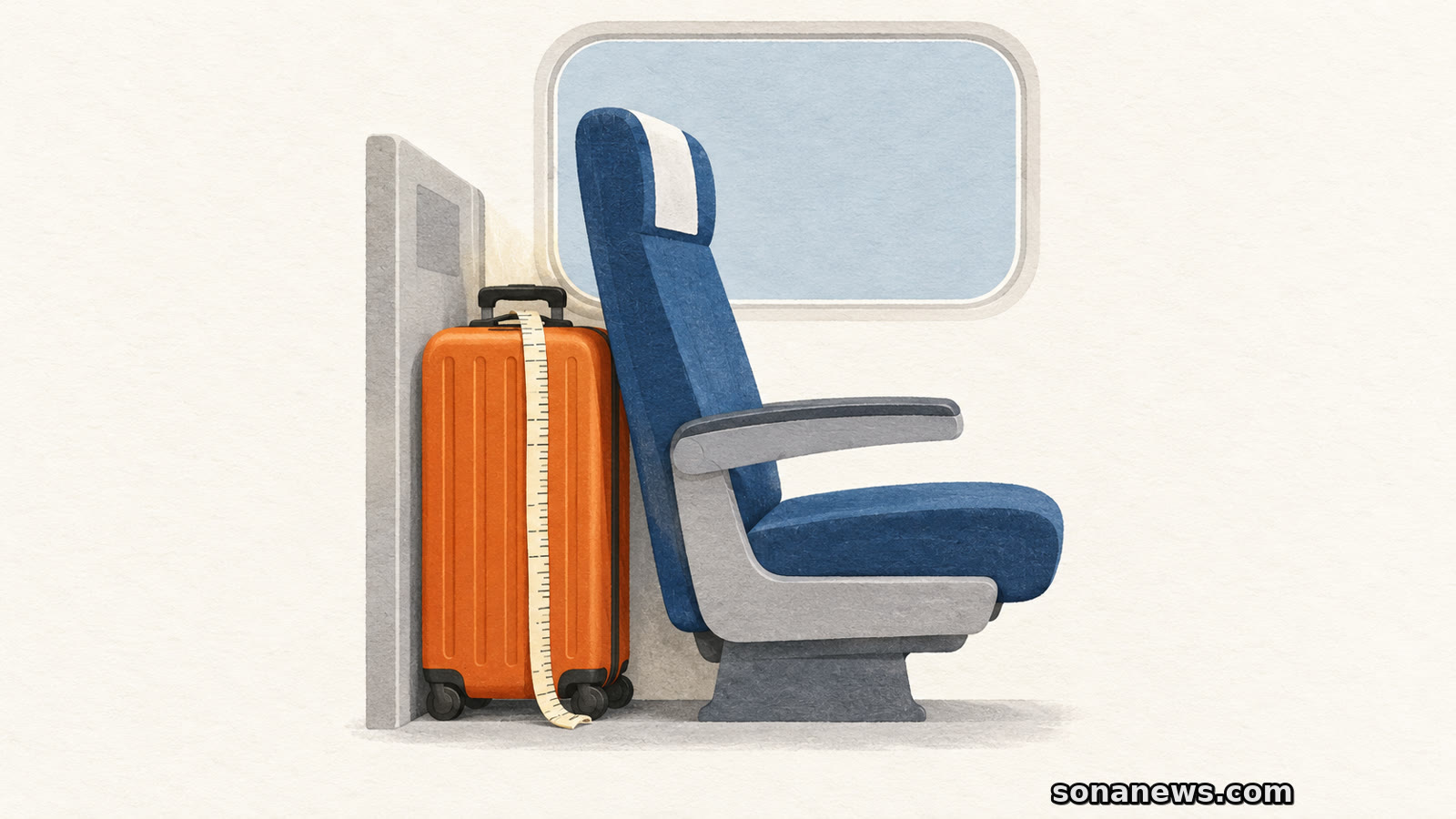

A luggage rack available without booking sounds like one less thing to arrange before a train journey in Japan. For passengers carrying an oversized suitcase on the Tokaido-Sanyo-Kyushu Shinkansen, it is not a substitute for reserving the right seat.
JR Central and JR West draw a distinction that is easy to miss: some storage compartments on the train decks are available without a reservation under a trial, but baggage measuring more than 160 cm across its three dimensions still requires a seat with an oversized baggage area. That area is the space behind designated seats, not simply any empty rack a passenger finds after boarding.
For a Tokyo, Kyoto or Osaka itinerary, the practical issue is therefore not just whether the suitcase can travel. Its size can affect which seat needs booking, and potentially which departure has suitable space. The free-to-use storage trial has not removed that requirement.
The key measurement is length plus width plus height. JR Central’s current guidance places ordinary baggage totalling 160 cm or less in one group, and oversized baggage above 160 cm and up to 250 cm in another. A case’s advertised height alone does not establish which group it belongs to.
The distinction matters because “large suitcase” is not a booking category. A bulky case may still fall within the smaller group, while a case that looks manageable can cross the threshold when all three dimensions are added. The railway’s test is the total, not the label on the luggage shop’s shelf.
There are other limits too. JR Central’s personal-belongings rules allow two carry-on items, each within 30 kg, with total dimensions no greater than 250 cm and a length no greater than two metres. Small on-hand possessions such as umbrellas, canes and purses do not count towards that two-item limit. Reserving baggage space does not waive the ordinary suitcase limits.
The oversized-baggage reservation system applies to the Tokaido, Sanyo, Kyushu and Nishi Kyushu Shinkansen. It is not a rule for every train in Japan. JR Central and JR West say conventional-line trains do not require this particular advance reservation. Other services still have their own baggage conditions.
The wording on the operators’ websites needs care. An oversized baggage **area** is behind designated seats in the last row of some cars. Reserving a seat with that area gives the passenger access to the associated luggage space. It is shared space, not a private locker or the whole width behind the row for one suitcase.
An oversized baggage **compartment** is a separate deck storage facility. JR West says that, from 1 July 2025, compartments on some decks became luggage storage areas available without prior reservation on a trial basis. Both operators’ pages still carry a warning that passengers with baggage over 160 cm need to reserve a seat with an oversized baggage area.
JR Central’s current overview makes the split clearer: large or heavy baggage totalling 160 cm or less can use the deck storage area without a reservation; oversized baggage belongs in the space behind the designated seats. The trial is not described as universal storage on every train or in every carriage.
Some lower sections of the operators’ pages retain older references to booking a “compartment”. The prominent trial notices should not be read as permission to place an oversized suitcase anywhere. For a specific journey, the booking options and the operator’s current guidance are more useful than an old screenshot showing a different storage arrangement.
For an ordinary reserved seat or a Green car reserved seat, the operators say there is no additional charge for reserving the oversized baggage area. This does not mean an unreserved-seat ticket acquires reserved-seat benefits for free. The relevant reserved-seat fare still applies.
The area can be requested through the operators’ supported online booking services, a reserved-seat ticket machine or a JR ticket counter. At a counter, JR Central tells passengers to say that they need a seat with an oversized baggage area. Its guidance also covers Japan Rail Pass users making the reservation at a station.
A seat being available somewhere on the train is not proof that an oversized-baggage seat remains available. If the designated seats are full, the operators’ advice is to reserve suitable space on another departure. They recommend booking early because some trains sell out.
Nor is the ¥1,000 baggage fee a reliable pay-on-board alternative. JR Central says passengers who bring oversized baggage without a reservation must pay the fee and store it where the conductor directs. Its FAQ also says that, if the seats are full, passengers will be asked to reserve another train. Paying a charge does not guarantee the journey originally intended.
Being below the threshold does not make every storage position suitable. JR Central’s personal-belongings rules say heavy or unstable luggage must not go on the racks. Its luggage guidance allows passengers who need extra space to reserve a seat with an oversized baggage area even when their bag is smaller, while asking people to remember that these seats are limited.
Strollers, sports equipment and musical instruments have separate treatment: the oversized-baggage reservation rule does not automatically apply to them in the same way as to a suitcase. However, a reservation is still needed to use the designated oversized baggage area. The exception concerns the item, not unrestricted access to somebody else’s reserved space.
A changed train is another point where the seat and suitcase can become separated administratively. JR Central says to change the reservation before boarding if plans change. After a missed departure, a ticket may permit travel in a non-reserved seat on a later train, but that does not permit oversized baggage there. A new appropriate reserved-seat ticket may be needed.
The useful check comes before choosing a departure: the suitcase’s three-dimensional total, the line being used and the exact seat option offered. An empty-looking rack is a storage opportunity. It is not evidence that an oversized-baggage reservation is unnecessary.
Editorial note. This is general travel information, not personalised legal or safety advice. Baggage arrangements and ticket conditions can vary by train and product. Consult the operator’s current guidance and the options shown for the actual journey before booking.
Sources
- JR Central, Luggage information: Accessed 5 October 2026. Supports the more-than-160-cm threshold, 250-cm upper limit, covered Shinkansen lines, distinction between deck storage and seat-back space, booking channels, no additional baggage-area charge, ¥1,000 unreserved-baggage fee, sold-out/missed-train guidance and exceptions. The current overview and trial notice are prioritised over legacy compartment-booking wording lower on the same page
- JR West, Oversized Luggage: Accessed 5 October 2026. Corroborates the area/compartment distinction and continuing oversized-baggage reservation requirement; dates the no-reservation deck-storage trial to 1 July 2025. The article does not claim that this is a new October 2026 change or that every car has trial storage
- JR Central, Personal belongings: Accessed 5 October 2026. Verifies two carry-on items, each within 30 kg and 250 cm total dimensions, maximum length two metres, on-hand-item exclusion and the restriction against heavy or unstable luggage on racks. Specific exceptions for sporting equipment and instruments are not broadened into ordinary suitcase exemptions
Help us improve
Was this article useful?
One anonymous tap helps Sona improve future reporting, headlines and source context.
Up next
UK and EU guidance separates reporting a missing bag from claiming for the delay. The date it comes back matters, and receipts still count.
Continue readingMore in Travel