Taiwan's airport meat rule includes your airline meal
A new official warning says ham sandwiches, pork dumplings and inflight leftovers should be discarded or declared before customs.
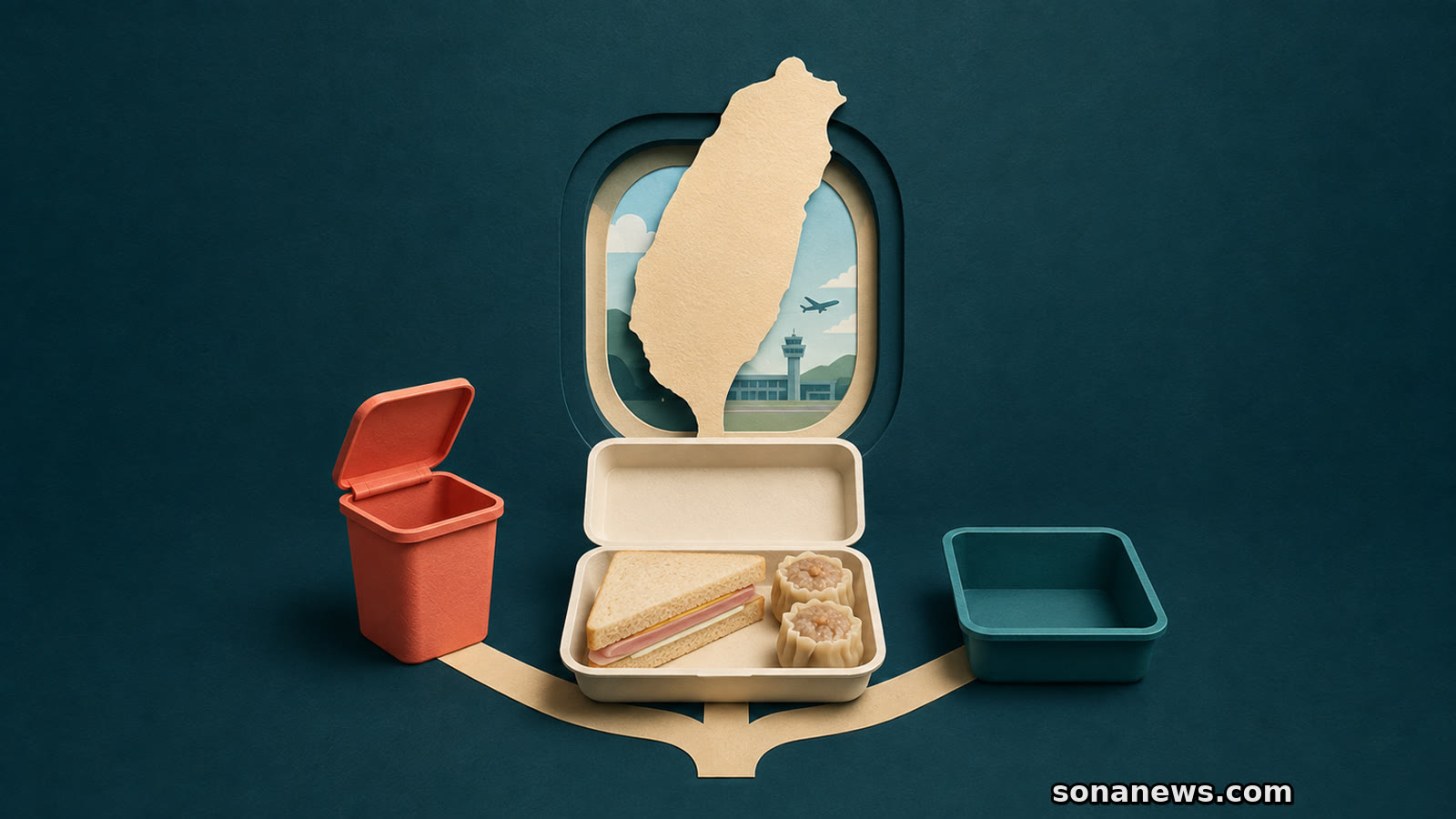

The food most likely to disrupt a smooth arrival in Taiwan may not look unusual. It could be half a ham sandwich saved from the flight or a bag containing two pork dumplings.
Taiwan's National Immigration Agency issued a fresh warning on 27 August 2026. It tells arriving travellers not to take meat-containing food, other animal products or meals supplied on flights into the country. The practical instruction is to use a designated disposal bin before entering Taiwan or to declare the item for disposal before passing customs.
Border-food warnings can sound as if they are about vacuum-packed meat bought as a gift. Taiwan's new notice makes the scope more concrete. Alongside sausages and pork burgers, it names ham sandwiches, hot dog buns, dumplings and a filled festival snack. It also calls out meals provided on flights.
That matters because an inflight meal can feel separate from the contents of a suitcase. A wrapped sandwich moved into a personal bag is still food being carried across the border. The same is true of a bun or dumplings saved for later, even when the portion is small and the packaging is unbranded.
The official examples are useful recognition cues, not a complete safe-or-unsafe catalogue. Ingredients, processing and the place of origin can affect quarantine treatment. Taiwan's Animal and Plant Health Inspection Agency maintains the product-level reference table linked by the immigration agency.
A calm check before the queue is easier than trying to interpret a snack at the inspection point.
First, separate unfinished food before landing. Look through the airline meal, personal snack bag and duty-free purchases rather than checking only the suitcase. Sandwich fillings, sausage, pork floss, dumpling fillings and meat in baked goods are the kinds of less-obvious examples in the official warning.
Next, use the disposal or declaration route. The immigration agency says travellers can put such items in designated disposal bins before entry or declare them for disposal before customs. This does not mean removing food secretly, using an ordinary bin or relabelling it. Airport signs and staff directions determine the correct point.
When the product remains unclear, Taipei Customs directs passengers with doubts to the Red, or Goods to Declare, Channel for consultation. The Green Channel is for passengers with nothing to declare.
The August notice says Taiwan's animal-health authority recorded 109 cases from 1 January 2026 involving foreign nationals who were denied entry after being unable to pay fines in full on the spot. Most were travelling for tourism. The agency published the figures as part of an African swine fever prevention warning ahead of the Mid-Autumn Festival.
It states that illegally bringing pork products from a country or area designated as affected by African swine fever carries a fine of NT$200,000 for a first offence and NT$1 million for a second. A foreign national without Taiwan residency who receives the NT$200,000 fine and cannot pay it in full immediately can be referred to immigration and denied entry.
Those details should not be flattened into a claim that every food mistake automatically produces the same result. The product, origin, quarantine status and enforcement finding matter. The useful travel lesson is narrower: do not assume a familiar snack is exempt, and do not enter the Green Channel while uncertain.
Taipei Customs describes four stages in the arrival flow. Health controls are handled by Taiwan's disease-control authority, passport examination by immigration, animal and plant quarantine by APHIA, and luggage checks for customs matters by Customs.
For passengers, those agency boundaries do not change the practical choice. The Red Channel is for goods that need to be declared and for consultation. The Green Channel is for travellers with nothing to declare. Customs also says luggage can be inspected in either channel.
This distinction explains why a food item can raise a quarantine issue even when it is inexpensive and not being imported for sale. Price is not what makes a ham sandwich relevant at the border.
The immigration notice also asks people overseas not to send meat-containing foods or other quarantine-controlled items to Taiwan by courier or post. It says recipients can be fined when pork products are mailed from an affected country or area.
For a traveller, that is a useful reminder not to promise to post the food later as a workaround. Gifts and festival foods need the same product-and-origin check through the official APHIA material.
The shortest useful routine is to finish, leave or correctly dispose of an inflight meal rather than putting it in hand luggage. Check sandwiches, filled buns, dumplings, sausages and meat-floss snacks. Keep uncertain items separate and easy to show, follow the airport's designated disposal signs, and use the Red Channel or ask an officer when the product is unclear.
Affected-area designations and quarantine classifications can change, so APHIA's current table matters more than an old screenshot or remembered rule. The memorable principle is not that all food is banned. It is that ordinary-looking meat food still counts at the border, including the meal that began on the aircraft.
Taiwan's 27 August warning tells arrivals not to bring meals supplied on flights into the country. If one is still being carried, the official routes are a designated disposal bin before entry or declaration for disposal before customs.
Yes. Ham sandwiches are among the prohibited-item examples named in the immigration agency's 2026 notice. Pork dumplings, hot dog buns and pork burgers also appear in its examples.
Taiwan Customs says passengers with doubts should use the Red Channel for consultation. For a pre-trip check, use APHIA's current reference table or contact the relevant Taiwanese authority rather than relying on a generic food list.
No. The immigration notice describes the NT$200,000 first-offence fine in the context of illegally imported pork from an African swine fever-affected country or area. Product, origin and official classification matter.
Editorial note. This article provides general travel-planning information based on official pages available on 3 September 2026. It is not personalised legal, immigration or customs advice. Product classifications, affected-area designations and entry procedures can change, so travellers should verify their own items through current Taiwanese authority guidance or qualified advice.
Sources
- Taiwan National Immigration Agency, “With the Mid-Autumn Festival Approaching, Foreign Nationals and Other Arrivals Are Urged to Help Prevent African Swine Fever and Other Major Transboundary Animal Diseases from Entering Taiwan”, Published 27 August 2026 and extracted 3 September 2026. Verified: 2026 case count; named food examples; explicit treatment of inflight meals; disposal and declaration routes; affected-area pork fine conditions; non-resident entry consequence; and parcel warning
- Taipei Customs, “Must Know: Arrival Procedures”, Extracted 3 September 2026. Verified: division of arrival controls; Red and Green Channel roles; consultation route for doubtful goods; legal meaning of the Green Channel; and possible inspection in either channel
- Animal and Plant Health Inspection Agency, “Reference Table of Quarantine Requirements for Common Animals, Plants, and Related Products Carried by Inbound Travelers”, Access attempted 3 September 2026. The direct page timed out during extraction, so no product-level exception was inferred from it; the NIA notice identifies it as the current official lookup
- UK Foreign, Commonwealth & Development Office, “Taiwan entry requirements”, Extracted 3 September 2026. Verified: Taiwan sets and enforces its entry rules; animal products require authorisation; travellers should declare goods that may be prohibited; and official rules can change
Help us improve
Was this article useful?
One anonymous tap helps Sona improve future reporting, headlines and source context.
Up next

On the A13-A14 Paris-Normandy route, drivers without automatic payment have 72 hours to settle the toll. Rental cars need a separate check.
Continue readingMore in Travel