Norovirus: why hand gel cannot replace soap and water
US and UK health guidance makes the same distinction: alcohol hand gel has a role in everyday hygiene, but it is not a substitute for handwashing against norovirus.
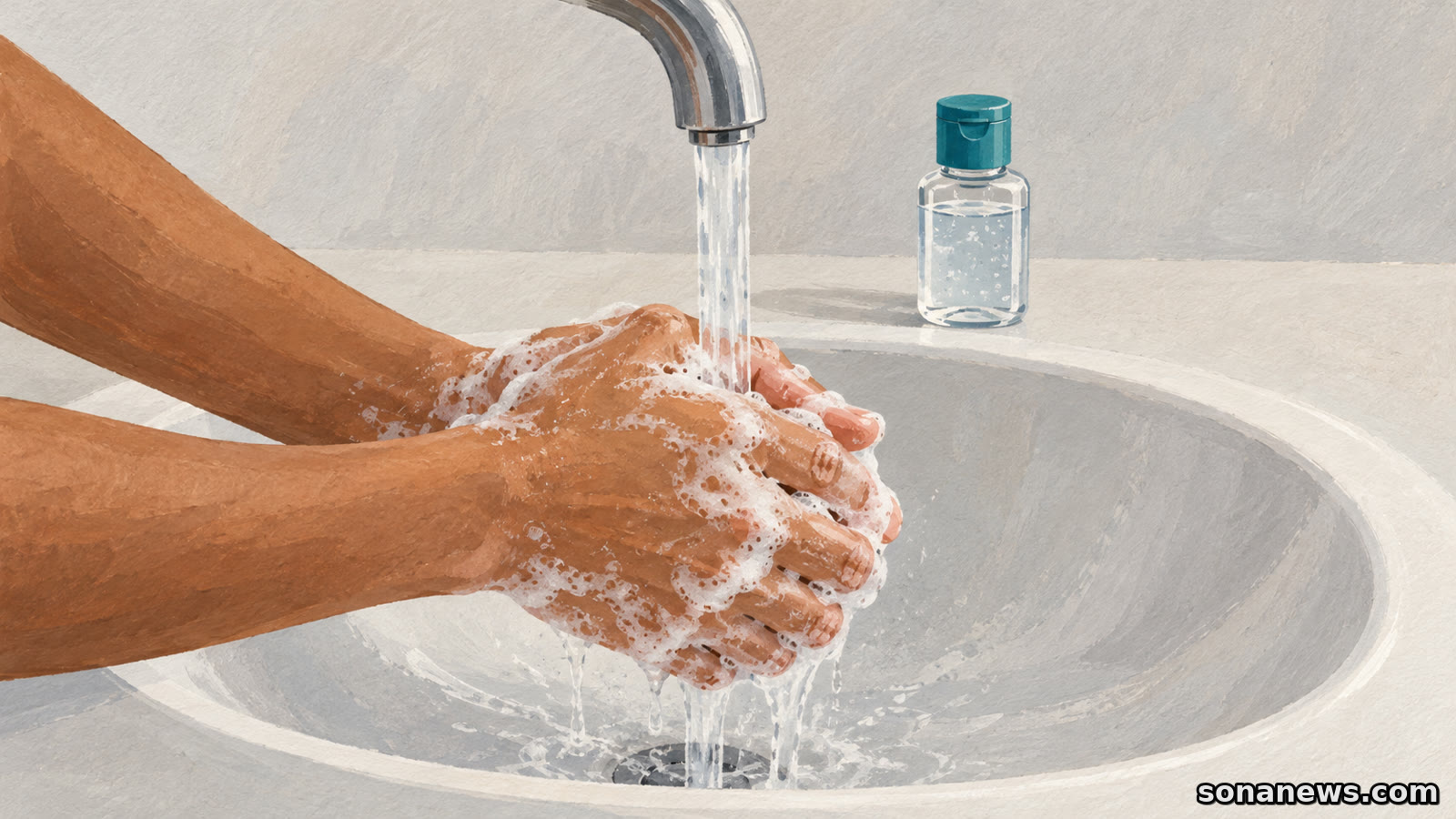

A bottle of hand gel is convenient precisely because it can travel where a sink cannot. Against norovirus, however, that convenience does not make the two interchangeable. Public-health guidance in both the United States and the UK puts soap and water first and warns against relying on alcohol gel instead.
The distinction is narrower than a verdict that hand sanitiser is useless. The US Centers for Disease Control and Prevention says sanitiser can quickly reduce many germs in many situations. Its norovirus guidance is more specific: hand sanitiser does not work well against this virus and is not a substitute for handwashing.
This is established prevention guidance, not a new October restriction or evidence that an outbreak is happening in a reader's area. It explains why a familiar bottle can be useful in one setting without being an adequate replacement in another. The relevant question is not simply whether a product is called antibacterial or contains alcohol, but what the guidance says about the germ involved.
The CDC's general hand-hygiene guidance draws a useful distinction between the two processes. Soap and water work to remove germs from hands, while sanitiser acts by killing certain germs on the skin. Those descriptions are not promises that either method leaves hands completely sterile.
For norovirus, the agency explicitly says soap and water are more effective than hand sanitiser at removing the virus. Its prevention page recommends washing with soap and water for at least 20 seconds, particularly after using the toilet or changing nappies, and before eating, preparing or handling food.
That gives the advice a practical context without requiring a claim about a particular brand or formulation. A quick application of gel is not presented as an equivalent version of the washing step. Nor does the guidance suggest that simply choosing a stronger-looking bottle resolves the distinction.
UK sources reach the same everyday conclusion. The UK Health Security Agency's prevention leaflet says not to rely on alcohol gels instead of handwashing. The NHS also specifies soap and water and says alcohol hand gels do not kill norovirus. The wording differs from the CDC's more qualified formulation, but all three direct readers away from using gel as a substitute.
For general situations in which soap and water are unavailable, the CDC recommends a hand sanitiser containing at least 60% alcohol. That number can be useful when reading a product label. It is not a statement that any product meeting the threshold replaces handwashing against every germ.
The same CDC guidance that gives the alcohol threshold lists norovirus among the germs for which soap and water are more effective. It also notes other limitations: sanitiser may be less effective on visibly dirty or greasy hands and might not remove harmful chemicals.
There is therefore no contradiction between general advice to carry sanitiser and specific advice not to rely on it for norovirus. The two statements answer different questions. One concerns a useful option in many everyday circumstances; the other concerns a particular limitation that remains relevant even when a bottle meets the general alcohol recommendation.
The CDC says sanitiser may be used in addition to handwashing in its norovirus guidance. That is different from saying both are always required, or that adding gel guarantees protection. This article does not rank products, test their claims or recommend a homemade alternative.
Norovirus can spread through close contact, contaminated food and water, and surfaces or objects carrying the virus. The NHS describes a route from touching a contaminated object to touching the mouth. These routes help explain the emphasis on handwashing around toilet use and food handling.
A hand that looks clean is not a test result. Equally, the presence of a gel dispenser beside a doorway does not establish that every relevant infection-control task has been covered. The official guidance concerns what a hygiene method can do, not whether a room or person looks tidy.
For households, workplaces and shared facilities, access to a sink and soap is consequently a different provision from access to a bottle of gel. That is the practical implication of the guidance, rather than evidence that any particular venue is unsafe. A photograph of a dispenser, or its absence, cannot establish whether norovirus is present.
The familiar name "winter vomiting bug" can also give a misleadingly narrow impression. The NHS says norovirus can occur at any time of year. The soap-and-water distinction is therefore not a rule that applies only during a northern-hemisphere winter, and this article makes no claim about current local infection levels.
The official pages do not present handwashing as the entire response. They also address food handling, contaminated surfaces and laundry, and avoiding contact with others while ill. UKHSA and NHS guidance includes staying away from school or work until at least two days after vomiting or diarrhoea has stopped. The CDC separately addresses food preparation and caring for others.
Those wider measures matter because a hand-hygiene comparison should not become a promise that one action eliminates transmission. Local public-health and workplace requirements may also matter. This explainer does not replace those instructions or provide a diagnosis, cleaning-chemical recipe or treatment plan.
The takeaway is specific: hand gel remains useful, but usefulness is not interchangeability. For norovirus, the official guidance preserves a role for the sink that a pocket bottle cannot simply take over.
Editorial note. This article provides general health information, not medical advice, a diagnosis or treatment. It cannot determine whether symptoms are caused by norovirus or assess an individual's risk. Follow local public-health guidance and seek advice from a qualified healthcare professional about symptoms or personal medical concerns. Do not delay medical care because of this explainer.
Sources
- **CDC: How to Prevent Norovirus** Reviewed 13 January 2025; read in full 13 October 2026. Supports the norovirus-specific handwashing recommendation, at least 20 seconds, key times, the limitation of sanitiser, its possible supplementary use, and wider food, surface and illness-related prevention. No bleach recipe, treatment or local outbreak claim is reproduced
- **CDC: Hand Sanitizer Guidelines and Recommendations** Reviewed 12 March 2024; read in full 13 October 2026. Supports removal versus killing, the general at-least-60% alcohol recommendation, dirty or greasy hand limitations, chemical limitations and soap-and-water superiority for removing norovirus. The general threshold is not presented as a norovirus efficacy guarantee
- **UKHSA: How to stop norovirus spreading** Read in full 13 October 2026. Supports the UK warning not to substitute alcohol gel for soap and water, transmission routes and the two-day school/work exclusion after symptoms stop. Established guidance, not a new October announcement or a universal legal rule
- **NHS: Norovirus (vomiting bug)** Reviewed 31 December 2024; read in full 13 October 2026. Corroborates soap-and-water guidance, contaminated-hand-to-mouth transmission, year-round occurrence, wider prevention and school/work exclusion. Its treatment and symptom-assessment sections are not republished as personalised advice
Help us improve
Was this article useful?
One anonymous tap helps Sona improve future reporting, headlines and source context.
Up next
Tap water, sterile saline and disinfecting solutions do different jobs. Guidance from US health agencies and a UK eye hospital explains why the distinction matters.
Continue readingMore in Health