Spirometry measures the air you blow out, not your oxygen level
A mouthpiece test and a finger oxygen probe answer different questions. Understanding the distinction helps explain what a lung function appointment can, and cannot, tell you.
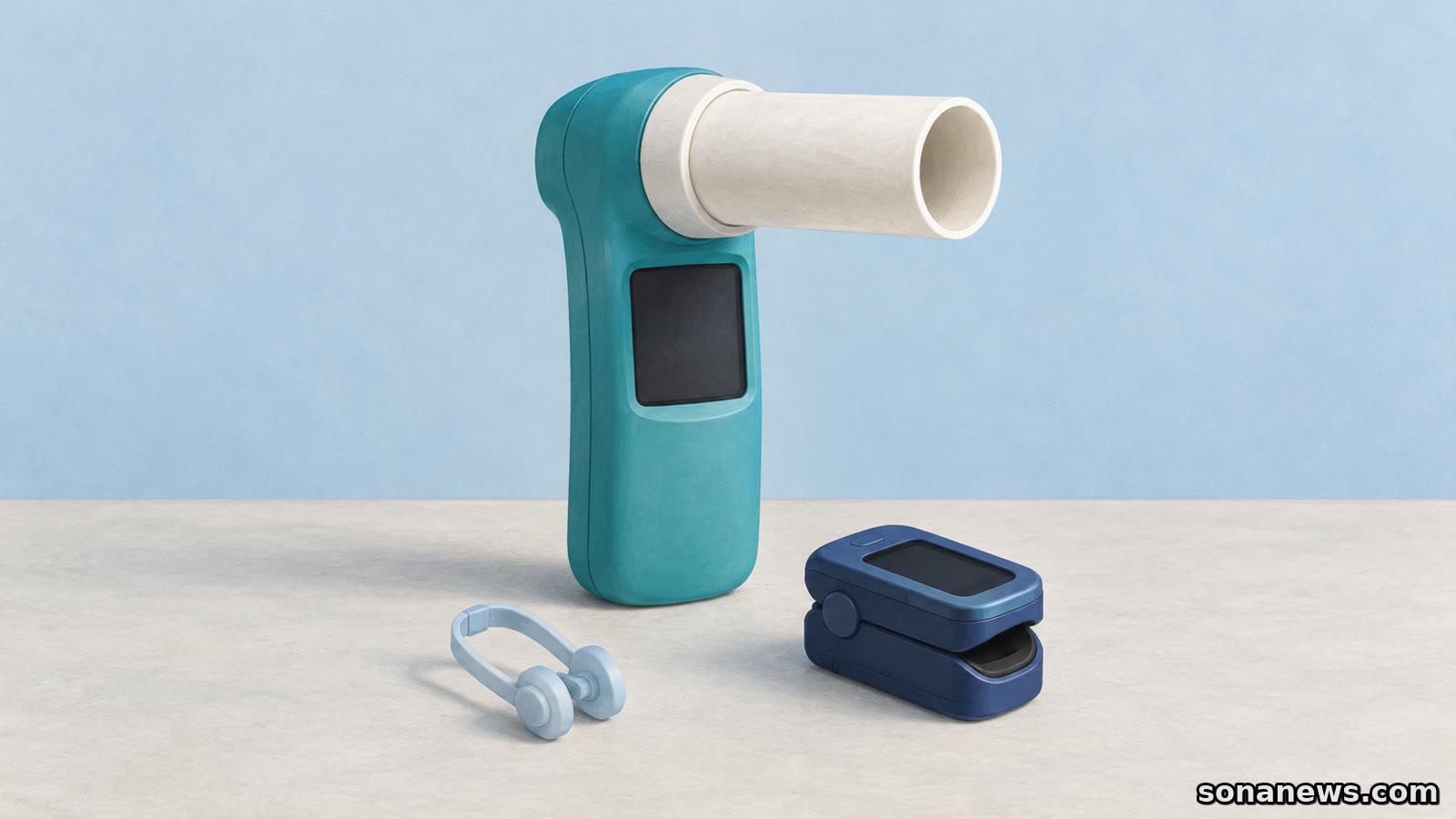

The mouthpiece is the clue. During spirometry, a person blows into a device so the clinical team can measure how much air comes out and how quickly. A finger oxygen probe does something else: it estimates the oxygen level in the blood. Both can feature in respiratory care, but one reading is not a substitute for the other.
That distinction can be lost in the phrase “lung function test”. It sounds like a single check with a single verdict. In practice, it covers several investigations, each designed to answer a particular question. Knowing which test has been arranged is more useful than assuming that every breathing-related measurement describes the same thing.
This is an explanation of established testing, not a new screening recommendation or a guide to diagnosing a lung condition. It draws on NHS information in England and the US National Heart, Lung, and Blood Institute and MedlinePlus. Local services, equipment and reporting arrangements vary.
The NHS describes spirometry as a test of how much air a person can breathe out in one breath. The US National Heart, Lung, and Blood Institute adds the other important part: how fast that air can be blown out. The device is called a spirometer.
Those are measurements of moving air, rather than a picture of the lungs or a direct measurement of oxygen in the blood. The test can help investigate symptoms, monitor an existing lung condition or check lung function before surgery. Being referred does not, by itself, establish a diagnosis.
The NHS describes a healthcare professional supervising the test in a GP surgery, clinic or hospital. A soft nose clip helps keep the breathing through the mouth, while the person blows through the tube attached to the device. The professional explains and guides the breathing manoeuvre. This is not simply an ordinary breath captured by a machine.
The NHS description includes repeating the test. Repetition is therefore part of the described appointment, not automatically evidence that the first attempt has revealed something worrying. The useful information comes from the completed investigation and its clinical interpretation, not from counting how many times someone has been asked to blow.
Pulse oximetry estimates blood oxygen levels using a probe placed on a finger or another skin surface, such as the ear, according to the US institute. It does not measure the volume of air blown through a mouthpiece or the speed of that airflow.
A person can therefore encounter both tests without being given the same check twice. Their purposes differ. Equally, a number on a home finger oximeter cannot supply the missing spirometry measurements, whatever the number happens to be.
This is a distinction between measurements, not a rule for interpreting someone's health. Neither this article nor a comparison of devices can establish what an individual's symptoms or results mean. There is no universal oxygen reading in this article that cancels the need for a clinician's assessment or another investigation.
There is another potential source of confusion: several lung tests involve breathing through a mouthpiece. The equipment may look broadly familiar while the measurement changes.
MedlinePlus distinguishes spirometry from lung volume testing. A lung volume test measures how much air the lungs can hold, including the air that remains after someone has breathed out as much as possible. One method uses a small, clear-walled booth. Another uses a special mixture of gases. A simple blow into a spirometer should not be assumed to provide all of that information.
A lung diffusion capacity test asks a different question again: how well gas transfers from the air in the lungs into the blood. The US institute describes this separately from both spirometry and pulse oximetry. It is not just another name for the finger-probe reading.
The distinction explains why a service may arrange more than one investigation. “Lung function” is the umbrella term, not a promise that a single device measures airflow, total lung volume and gas transfer at once. The clinical team selects the tests according to the reason for the assessment.
Both the NHS and the US institute describe circumstances in which the team gives an inhaled medicine and then repeats spirometry after a break. That lets the team compare measurements before and after a medicine that helps open the airways.
It does not mean every appointment follows that sequence. Nor is it an instruction to take an extra inhaler dose before attending. Preparation belongs to the service carrying out the investigation, because the timing and purpose of the test matter.
The NHS says patients are told whether they need to stop any medicines or inhalers beforehand. MedlinePlus explicitly warns against stopping medicine without speaking to the healthcare provider. A general explainer cannot replace those individual instructions, and it should not turn them into a universal preparation timetable.
MedlinePlus says lung function tests are used with other tests and information to support the diagnosis and monitoring of lung disease. A machine's output is evidence for that assessment, not a complete explanation on its own.
The NHS describes a specialist reviewing spirometry results and sending them to the patient's doctor, who explains any problems and the next steps. That is an England-based description of the reporting process, not a guaranteed timetable or pathway everywhere.
For a conversation about an upcoming appointment, three questions get to the point: which test is planned, what will it measure, and who will explain the results? Spirometry makes moving air measurable. Understanding that specific job helps avoid asking an oxygen probe, or the word “normal” beside a different test, to answer a question it was never designed to settle.
Editorial note. This article provides general health information, not medical advice, a diagnosis or treatment. It cannot interpret personal symptoms or test results. Follow the preparation instructions from your own clinical service and discuss medical concerns with a qualified healthcare professional. Do not change medicines or delay medical care because of this article or a home-device reading.
Sources
Help us improve
Was this article useful?
One anonymous tap helps Sona improve future reporting, headlines and source context.
Up next
The blood test reflects average glucose over roughly three months, not the level at the moment of a finger-prick check. That difference explains both its value and its limits.
Continue readingMore in Health