Your cooker hood's carbon filter may not belong in the wash
Metal grease filters and carbon odour filters need different care. UK manufacturer guidance shows why even a washable carbon filter needs its own instructions.
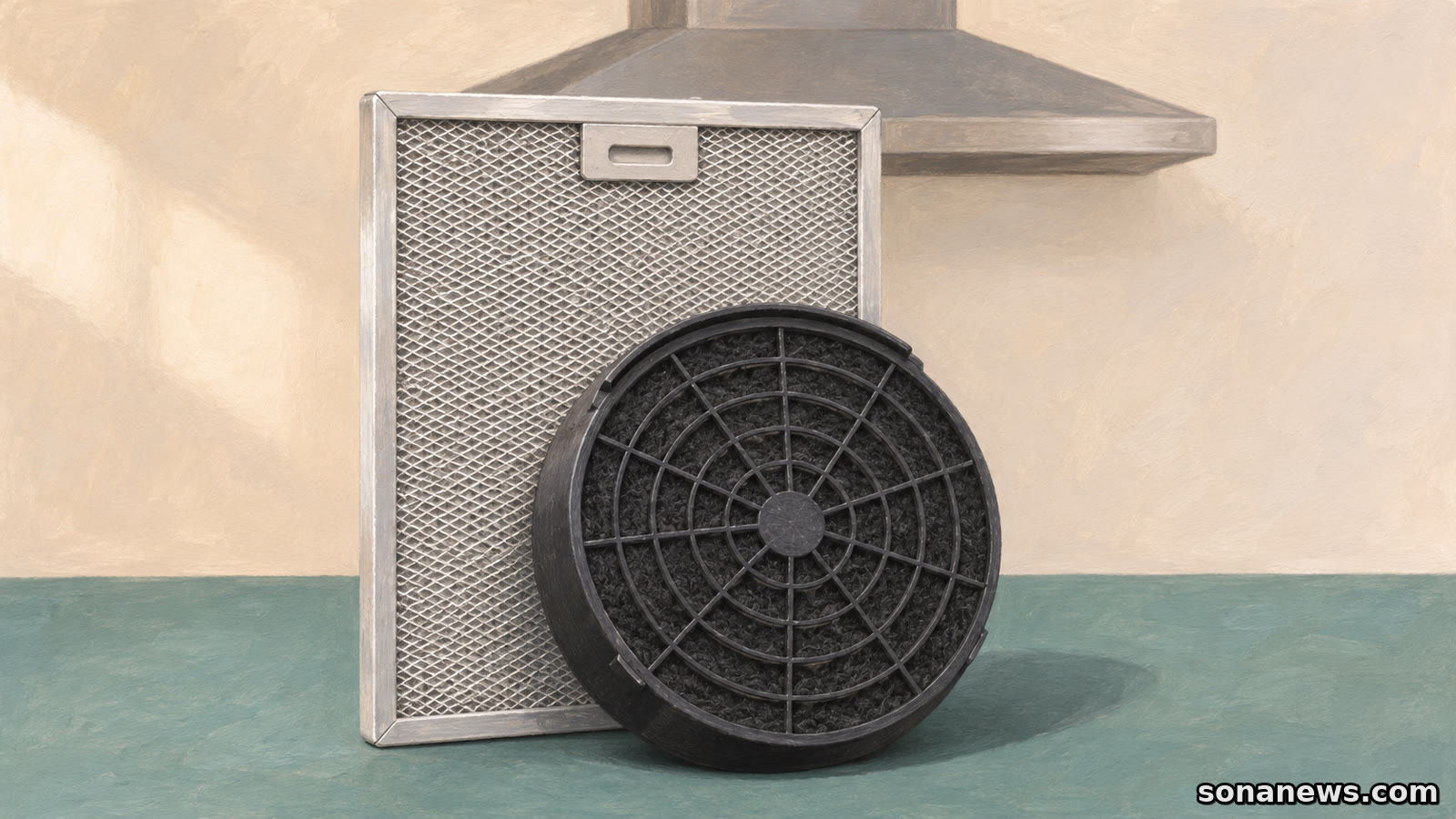

Taking a greasy metal filter out of a cooker hood can make the next step seem obvious: wash it. Finding a second, dark filter behind it is where that routine can go wrong. The carbon filter that deals with cooking odours may need replacing rather than rinsing, even when the metal filter in front can be cleaned.
But “never wash carbon” is not a safe universal rule either. Some carbon filters are designed for washing or regeneration. The useful distinction is not clean versus dirty. It is which filter is fitted, what job it does and which care method its manufacturer permits.
This is established appliance-care guidance, not a new recall. The examples below come from UK support pages for Bosch, AEG and IKEA. They illustrate differences between products, not a cleaning recipe for every cooker hood or every market. The instructions for the actual hood and filter take precedence.
Two filters, two different jobs
A grease filter catches grease particles carried in the cooking vapour passing through it. AEG distinguishes reusable aluminium or steel filters from disposable fleece filters. Even at this first stage, the word “filter” does not establish that a part can go in the sink.
A carbon filter has a different role. In a recirculating hood, it removes unwanted odours before the filtered air returns to the kitchen. AEG's guide places it inside the hood, accessed behind the grease filter. Bosch likewise explains that a recirculating installation needs a recirculation filter as well as its grease filter.
That distinction matters when looking for cleaning instructions. A page about washing metal mesh is not permission to wash everything removed from the same appliance. Nor does cleaning the visible grease filter establish that the odour filter has been maintained. They are separate parts with separate requirements.
The first check is therefore the hood model and its installed filter type. Do not infer the care method from a black colour, a circular shape or a filter's position alone. Those features cannot tell you whether the particular component is disposable, washable or suitable for regeneration.
Why the advice can appear to contradict itself
Bosch's general UK filter-cleaning page says the recirculating filters it describes cannot be cleaned or washed and need periodic replacement. Its advice for metal grease filters is different: some are dishwasher-safe, subject to the user manual, and they must dry completely before refitting.
AEG's more detailed guide makes the split within carbon filters explicit. Its OdourClean carbon filters are one-shot parts that cannot be cleaned. OdourClean Plus filters have a washing and drying routine. OdourClean Pro filters have a different care routine involving surface cleaning and oven drying, with the manual supplying the details.
IKEA provides another specific counterexample to the blanket no-washing rule. Its NYTTIG FIL 440 product page expressly describes washing that charcoal filter and gives drying instructions. It also tells buyers to check the information for their particular extractor hood to identify the right filter.
These are not three competing verdicts on one interchangeable object. The manufacturers are describing different parts. A broad support-page answer is useful background, but an instruction attached to the exact filter is the better basis for deciding what happens to it next.
Washable does not mean any wash will do
Permission to wash a filter answers only the first question. The method can also specify whether detergent is allowed, whether a dishwasher is suitable and how the part must be dried. Instructions for one range should not be borrowed for another simply because both contain carbon.
Drying deserves the same attention as washing. Bosch tells owners to air-dry its cleaned metal grease filters fully and not accelerate that process with a hairdryer or direct heat. Some reusable carbon-filter instructions, by contrast, expressly include an oven step. That difference is precisely why an oven should not become a general-purpose filter-drying shortcut.
There is no universal temperature or cycle to copy from this article. Find the exact product instructions before putting a component in water, a dishwasher or an oven. If the filter cannot be identified, pause the cleaning decision and ask the manufacturer or an authorised service provider rather than testing a method on it.
A filter reminder is not a diagnosis
AEG explains that some hoods display a filter notification based on use. That can be a useful maintenance prompt, but the required response still depends on the filter. One component may need cleaning while another needs replacement or its specified regeneration routine.
Likewise, an odour or a noisier hood is not enough to identify a particular fault. AEG says thick grease deposits can reduce suction and increase noise, and stresses cleaning to limit grease build-up and fire risk. That supports maintaining filters; it does not prove that every performance problem will be solved by washing one.
Follow the appliance's instructions for switching off, electrical isolation, removal and refitting. Bosch specifically says to switch off and unplug before cleaning. For a fixed installation or any uncertainty about safe access, seek appropriate help rather than dismantling the hood or reaching into electrical parts.
A useful household record is modest: the hood model, the compatible filter reference, the approved care method and the date of the last clean or replacement. It makes the next maintenance reminder easier to interpret without assuming that a filter from a previous appliance is an equivalent spare.
The aim is not to buy a new filter whenever cooking leaves a smell, nor to rescue every old filter with a more intensive wash. It is to avoid treating two different components as one cleaning job. Check the part before choosing the process.
Editorial note. General household information, not personalised electrical, repair or health advice. Follow the exact hood and filter instructions for isolation, removal, cleaning, drying and refitting. Do not wash or heat an unidentified filter, bypass safety requirements or dismantle electrical components. Ask the manufacturer or a qualified service provider when the part or safe procedure is unclear.
Sources
- Source: Bosch UK, How to clean cooker hood filters, Accessed 4 November 2026. Supports grease/recirculation distinction, replacement-only recirculating filters described by this general page, conditional dishwasher suitability for metal filters, full drying, no hairdryer/direct heat, and switch-off/unplug guidance. Not treated as proof that every Bosch or other-brand carbon filter is non-washable
- Source: AEG UK, How to clean the filters on your AEG cooker hood, Accessed 4 November 2026. Supports grease-filter function, disposable fleece versus reusable metal, recirculating carbon-filter function, one-shot OdourClean versus Plus and Pro care routines, usage notifications and grease-build-up concerns. Model-specific intervals, detergent instructions, lifespan figures and regeneration settings are not generalised
- Source: IKEA UK, NYTTIG FIL 440 charcoal filter, Accessed 4 November 2026. The product's Materials and care section explicitly permits washing and gives drying requirements; Good to know requires checking the relevant extractor hood. Used as a named counterexample, not a recommendation, universal compatibility claim or independent performance test. Price, ratings and customer reviews are not evidence for the article
Help us improve
Was this article useful?
One anonymous tap helps Sona improve future reporting, headlines and source context.
Up next
One drum does not mean one load limit. UK manufacturer examples show why washing capacity, drying capacity and the chosen programme need separate checks.
Continue readingMore in Home & Living