Before rinsing a vacuum filter, check which part it is
A washable dust container does not mean washable filters. Manufacturer instructions show why the exact part matters, and why a rinsed filter may need longer than a day to dry.
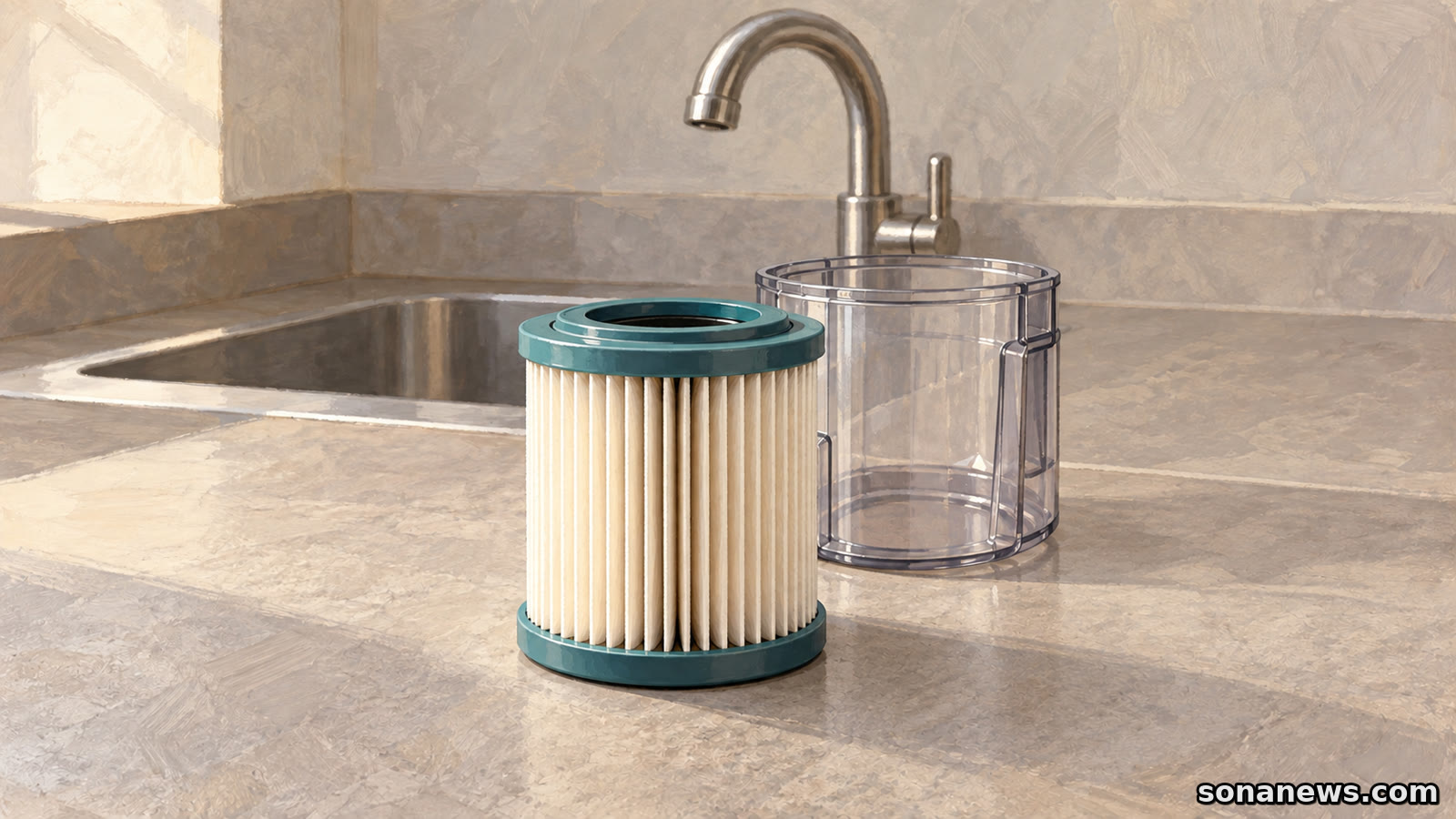

The dust container is empty, but the vacuum still seems to be struggling. A dirty filter looks like the obvious next job, and the kitchen tap is close by. Before rinsing it, though, there is a more important question than how long to wash it: is this particular part meant to get wet?
The answer can differ between components inside the same machine. Miele's US troubleshooting guidance for certain Triflex models permits washing the dust container but explicitly says not to wash the filters. Dyson's cordless filter-care guidance, by contrast, includes washing followed by at least 24 hours of drying. Neither instruction can safely stand in for the other.
These are established maintenance instructions, not a new recall or a finding that one type of vacuum is better. The examples below come from manufacturer support pages in the US and UK. Use them to understand the distinction, then check the instructions for your exact model and market before removing or cleaning anything.
It is easy to treat everything lifted out of a bagless vacuum as one washable assembly. A support page may even describe cleaning several parts in sequence. But permission to rinse the container does not automatically extend to the material that filters the air.
Miele's Triflex page makes that distinction unusually clear. In the section for the HX1 Facelift and HX2, it says not to clean either the fine dust filter or the prefilter with water. Further down, its advice for a full dust container allows water and mild washing-up liquid, followed by careful drying.
The cleaning method also differs between the two filters. Miele says to empty the fine dust filter by carefully tapping its rubberised lower edge over a bin. It specifically prohibits brushing it, cleaning the inside or using pointed or sharp-edged objects. For the prefilter in that section, it allows the supplied dust brush or a dry cloth.
That is a useful warning against a seemingly harmless substitution. A brush permitted on one part may be wrong for the part beside it. Before starting, identify the component by the name and diagram in the manual, rather than treating every dusty insert as the same thing.
Even one manufacturer's support page can contain separate procedures. Miele divides its Triflex guidance into HX1 and HX1 Facelift/HX2 sections, with different removal and cleaning sequences. A video for a visually similar machine is not enough to establish which sequence applies to yours.
Dyson's US cordless filter-care page likewise offers a model selector and individual cleaning videos. Its general guide calls for a cold-water rinse without detergent, then describes a warm-water filling and shaking step. The UK general cleaning page instead specifies cold water only, again without detergent, and says not to use a dishwasher or washing machine.
Those pages should not be blended into a new universal recipe. The sensible next step is the selected model's own guidance, especially where a broad support summary and a model-specific instruction differ. If the exact filter cannot be identified, pause and ask the manufacturer rather than trying a method intended for another appliance.
The same restraint applies to cleaning products. A little washing-up liquid may be permitted for a detached dust container yet prohibited for a washable filter. More thorough-looking cleaning is not necessarily the approved cleaning.
Where washing is expressly allowed, rinsing is only part of the job. Dyson's US guide says to leave the filter for at least 24 hours in a place with plenty of airflow. It also says the filter must be completely dry before refitting, warns that moisture could damage the motor and tells owners to check for moisture by touch.
The important wording is both a time and a condition: at least 24 hours, and completely dry. Reaching the next morning does not override a filter that is still damp. Follow the model's instructions and allow more time if needed, rather than treating a clock as proof of dryness.
Nor is stronger heat an approved shortcut. Both Dyson pages say not to dry the filter in a tumble dryer, microwave or near a naked flame. The US page suggests airflow, such as beside a fan or open window. Check the model's permitted drying arrangement rather than improvising a heated one.
Plan the maintenance around that pause. Dyson notes that an additional suitable filter can let the machine remain available while the washed one dries. That is an optional convenience, not a reason to buy a spare automatically or to assume a similar-looking replacement fits. Confirm compatibility before purchasing or installing a replacement.
A dirty filter can be relevant without being the whole explanation. Miele's same troubleshooting page separately lists a full dust container and a dirty or blocked electrobrush as possible reasons for reduced cleaning performance. Dyson directs owners with continuing problems to its troubleshooting guide.
That means repeated washing is not a sensible default response when cleaning remains poor. Return to the model's fault-finding sequence and contact support if the problem is unresolved. This article is not a guide to opening a motor housing, bypassing a filter or running a partly dismantled machine.
For the next maintenance session, keep three details together: the model number, the exact component name and its permitted cleaning and drying method. The useful distinction is not simply clean versus dirty. It is which part can be washed, which must stay dry, and when the machine is ready to be put back together.
Editorial note. General household information, not personalised appliance-safety advice or a repair guide. Follow the exact model's instructions for switching off, disconnecting power and handling components before maintenance. Do not wash a part unless its instructions permit it, refit a damp filter, bypass filtration or operate a dismantled machine. Ask the manufacturer or an authorised service provider if the correct method or a continuing fault is unclear.
Sources
- Source: Miele USA, Cleaning performance is reduced (Triflex), Accessed 25 October 2026. Supports separate HX1 and HX1 Facelift/HX2 procedures; the latter section's explicit no-water instructions for fine dust filter and prefilter; no brushing or cleaning inside the fine filter; permitted prefilter brush/dry-cloth care; separately washable dust container; other performance causes. No claim is extended to all Miele filters
- Source: Dyson US, Vacuum filter care, Accessed 25 October 2026. Supports filter buildup and performance, no detergent, cold rinse followed by warm-water step, model-specific selector, at least 24 hours with airflow, complete dryness and moisture check, motor-damage warning, prohibited drying methods and optional additional filter. Promotional filtration percentages, warranty claims and comparative performance language are not adopted
- Source: Dyson UK, Replacing, washing and cleaning Dyson filters, Accessed 25 October 2026. Supports switching off/disconnecting, exact-machine selection, cold-water-only summary, no detergent/dishwasher/washing machine, complete drying and no tumble dryer/microwave/flame. Differences from the US summary are stated, not silently harmonised
Help us improve
Was this article useful?
One anonymous tap helps Sona improve future reporting, headlines and source context.
Up next
The valve responds to nearby air, not the temperature at your sofa. UK guidance explains why covers, curtains and furniture deserve a check before changing the setting.
Continue readingMore in Home & Living