A radiator thermostat behind a curtain may misread the room
The valve responds to nearby air, not the temperature at your sofa. UK guidance explains why covers, curtains and furniture deserve a check before changing the setting.
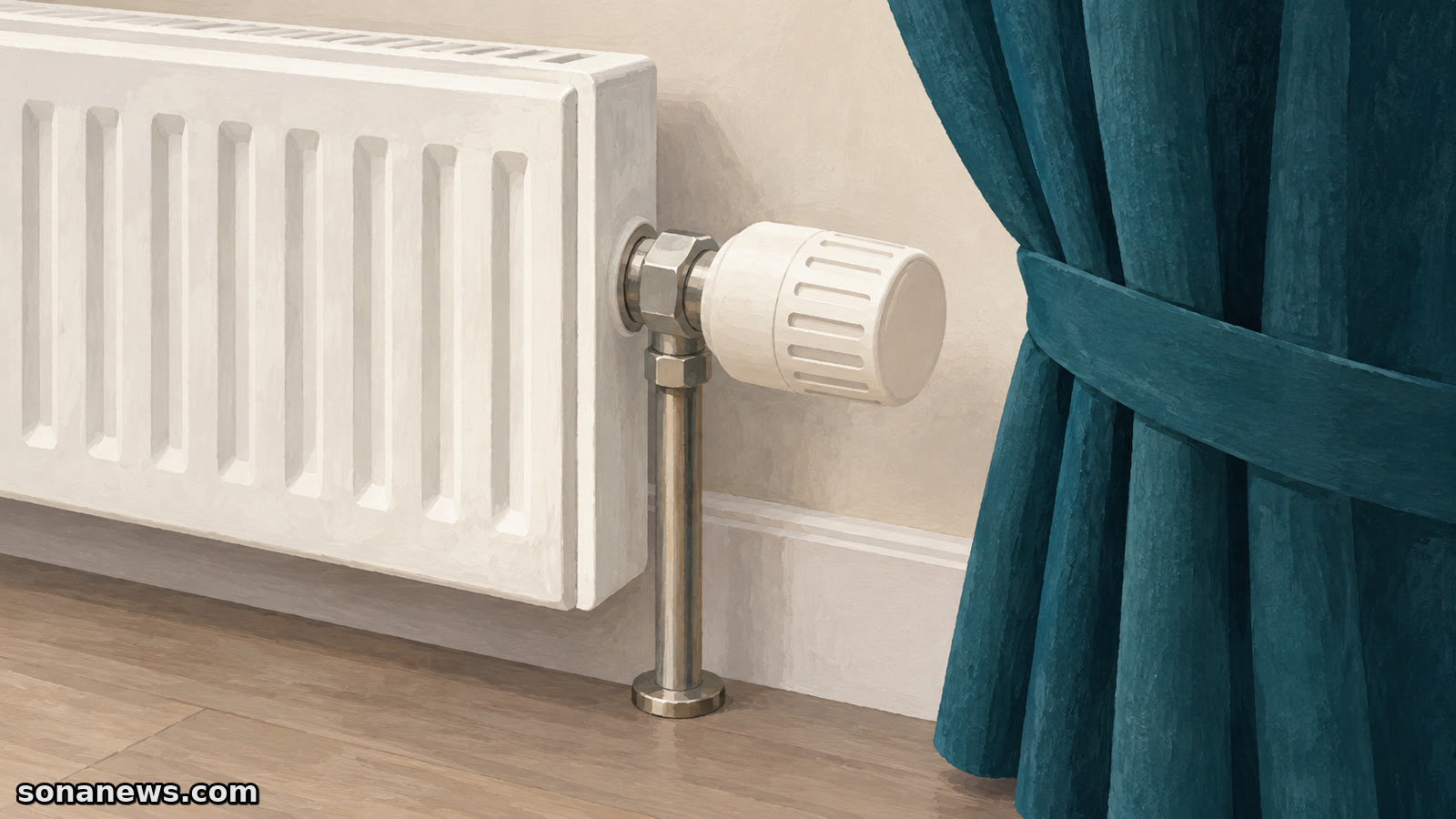

A radiator can ease off while the room still feels too cool. Before treating that as a faulty valve or reaching for a higher number, look at what surrounds its thermostat. A long curtain, furniture or a decorative cover can leave the sensor responding to a pocket of air that is not representative of the room.
That is the distinction behind a small but useful household check. A conventional thermostatic radiator valve, usually called a TRV, regulates the flow of hot water through one radiator according to the air temperature around its sensor. It does not directly measure how warm someone feels on the other side of the room.
This is established heating guidance, not a new product warning. The sources here are UK energy advice and manufacturer documentation about water-filled central-heating radiators. Electric heaters, heat pumps and connected heating systems have their own operating requirements. Their manuals and installer guidance take precedence over a general explanation of a conventional TRV.
Energy Saving Trust explains that a TRV reduces the flow of hot water as the air around it warms, and allows more through as that air cools. The changing flow is the control doing its job. A radiator need not remain equally hot throughout the time the heating is available.
Most TRVs have numbered settings, but the numbers do not correspond to the same temperature on every model. A setting borrowed from a neighbour's radiator is therefore not a reliable temperature specification for yours. Check the correct product instructions rather than assuming that a particular number always means a particular room temperature.
The useful question is whether the room is reaching the intended level of warmth, not whether the metal feels continuously hot. Equally, a cool radiator does not prove that its thermostat has sensed enough warmth. The wider heating system may not be supplying heat at that moment. One observation is not a fault diagnosis.
Energy Saving Trust generally advises against radiator covers because they can trap warm air around the TRV. That can cause it to reduce the heat sooner than needed, leaving the wider room cooler than intended. The thermostat may be responding to its immediate surroundings rather than malfunctioning.
Danfoss's technical guide makes the related point about placement: sensors behind curtains or furnishings, or in confined positions alongside hot pipes, will not control satisfactorily. The aim is to sense air that represents the room as a whole. Concealing the valve can interfere with that aim even when the control remains physically reachable.
This does not establish that every curtain or piece of furniture causes a problem. The relevant check is whether the built-in sensor is enclosed or obstructed in the actual arrangement. Look at the room as it is used, including with the curtains closed, rather than judging only the clear view available during the day.
Do not interpret that as permission to drape fabric over a radiator or to use a generic clearance measurement. Keep to the heating equipment's instructions. The illustration accompanying this article shows the relationship between curtain and valve, not a safe spacing specification.
A conventional radiator valve and a room thermostat are not interchangeable controls. Energy Saving Trust describes the room thermostat as switching heating on until its chosen temperature is reached, then off as required. A conventional TRV controls flow through its own radiator while the system can supply heat.
The room thermostat also needs a free flow of air. Energy Saving Trust advises against blocking it with curtains or furniture and against positioning it near heat sources such as radiators. A clear radiator valve will not correct a poorly situated separate room sensor.
Before changing several settings, identify the controls you actually have. A wall thermostat, programmer and radiator dial each answer a different question: whether heat is needed, when it is available and how much is admitted locally. Smart controls may coordinate those jobs differently. Do not assume that advice for an ordinary mechanical valve describes how a connected system requests heat.
Sometimes an awkward position is part of the installation rather than a movable furnishing. Danfoss describes remote sensors or remote adjusters for situations where integral sensing is impractical. Drayton's ETF2 product page similarly describes a kit for locating the TRV head away from a valve behind curtains or furniture.
That is evidence that remote sensing is a recognised design option, not a recommendation to buy a particular kit. It does not mean every remote head fits every valve. Compatibility, sensor location and the wider system need checking by the manufacturer or a competent heating professional. This is not a reason to remove a valve head, loosen pipework or alter an installation without appropriate guidance.
The inexpensive first step is observation: identify the model, consult its instructions and check whether normal use of the room conceals its sensor. If the room still fails to warm adequately, report the pattern to the landlord, installer or service provider rather than repeatedly compensating with higher settings.
Keep the aim modest. Giving a sensor representative room air may help it regulate as intended, but these sources do not establish a particular bill saving for moving one curtain. Nor should anyone accept an inadequately heated home for the sake of a setting. The point is to understand what the thermostat can sense before deciding that the room, the valve or the heating system needs a different response.
Editorial note. General household information, not personalised heating, health or repair advice. Follow the exact equipment's operating and clearance instructions and maintain warmth appropriate to household needs. Do not dismantle valves, loosen pipework or alter heating controls on this article's authority. Ask a competent heating professional or your landlord about persistent inadequate heating or installation changes.
Sources
- Source: Energy Saving Trust, Heating controls, Accessed 1 November 2026. Supports local air sensing, hot-water flow regulation, model-dependent dial temperatures, separate room-thermostat function and the warning that covers can trap warm air and cause premature reduction in heating. Scope is gas, oil and LPG boiler controls; advice differs for heat pumps and electric heating
- Source: Energy Saving Trust, The most economical ways to use your central heating, Accessed 1 November 2026; page dated 28 October 2026. Supports keeping room thermostats clear of curtains, furniture and nearby heat sources, and consulting product guidance. Its example settings, monetary savings and boiler-water temperature advice are not reproduced
- Source: Danfoss, Domestic heating controls are easy, Part 5: Radiator thermostats, Accessed 1 November 2026. Technical background supports local sensing, curtains/furnishings/hot-pipe interference and remote-sensor options. This is older technical literature, not a current statement of building regulations. Historical regulatory claims, brand superlatives, installation steps and specific temperature mappings are not adopted
- Source: Drayton Controls, ETF2 TRV Remote Setting Kit, Accessed 1 November 2026. Describes remote head placement where a valve is behind curtains or furniture. Used only to corroborate the design option, not compatibility with an unidentified valve or independently tested savings
Help us improve
Was this article useful?
One anonymous tap helps Sona improve future reporting, headlines and source context.
Up next
One drum does not mean one load limit. UK manufacturer examples show why washing capacity, drying capacity and the chosen programme need separate checks.
Continue readingMore in Home & Living