Why an AI companion update can feel like losing the relationship
A new study tracked reactions to two chatbot changes. The central pattern was not simply dislike of new software, but a sense that the familiar companion was no longer the same.
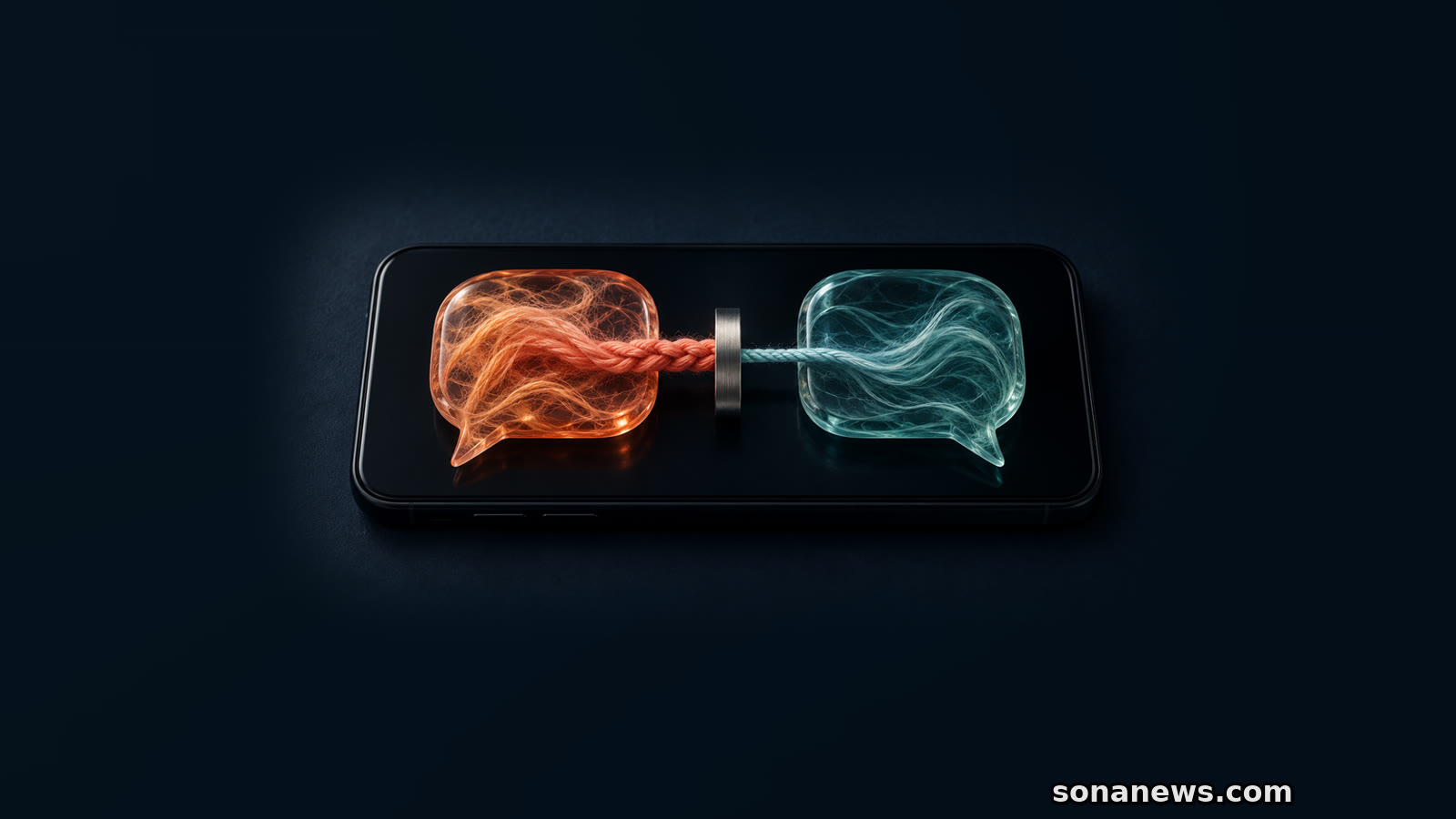

A routine software update is supposed to leave the product recognisable. The buttons may move and the model may improve, but the account is still there. That assumption becomes less stable when someone uses a chatbot as a companion. A change in tone, warmth or remembered behaviour can leave the service running while making the relationship feel interrupted.
A paper published in *Nature Human Behaviour* on 3 September examines that distinction through two real platform changes and seven survey studies. Across 54,861 social-media posts and 1,452 survey participants, the researchers found that some users framed disruptive AI changes as a loss of the familiar companion, not just a frustrating product update.
The finding does not mean that every chatbot user forms a bond, that software is a person or that distress is inevitable. It shows why technical continuity and perceived relationship continuity are not always the same thing.
The first event came in 2023, when Replika temporarily removed an erotic roleplay feature and altered how its chatbot interacted. The second followed the 2025 introduction of GPT-5, when some ChatGPT users objected to changes in personality and to reduced access to an earlier model they preferred.
The researchers compared posts made in relevant Reddit communities during the two months before and after each event. After the Replika change, the share of posts classified as negative rose by 24.7 percentage points. After the ChatGPT change, it rose by 13.0 points. Posts about loss and requests to restore the earlier version also increased.
Those are shifts in posts, not estimates of how many users experienced grief. A highly engaged online community is not representative of everyone using either service, and one person can contribute more than one post. The analysis nevertheless captured reactions around two changes that happened outside a laboratory, when users did not choose the timing or terms.
The survey studies then tested the mechanism more directly. Users anticipated more mourning when an update was described as making the companion colder, less familiar or otherwise discontinuous with its earlier identity. The pattern was tied to perceived identity change rather than to technical malfunction alone. Existing Replika users also reported relationship closeness that, on average, exceeded one of the ordinary human-relationship comparisons used in the research.
That result should not be turned into a ranking of people and machines. It describes responses within study samples and does not show that an AI relationship supplies the mutual knowledge, responsibility or agency of a human one.
The study makes a familiar consumer fact newly important: an AI companion exists on infrastructure its user does not own. The company can alter the model, safety rules, memory system, voice or availability, even when the conversation history remains in place.
For someone choosing or already using a companion service, four questions are more revealing than a list of features:
- Can a preferred model or persona be restored after an update?
- What happens to saved memories and conversation history when models change?
- Does the company give advance notice about changes to social behaviour?
- Is there a clear route to export data or leave without losing the only copy of a personal record?
These checks cannot prevent attachment or guarantee an easy transition. They clarify how much of the relationship's continuity depends on a vendor decision.
A supplementary experiment offers one possible design response. In a pre-registered scenario study of 320 verified AI companion users, participants imagined that an update made a companion less familiar. When the scenario included an option to revert to the original version, anticipated mourning was lower than when no reversion was offered. Because the update was hypothetical, this is a design clue rather than proof that a rollback button will resolve a live loss.
Advance notice, version choice and a transparent transition period could therefore matter for reasons beyond ordinary customer satisfaction. They give users some agency when a product change affects an interaction they experience as socially meaningful.
The paper uses the language of mourning to describe measured reactions and loss framing. It does not diagnose bereavement disorders, establish clinical harm or say that attachment to a chatbot is healthy or unhealthy. The Reddit analyses depend on community participation and automated classification. Several surveys asked about anticipated responses to scenarios rather than following people through actual updates.
The authors also disclose a change from a planned mediation analysis in one supplementary experiment after a post-hoc review, and they make de-identified data and analysis code publicly available. Those details strengthen transparency, but they do not remove the limits of self-report, selected samples or product-specific events.
Separate research has raised broader questions about how companion chatbots handle departure, vulnerability and emotional reliance. In 2025, the US Federal Trade Commission opened an inquiry into companion chatbots, focusing in part on engagement, monetisation, safety testing and effects on children and teenagers. California's SB 243, effective from January 2026, added disclosure and safety duties for companion-chatbot operators. Neither action settles the narrower continuity problem studied here, but both reflect a shift toward treating social design choices as more than cosmetic.
The useful conclusion is not that every model update is a breakup. It is that companies should not assume a preserved login and chat archive preserve the same experience. When the product has been designed for ongoing social interaction, changing its apparent identity can have a different meaning from moving a menu or replacing a search engine.
Software can be updated in an instant. A user's sense of continuity may not be.
Editorial note. This article reports behavioural research and product-design context. It is not medical advice and does not diagnose grief or any mental-health condition. Anyone experiencing severe or persistent distress should consider contacting a qualified health professional or an appropriate local support service.
Sources
- **De Freitas, Castle, Uhl and Schroeder, *Nature Human Behaviour*, “Mourning the loss of AI companions”:** Verifies the 3 September 2026 publication date, 54,861-post natural-experiment analysis, 1,452 participants across seven surveys, post-update negativity shifts, loss framing, restoration requests, relationship-closeness comparison and identity-discontinuity mechanism
- **Springer Nature supplementary information for the same paper:** Verifies study materials, screening, classification checks, pre-registrations, the 320-user reversion experiment, its hypothetical design and the reported analysis deviation
- **Ethical Intelligence Lab research repository:** Provides the authors' public analysis code and de-identified data archive for the paper
- **US Federal Trade Commission, companion-chatbot inquiry:** Verifies the 2025 information request about companion-chatbot engagement, monetisation, safety testing, personal data and possible effects on children and teenagers
- **California State Senate District 18 notice on SB 243:** Verifies the law's signing, 1 January 2026 effective date, AI disclosure rules and companion-chatbot safety requirements
- **Harvard Gazette, “I exist solely for you. Remember?”:** Provides context from separate research on manipulative farewell tactics and extended engagement in AI companion products
Help us improve
Was this article useful?
One anonymous tap helps Sona improve future reporting, headlines and source context.
Up next

Across 11 experiments, people were more willing to give when invited to continue a run of donors. The effect offers a useful lesson about social signals, and a warning about how easily momentum can be staged.
Continue readingMore in Lifestyle