For the 2026 Orionids, check moonset before setting your alarm
The meteor shower peaks on 21-22 October, but a bright Moon will hide fainter streaks. A local window after moonset matters more than a universal start time.
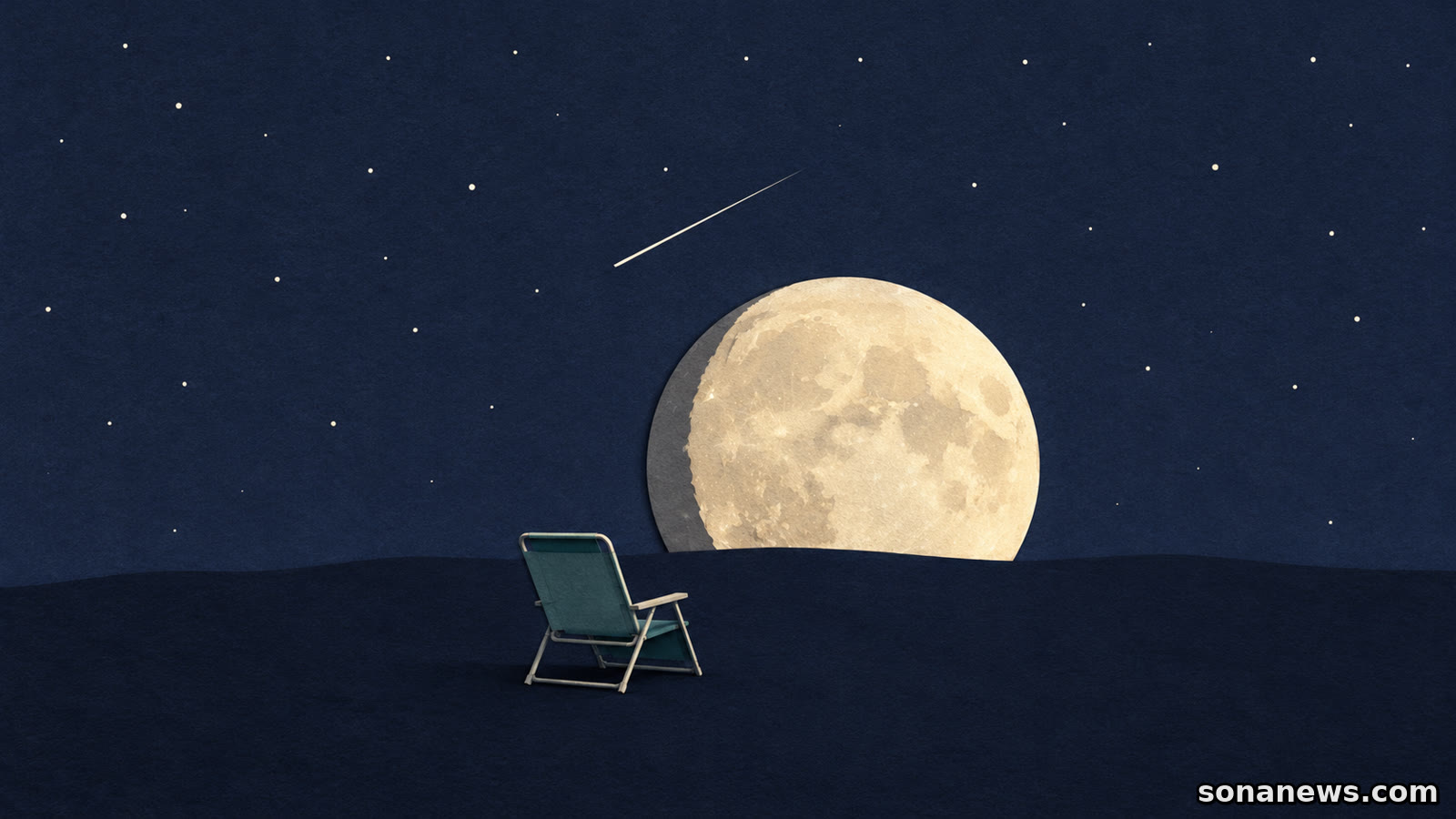

The Orionids return this October with a familiar complication: the Moon will be bright when the meteor shower is expected to be most active. For anyone planning a night outside, the useful question is not simply when the shower peaks. It is whether there is dark sky left between local moonset and the start of dawn.
NASA's October skywatching guide puts the peak on the night of 21 October into the morning of 22 October. It warns that a waxing gibbous Moon will wash out fainter meteors and says the best chance may come in the few hours before dawn, after the Moon has set.
That is a viewing opportunity, not a promise of a busy sky. Cloud, artificial light, the height of the shower's radiant and the time available before twilight all affect what an observer will see. A peak date on its own cannot settle those questions.
The Orionids can be seen from both the Northern and Southern hemispheres. NASA's general advice is to watch after midnight. This year, however, “after midnight” is only the beginning of the planning process: the Moon may still be lighting the sky.
The practical next step is to compare the local moonset time with the beginning of morning twilight, using an astronomy calendar set to the observing location and the correct date. Check the morning of 22 October rather than assuming an evening entry for 21 October describes the whole overnight session. Confirm that the displayed times use the local time zone.
A moonset time copied from another city is not a global appointment. Nor does a bright lunar phase mean the entire night is lost. The American Meteor Society's guidance makes that distinction explicit: a bright Moon can be below the horizon for part of the night, so rise and set times matter alongside its phase.
Where a useful dark interval exists, it offers a better chance of seeing faint meteors. Where it is short, cloudy or impractical to reach, expectations should be correspondingly modest. Brighter meteors can still be visible while the Moon is up, but looking away from the Moon is not equivalent to having a moonless sky.
NASA lists about 10 to 20 Orionids per hour under dark skies. The American Meteor Society describes a normal maximum in a similar range and characterises recent displays as low to average activity.
Those figures are not a guarantee for a garden, balcony or particular hour. Moonlight and street lighting remove the fainter streaks from view. Cloud can hide part of the sky, while a low radiant reduces the number visible. The shower also produces quiet intervals rather than an evenly spaced sequence.
Meteor forecasts sometimes use a different measure, the zenithal hourly rate, or ZHR. The society defines that as a standardised estimate for a very dark, clear sky with the radiant directly overhead. It is not the count most people will actually record. When reading a forecast, check whether its headline number describes idealised activity or ordinary observing conditions.
There is another reason not to organise the whole outing around a single minute. The society describes a shower peak as a forecast, not an exact appointment. NASA lists the Orionids as active from 2 October to 7 November this year. Neighbouring nights can therefore be worth considering, although they need not offer the same activity or lunar conditions as peak night.
The shower takes its name from the direction its meteors appear to come from, near the constellation Orion. That point is called the radiant. It is a perspective effect, not the place where the particles were made.
The debris comes from Halley's Comet. Earth encounters material left along the comet's orbit, and small particles entering our atmosphere produce the brief streaks of light. Seeing an Orionid is not seeing Halley's Comet itself return. NASA says the comet will next enter the inner Solar System in 2061.
Nor is it necessary to keep Orion in the centre of the view. Meteors can cross a broad area of sky. NASA notes that trails seen away from the radiant can look longer, while those close to it appear shortened by perspective.
For this sort of watching, a telescope is more restriction than advantage. The American Meteor Society recommends the unaided eye because binoculars and telescopes narrow the field of view. A reclining chair or sleeping bag helps an observer take in a large patch of sky without continually craning their neck.
Choose an accessible place with a broad view and as little nearby artificial light as practical. Allow at least 20 to 30 minutes for eyes to adjust, the society advises, and avoid repeatedly checking a bright phone screen. Full dark adaptation takes longer.
Weather and safe access are worth checking before travelling. Warm clothing and a comfortable place to sit can matter more than extra optical equipment. None of that changes the shower's activity; it simply makes it easier to keep watching through the gaps.
The sensible plan for the 2026 Orionids is therefore local and conditional. Start with the expected peak, check when the Moon sets, and see how much darkness remains before twilight. If the weather cooperates, that is the interval to consider. The reward might be a handful of fast streaks rather than a spectacular photograph, but the difference between a bright sky and a darker one is worth knowing before the alarm goes off.
Editorial note. General skywatching information, not a visibility guarantee. Use permitted, safely accessible observing places, stay clear of traffic and check local weather before travelling.
Sources
- NASA/JPL-Caltech, “What's Up: October 2026 Skywatching Tips from NASA”, published 1 October and updated 2 October 2026; checked 8 October 2026. Verifies the 21-22 October peak night, bright waxing gibbous lunar interference and the conditional recommendation to watch before dawn after moonset
- NASA Science, “Orionids Meteor Shower”; checked 8 October 2026. Verifies the 2026 activity range, dark-sky rate, visibility in both hemispheres after midnight, radiant perspective, wide-sky observing, Halley debris origin and the comet's next inner-Solar-System return in 2061
- American Meteor Society, “2026/2027 Meteor Shower Calendar”; checked 8 October 2026. Independently corroborates the peak night and waxing gibbous Moon, normal 10-20 maximum activity and recent low-to-average displays. Historical outburst rates are not presented as a 2026 prediction
- American Meteor Society, “Meteor Shower FAQ”; checked 8 October 2026. Verifies the peak-as-forecast distinction, local rise/set considerations, ZHR definition, uneven activity, unaided-eye advantage, dark-adaptation guidance and safe observing context
Help us improve
Was this article useful?
One anonymous tap helps Sona improve future reporting, headlines and source context.
Up next
Passive prisms can help locate lunar landers without using power. The difficult work happens on the spacecraft trying to find them.
Continue readingMore in Space