EU battery exception would shift some wearable repairs to professionals
A Commission measure awaiting scrutiny would keep qualifying batteries replaceable, but let independent professionals handle some compact wearables and specialised devices.

A European battery rule taking effect in 2027 is often reduced to a catchy promise: gadgets will get user-replaceable batteries. A Commission measure adopted in July shows why the reality is more precise.
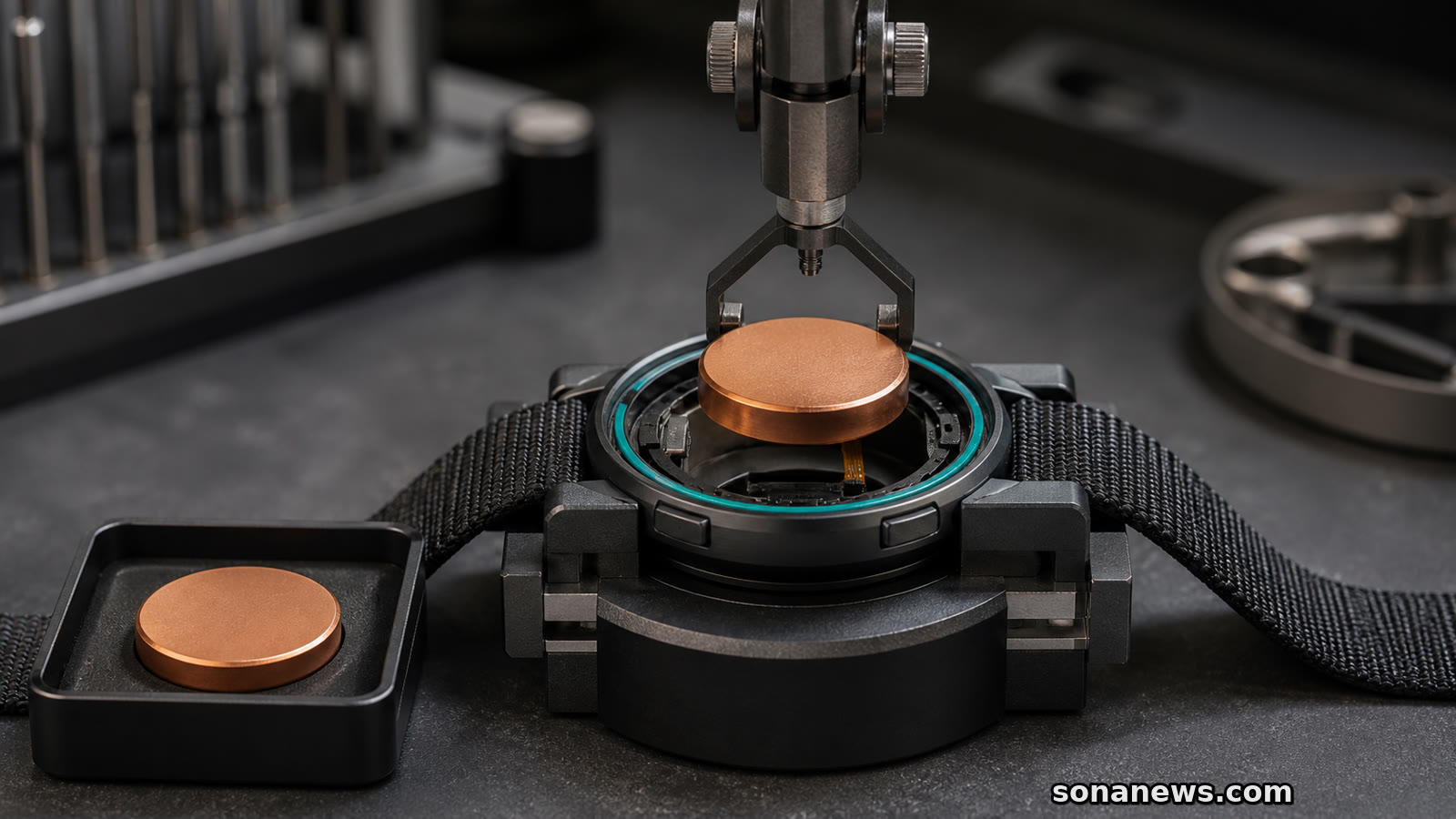
For certain small wearables and five specialised product groups, the measure would allow the battery to be removed and replaced by an independent professional rather than by the person who owns the device. That is an exception to do-it-yourself access, not permission to make the battery permanent.
The distinction matters when judging a future smartwatch, fitness tracker or other compact gadget. “Replaceable” can describe a service route, not necessarily a battery door that opens at home.
Article 11 of the [EU Batteries Regulation](https://eur-lex.europa.eu/eli/reg/2023/1542/oj) applies its removability and replaceability requirements from 18 February 2027. The Commission's [application guidelines](https://environment.ec.europa.eu/publications/guidelines-facilitate-harmonised-application-provisions-removability-and-replaceability-portable-and_en) say the requirements concern portable batteries incorporated into products placed on the market from that date.
The general rule is that an end user should be able to remove and replace a portable battery at any time during the product's life. That does not mean removal must be tool-free. The guidelines say commercially available tools may be used. The process should not require specialised or proprietary tools unless those tools are supplied free with the product, and it should not require heat or solvents.
The law also reaches beyond disassembly. Replacement batteries must remain available as spare parts for at least five years after the last unit of the product model is placed on the market. Software must not be used to impede replacement with a compatible battery.
Those obligations describe an access system, not a return to every old phone having a snap-off plastic cover.
On 14 July, the Commission [adopted a delegated regulation](https://environment.ec.europa.eu/news/commission-adds-exemptions-portable-battery-removal-rules-2026-07-14_en) covering six additional product categories. The familiar one is a wearable device intended to be worn on, attached to or placed close to the human body.
The legal text does not exempt every wearable. Its wearable category sets several boundaries, including a mass of no more than 30 grams and a minimum tested level of water and dust protection. It also excludes phones and slate tablets covered by the EU's separate ecodesign regulation.
The other listed categories are electronic toys that need a high level of water protection for safety, equipment for potentially explosive atmospheres, certain wireless food thermometer probes, eCall retrofit systems and some roof-mounted telematics devices. Several of those derogations would be time-limited to 31 July 2030.
For products that meet the detailed conditions, an independent professional could perform the battery replacement. That protects a repair path while recognising that opening a very small sealed enclosure can create safety or durability problems.
This is not a licence for a manufacturer to call any sealed gadget a wearable and close its service network. The route specified is an **independent professional**, not only the original brand's authorised counter.
The July measure is an adopted Commission delegated act, but the Commission's announcement says it was sent to the European Parliament and the Council for scrutiny. It will enter into force only if neither institution objects and it is then published in the Official Journal.
That status is important. A product listing should not claim that the new exception is already operational, and buyers should not treat the six-category list as settled law until the scrutiny and publication steps are complete.
The underlying 18 February 2027 deadline in the Batteries Regulation is separate. The Commission measure changes how its end-user requirement would apply to particular products; it does not move the main date.
The wearable language does not create a new blanket escape route for smartphones. The delegated act expressly excludes products covered by [Regulation (EU) 2023/1670](https://energy-efficient-products.ec.europa.eu/ecodesign-and-energy-label/product-list/smartphones-and-tablets_en), the ecodesign rules for smartphones, feature phones, cordless phones and slate tablets.
Those rules have applied to covered models placed on the EU market since 20 June 2025. They already address battery durability, spare parts, disassembly, repair and access to software or firmware needed by professional repairers.
That is why a claim such as “the EU has exempted smartwatches and phones” would be wrong. The new category concerns qualifying compact wearables and does not rewrite the separate phone regime.
The practical test starts with the specific model, not a broad promise on a shop page.
1. **Check when the model entered the EU market.** The 2027 Batteries Regulation requirements are not a retroactive guarantee for every device already in use. 2. **Ask who can replace the battery.** A seller should be able to distinguish end-user replacement from independent-professional replacement. 3. **Look for the service route.** For a professional-only design, ask where independent repair instructions, tools and replacement cells will be available. 4. **Ask about sealing after repair.** A compact wearable's water protection is part of the reason for the exception. Confirm what testing or warranty applies after the case is opened. 5. **Do not open a sealed cell based on a headline.** Wait for model-specific instructions and use the stated repair route.
The most useful future product page will therefore answer two different questions: can the battery be replaced, and who is permitted and equipped to do it?
Battery ageing often ends the useful life of an otherwise working wearable. The EU framework tries to prevent a sealed cell from becoming a disposal deadline, while leaving room for narrow safety exceptions.
Its consumer value will depend on execution: replacement-cell prices, access for genuinely independent repairers, clear instructions and the cost of restoring the enclosure. A replaceable battery that exists only on paper would miss the point.
For now, the accurate takeaway is limited but practical. From 2027, the default is broader battery access. If the July delegated act clears scrutiny, some qualifying wearables and specialised devices would shift that access from the owner's workbench to an independent professional's repair cradle.
Editorial note. This article is general technology and regulation reporting, not individual legal, product-safety, repair or purchasing advice. Do not open a sealed battery without model-specific instructions. Check the final Official Journal text, the exact product's documentation and the stated independent-repair route before relying on the exception.
Sources
- European Commission, “Commission adds exemptions to portable battery removal rules”, published 14 July 2026 and extracted 25 August 2026. Verified the six additional categories, the independent-professional route, the 18 February 2027 context and the statement that the act was sent to Parliament and Council for scrutiny before possible Official Journal publication
- European Commission, adopted delegated regulation on removability and replaceability of portable batteries, dated 14 July 2026 and extracted 25 August 2026. Verified the category conditions, including the wearable mass and protection boundaries, the phone and tablet exclusion, and time limits attached to several specialised categories
- European Commission, guidelines to facilitate harmonised application of portable and LMT battery removability and replaceability provisions, updated 10 July 2026 and extracted 25 August 2026. Verified the market-date scope, commercially available tool standard, restrictions on heat, solvents and proprietary tools, spare-battery period and software non-interference rule
- EUR-Lex, Regulation (EU) 2023/1542 concerning batteries and waste batteries, consolidated legal framework accessed 25 August 2026. Verified Article 11's 18 February 2027 application and the distinction between the general end-user rule and professional-replacement derogations
- European Commission, smartphones and tablets ecodesign and energy-labelling product page, accessed 25 August 2026. Verified that the separate phone and slate-tablet regime applies from 20 June 2025 and addresses battery durability, spare parts, repair and professional access to required software or firmware
Help us improve
Was this article useful?
One anonymous tap helps Sona improve future reporting, headlines and source context.
Up next
Apple's repair labels distinguish reused components, unfinished calibration and parts it cannot verify. None is a complete verdict on a second-hand phone.
Continue readingMore in Tech