Android's new Find Hub memory is a note, not a live tracker
The coming Android 16 feature lets Gemini save where you say you left keys or a passport. That can be useful, but it only knows the location you entered.
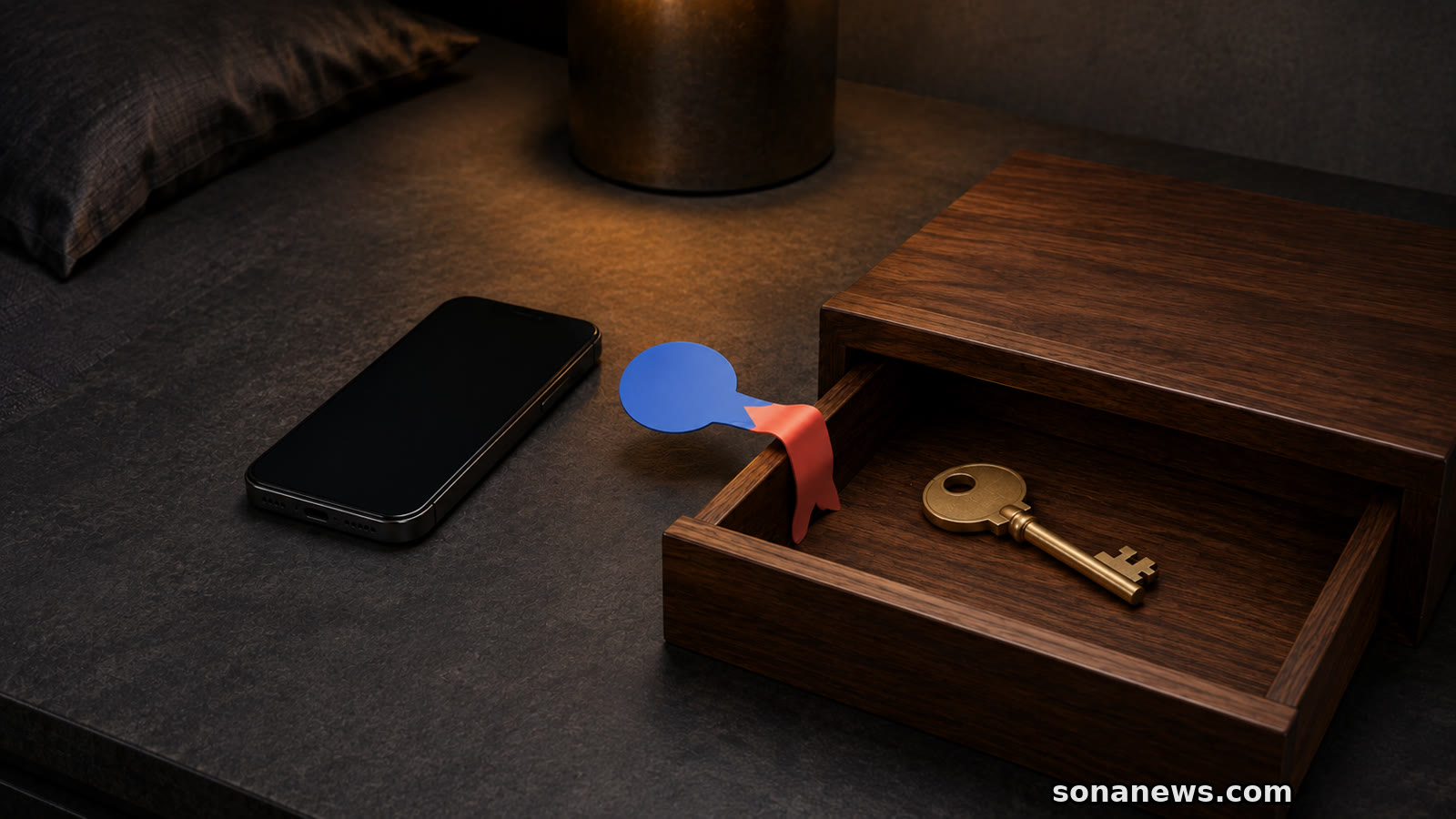
A spare key without a tracker is about to gain a digital memory, not a radio.
Google's September Android Drop introduces a “remembered items” section in Find Hub. The idea is simple: tell Gemini where you have put an object, optionally add a photo, then ask Gemini or open Find Hub when you need that location again.
The important limitation sits in Google's own small print. The remembered-items tab does not track an object's real-time location, and its accuracy depends on what the user supplied. This is a saved note about a place. It does not turn an ordinary key, passport or folder into a connected device.
That distinction makes the feature more useful, not less. It tells people which problem it can solve: forgetting a deliberate storage place. It also prevents the Find Hub name from promising a technical capability that an untagged object does not have.
Google's example is a passport placed in a bedroom drawer. A user can ask Gemini to remember that location in Find Hub and attach an optional photo. Later, the location can be retrieved through Gemini or the remembered-items tab.
The company says the feature is coming soon for devices running Android 16 or later in countries where both Gemini and Find Hub are supported. The user must be signed into Find Hub, and must also be signed into Gemini to create the memory through Gemini. As with other Android Drops, availability can arrive gradually and vary by device or region.
There is no need to pretend the process is more sophisticated than it is. The useful input is the person's own description. “Spare key in the top drawer of the hall cabinet” is actionable because it names one object and one stable place. “Keys somewhere downstairs” would preserve the uncertainty rather than remove it.
The record can also become stale. If somebody moves the key but does not update the remembered item, Find Hub has no independent signal from the key that would correct the old location. Google states this plainly: accuracy depends on user-provided information.
Find Hub already locates compatible phones, headphones and Bluetooth tracker tags. Google's support documentation describes how participating Android devices scan for nearby items and send encrypted detection locations to the crowdsourced Find Hub network. A tracker tag attached to a bag or keys can therefore generate a last-detected location without its owner manually recording where it was placed.
Remembered items do not use that mechanism for the object itself. There is no tag to broadcast, no nearby phone detecting the key and no live route following it across a map. The new feature is closer to a searchable household index than a recovery beacon.
The choice depends on the object and the failure you expect. A seldom-used spare key that normally lives in one drawer is well suited to a static memory. Luggage that changes location during a journey presents a different problem, one for which a compatible tracker may provide more relevant evidence. Neither system guarantees recovery, and a manual record is only as current as its last update.
Google's existing Find Hub privacy documentation is detailed about connected devices, accessories and tracker tags. It says recent device and item locations in the crowdsourced network use end-to-end encryption, and it explains controls for network participation in busy places, everywhere or not at all.
Those explanations should not automatically be copied onto the new remembered note and optional photo. The September announcement says the information is saved in Find Hub, but the current feature copy does not spell out, on that page, whether the manually entered description and photo use the same encryption design as tracker-location reports.
That is not evidence that the data is unprotected. It is a reason to avoid claiming a protection that Google has not attached specifically to this new data type in the cited material. Before storing a sensitive description, users can review the feature's in-app explanation and the current Find Hub and Gemini privacy controls. Google should make deletion, retention and photo handling easy to find as the rollout reaches more phones.
A remembered location also need not contain more detail than the task requires. A clear object and storage place may be enough. Account passwords, lock combinations and document numbers would add sensitivity without helping the app remember which drawer to check.
The announcement was published on 1 September, but Google's wording remains prospective. It says users will “soon” be able to save remembered items. A compatible Android version and supported country do not prove that the control has reached a particular phone today.
This is where a product update can become frustrating if the headline outruns the rollout. Keeping Find Hub and Gemini updated is reasonable, but there is no basis for forcing downloads from unofficial sites or repeatedly resetting a phone to chase a feature that may not yet be enabled for that account.
TechCrunch independently reported the same operating model: Gemini saves a user-stated storage location in a remembered-items section, with an optional photo. Its account does not turn the feature into live tracking either.
The most honest way to think about Find Hub's new memory is as a deliberate handoff between present-you and future-you. It can retrieve what you told it. If the object moves, the technology has not failed to track it, because tracking was never the promise.
Sources
- Google, “September Android Drop: Remember where you put things, ease motion sickness, and more”, published 1 September 2026 and extracted 8 September 2026. Verified the coming Gemini-to-Find-Hub workflow, optional photo, Android 16 or later requirement, supported-country condition and remembered-items tab
- Android, “What's new”, September 2026 feature page, extracted 8 September 2026. Verified the signed-in requirements, explicit statement that remembered items do not track real-time location, dependence on user-provided information, Android Drop delivery model and gradual availability
- Google Android Help, “How Find Hub protects your data”, extracted 8 September 2026. Verified how compatible devices, accessories and tracker tags use Bluetooth detections, encrypted location reports and configurable crowdsourced-network participation. It was not used to claim that remembered descriptions or optional photos receive identical treatment
- TechCrunch, “Google's Android update tackles motion sickness, accessibility, and more”, published 1 September 2026 and extracted 8 September 2026. Independently confirmed the remembered-items section, user-stated storage location and optional photo
Help us improve
Was this article useful?
One anonymous tap helps Sona improve future reporting, headlines and source context.
Up next
Intune Remote Help can now let an authorised helper open a separate session on a managed corporate PC without the employee being there. The controls are real, but they need deliberate setup.
Continue reading