The US Cyber Trust Mark is a doorway, not a security score
The FCC’s voluntary label for wireless consumer IoT products pairs a binary mark with a QR-linked record. Support dates and update behaviour live in that registry.
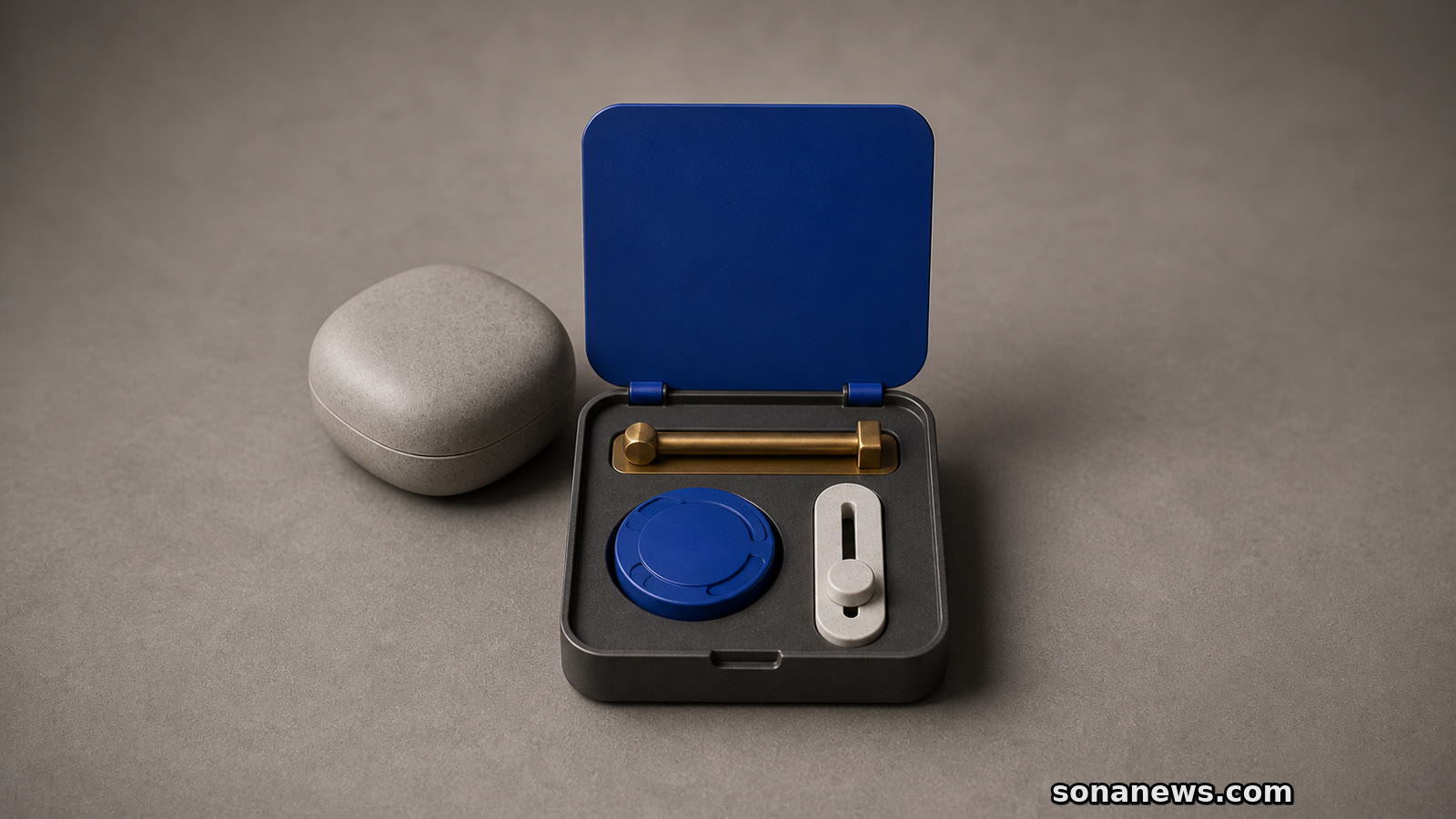

A security symbol on a connected camera, thermostat or speaker can look like a complete verdict. The US Cyber Trust Mark is designed to do something narrower. Under Federal Communications Commission rules, it is a binary indicator that a participating wireless consumer Internet of Things product meets the programme’s requirements. It is not a row of stars, a permanent safety promise or a ranking of every device on the shelf.
The more useful part sits behind it. The FCC IoT Label combines the mark with a QR code leading to a public product registry. That record is meant to carry details that cannot fit into a small symbol, including the support period and how software updates work.
The programme is voluntary and focused initially on wireless consumer IoT products. The FCC’s rules define the product broadly enough to include the connected device and necessary components such as a companion app, gateway or manufacturer-controlled backend. That matters because a well-built camera can still depend on an app and cloud service for important functions.
The FCC has cited home security cameras, connected appliances, fitness trackers, garage-door openers and baby monitors as examples of products that may be eligible. Medical devices regulated by the US Food and Drug Administration, motor vehicles and motor-vehicle equipment sit outside this programme. Wired-only products are also outside its initial scope.
Those boundaries make the absence of a mark ambiguous. A product may be out of scope, its maker may not have joined the voluntary programme, or the category may not yet have a usable route through the scheme. An unmarked product has not automatically failed a government test.
The reverse needs care too. A displayed mark means the product obtained authority to use the label under the programme. It does not mean that every security question has been settled for the rest of the product’s life.
The registry requirements turn a simple mark into a more practical comparison. For each authorised product, the record is designed to identify the product and manufacturer, the date it received authorisation, the current status of that authorisation, the label administrator and the testing laboratory.
It must also explain whether updates and patches are automatic and how to obtain them if they are not. Most importantly, the record must state the date until which the responsible company promises to identify critical vulnerabilities and issue needed fixes promptly. If the product is unsupported, the registry must say so instead.
That support horizon is more informative than a vague claim such as “secure by design”. Two connected products can both meet a baseline on the day they are assessed while offering very different lengths of future support. A buyer comparing them needs the end of the promise, not just evidence that each passed an entry gate.
The registry also includes instructions for changing a default password, or a statement that it cannot be changed, plus secure-configuration information. It discloses whether the manufacturer maintains a hardware or software bill of materials. Those are distinct facts, not a combined score.
NIST’s consumer IoT profile explains why a single rating would be a poor substitute for the record. Its recommended outcomes cover the whole product and include identifying assets, configuring the product, protecting data, controlling access to interfaces, updating software and reporting cybersecurity state. Organisational actions, including documentation, information reception, dissemination and education, sit alongside device capabilities.
The exact needs can also vary by product class. NIST published a separate profile for consumer-grade routers because a router occupies a particularly important position between home devices and the internet. The point is not that every marked router or camera is equivalent. It is that a baseline can be translated into requirements appropriate to a type of product.
Cybersecurity also changes after purchase. New flaws are found, software dependencies change and support periods expire. That is why the FCC rules call for a dynamic registry and a current authorisation status. A label stuck to a box is a snapshot; the linked record is the part that can reflect a changing product history.
If the mark appears on a US product or listing, the first check is whether the registry entry names the exact product rather than a similar family. Then read four fields separately:
1. the current status of the authorisation; 2. the promised support end date; 3. whether security updates are automatic or require action; 4. the password and secure-configuration instructions.
A long support period does not guarantee that every future flaw will be fixed perfectly. Automatic updates do not describe every update policy. A bill-of-materials disclosure does not reveal the document itself or eliminate vulnerable components. Each field answers one question and leaves others open.
For an unmarked product, the same questions still work. Ask the manufacturer for a dated support commitment, its update method, its vulnerability-reporting route and what happens to the app or cloud service at end of support. Treat missing answers as missing information, not as proof of either safety or danger.
After purchase, keep the product model and registry route with the receipt or household device list. The value of a dynamic record is that it can be checked again, particularly before handing the device to someone else or continuing to use it beyond the stated support period.
The Cyber Trust Mark can make connected-product security easier to inspect, but only if shoppers resist treating the symbol as the whole story. Its best use is as a doorway into a dated, product-specific record.
Editorial note. This article is general technology and product-label reporting, not individual cybersecurity, privacy, purchasing or legal advice. Programme scope, participating products, registry status and manufacturer commitments can change. Check the current FCC-linked record for the exact product and keep following the manufacturer’s update and security notices.
Sources
- Electronic Code of Federal Regulations, 47 CFR Part 8 Subpart B, Cybersecurity Labeling Program for IoT Products. Current page displayed as up to date on 20 August 2026 and extracted 22 August 2026. Verified the voluntary, wireless consumer-product scope; product-component definition; binary mark plus QR-linked registry; excluded categories; authorisation framework; and registry fields including current status, update method, support period, password/configuration information and bill-of-materials disclosure
- Federal Communications Commission, FCC Creates Voluntary Cybersecurity Labeling Program for Smart Products. Published 14 March 2024 and extracted 22 August 2026. Verified the programme framework, accredited-lab and administrator model, support-period and automatic-update examples, and sample eligible product categories
- Federal Communications Commission, Cybersecurity Labeling for Internet of Things, Final Rule, 89 FR 61242. Effective 29 August 2024 and extracted 22 August 2026. Verified that participation is voluntary, the initial programme covers wireless consumer IoT products, the label includes the mark and registry QR code, and absence of the mark is not a mandatory-failure signal
- National Institute of Standards and Technology, NIST IR 8425, Profile of the IoT Core Baseline for Consumer IoT Products. Published September 2022 and extracted 22 August 2026. Verified the whole-product approach and the consumer profile’s technical and organisational cybersecurity outcomes
- National Institute of Standards and Technology, NIST IR 8425A, Recommended Cybersecurity Requirements for Consumer-Grade Router Products. Published September 2024 and extracted 22 August 2026. Verified that consumer routers have a product-class profile reflecting their network role rather than a universal one-size-fits-all score
Help us improve
Was this article useful?
One anonymous tap helps Sona improve future reporting, headlines and source context.
Up next
Apple's repair labels distinguish reused components, unfinished calibration and parts it cannot verify. None is a complete verdict on a second-hand phone.
Continue readingMore in Tech