Taking a bike on Britain's trains? Check the replacement bus first
A cycle space on a train does not solve a bus connection. Britain's rail replacement rules exclude non-folding bikes, while folded bikes depend on space.
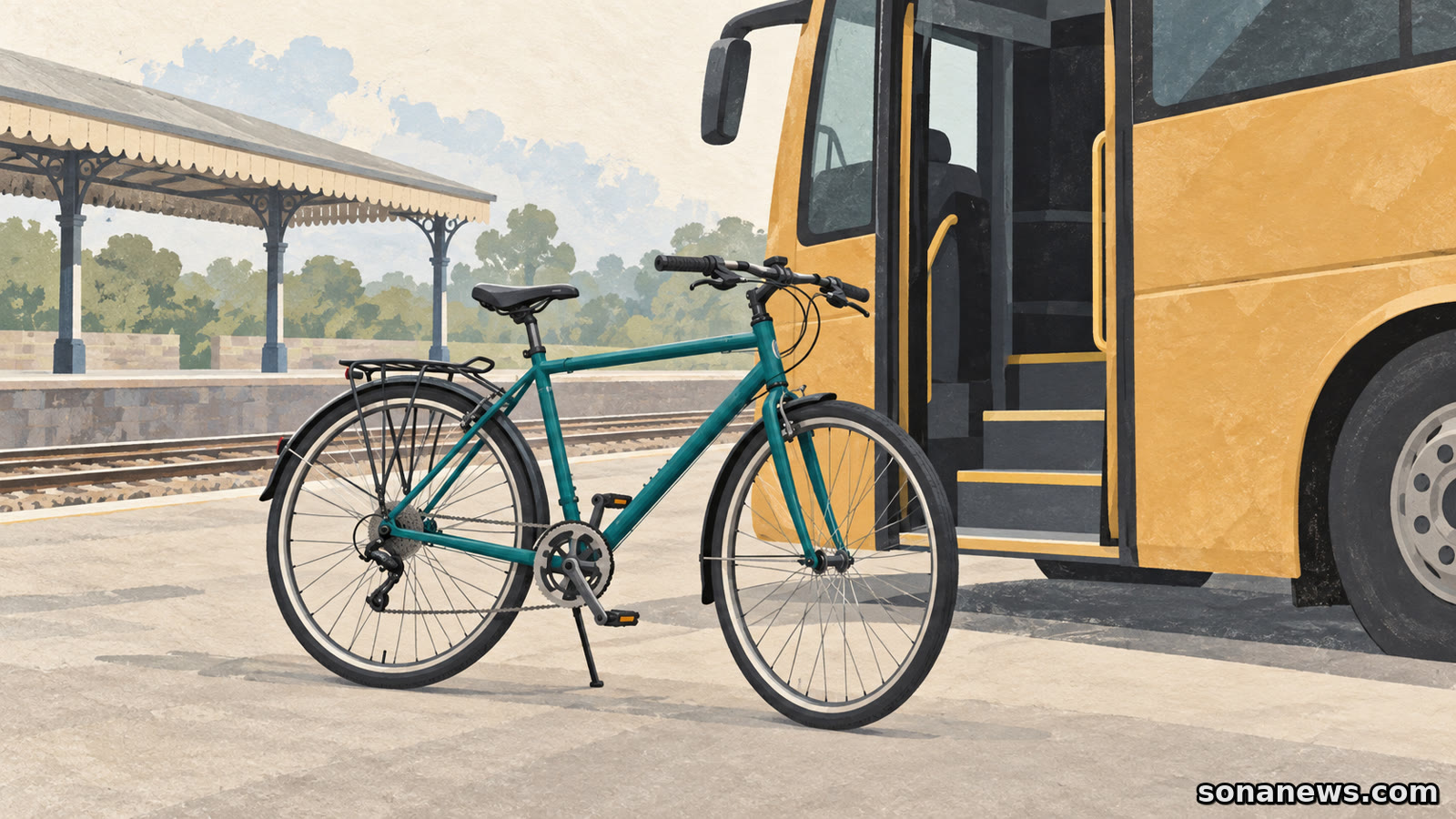

A train journey with a bicycle can unravel at a connection that does not involve another train. In Britain, a rail replacement bus may carry passengers along a closed section of railway, but it does not inherit the train's cycle facilities. Booking a bike space on the rail leg is therefore only part of checking whether the whole trip works.
National Rail's replacement-service guidance is explicit: **non-folding bicycles cannot be taken on replacement buses or coaches**. There may be limited space for folded bicycles, at the driver's discretion. That distinction matters before buying a ticket for a cycling holiday, a weekend ride or a journey where the bicycle provides the final connection.
These are existing rules, checked on 19 October 2026, not a newly announced ban. The useful change is to the order of planning: look for bus sections first, then check bicycle carriage on the trains. A passenger itinerary can be perfectly valid while still being unsuitable for the bike travelling with its owner.
National Rail says many train operators carry bicycles, with advance cycle reservations required on some services. Its advice is to check the policy of each train company used. That remains necessary even on a journey made entirely by rail, because a cycle space on one service does not establish availability on the next.
A replacement bus creates a different problem. The restriction is not simply that its bicycle spaces have sold out. The general rule excludes non-folding bikes, including when the replacement vehicle is a coach. A large luggage hold should not be treated as evidence that a full-size bicycle will be accepted.
Great Western Railway's own replacement-bus guide illustrates the distinction. It lists non-folding bikes, including tandems, among the large items it cannot accept. The same guide explains that coaches usually store luggage beneath the passenger seating. Both statements can be true: luggage storage is not permission to bring any object that might fit inside it.
For someone connecting from a train with a reserved cycle space, the practical question is therefore not just whether the next service has room. It is whether that next service is a train at all.
National Rail's cycle guidance says folding bikes are usually allowed on buses when fully folded, stowed as luggage and when space is available. It expressly says that a space for the folded bike cannot be guaranteed. Its replacement-service page also places acceptance within the driver's discretion.
GWR says folding bikes may be carried as luggage provided they are folded before boarding. That is not the same as presenting an unfolded bike at the door and expecting the train's arrangements to apply. Nor does owning a folding bicycle remove the need to check the replacement service and its luggage restrictions.
This is also where wording matters. “Bikes allowed on the train” and “folded bikes may be carried on the bus” describe different conditions. A journey planner can identify the road connection, but its existence does not reserve luggage space for a folded bicycle.
Replacement services are used for both planned engineering work and unexpected disruption. Network Rail says larger engineering projects are frequently scheduled overnight, at weekends and during bank holidays, when fewer people are travelling. Those are also times when a leisure trip may be planned, so checking only a normal weekday timetable can miss the relevant arrangement.
National Rail says its Journey Planner shows where a replacement service operates for all or part of a journey. The check needs the intended travel date and direction. The return leg deserves its own search rather than an assumption that it will mirror the outward trip.
For planned work, the operator's service notice and National Rail's disruption information provide the next layer of detail. Check which section is replaced, which services still run and whether an alternative rail route is offered. Before relying on a different train, confirm both ticket validity and its cycle policy with the operator. An alternative passenger route is not automatically an alternative bicycle route.
Unplanned disruption can still change arrangements after those checks. The point is not that careful research guarantees a bus-free trip. It is that a known replacement section should be identified before the rest of a cycling itinerary depends on it.
Even when travelling with a permitted folded bike, the change from train to bus needs attention. National Rail says the replacement stop can be found through station signs, onward-travel maps and the Transport Links section of its station pages. It may be close to the station rather than directly outside it.
GWR likewise warns that some stops are not near the station itself and that some replacement buses do not call at every station. Finding the right vehicle and destination is a separate task from finding the usual railway platform.
A valid train ticket is still required for the replacement service. National Rail also says a different timetable operates and journeys may take longer than usual. When checking onward connections, use that temporary timetable rather than the usual train running time. These details matter to the passenger even if the bike has been left behind.
If a planned bus section makes a full-size-bike journey unworkable, the options to investigate include another travel time, an operator-confirmed rail route, station cycle parking or hiring a bike at the destination. National Rail points travellers to station information and its Journey Planner for parking and local hire information. Availability needs checking; none is a guaranteed substitute.
The important separation is between getting the passenger there and getting the bicycle there. A replacement service may solve the first problem without solving the second. Checking that distinction before booking is more useful than discovering it beside the coach's luggage hold.
Editorial note. General travel information, not personalised legal or safety advice. Check current National Rail and train-operator guidance for the journey, ticket and equipment involved, and follow staff instructions.
Sources
Help us improve
Was this article useful?
One anonymous tap helps Sona improve future reporting, headlines and source context.
Up next
On the A13-A14 Paris-Normandy route, drivers without automatic payment have 72 hours to settle the toll. Rental cars need a separate check.
Continue readingMore in Travel