Eurostar Snow: check the ski-bag allowance on a separate TGV
Eurostar Snow allows skis or a snowboard in addition to its two-bag allowance. A separate TGV INOUI journey uses a different count, so pack for every train, not just the first.
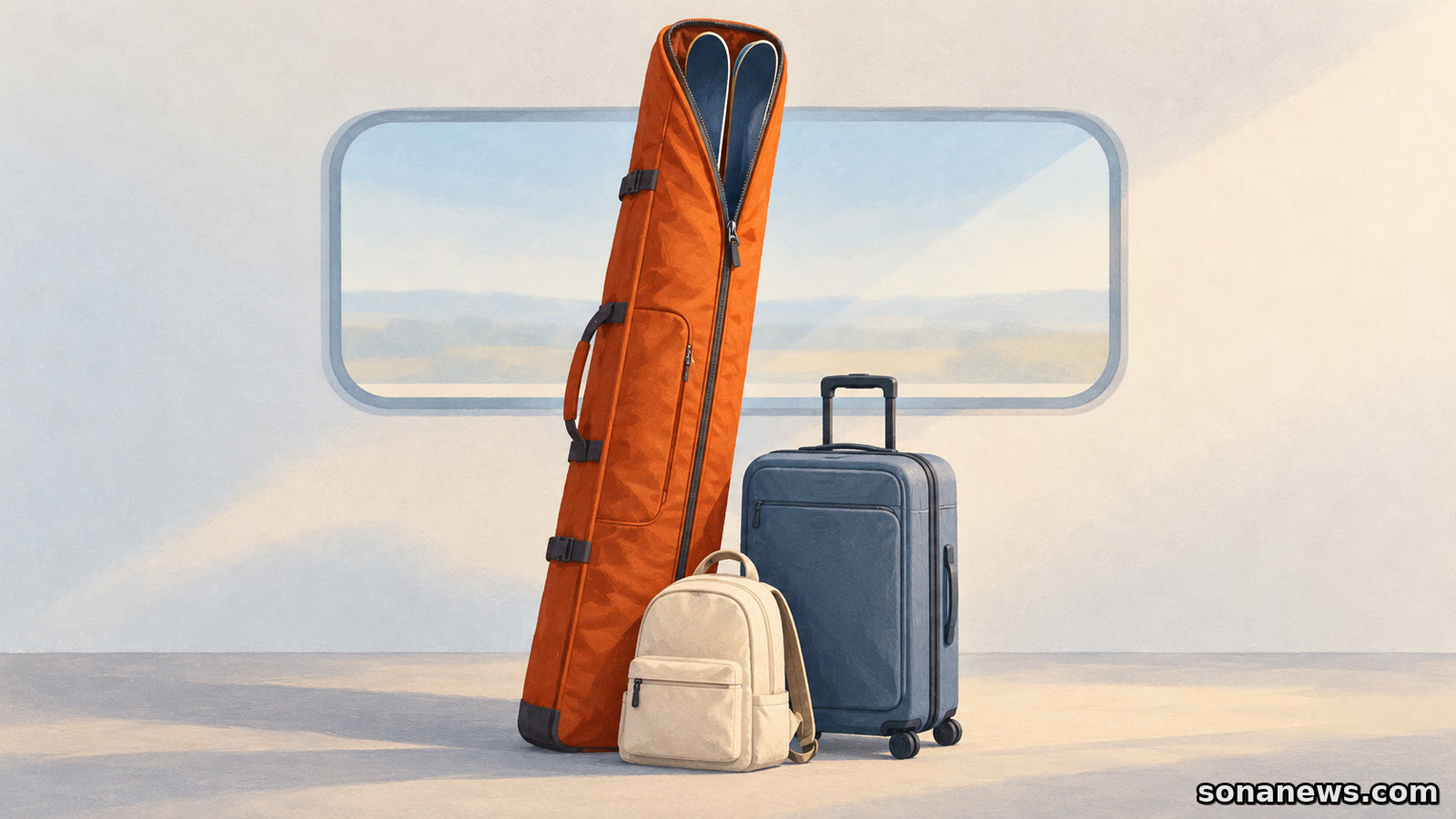

A pair of skis can be an extra item on Eurostar Snow and still use up part of the allowance on a separate TGV INOUI journey. For a UK-to-France ski trip involving different train services, the important packing question is not just whether skis are allowed. It is what else can travel alongside them.
Eurostar's sporting-equipment guidance says passengers on Eurostar Snow trains to the Alps can take one pair of skis or one snowboard in addition to their two-bag luggage allowance. The same page warns that on connecting TGV INOUI trains to the slopes, the equipment counts as one of the pieces of luggage.
That is a difference between services, not a new ban on taking skis by rail. These are existing rules checked on 29 October 2026, ahead of winter travel. This article does not announce train operating dates, confirm a particular connection or describe every Eurostar departure as a Eurostar Snow service. A separate TGV leg needs its own luggage check.
SNCF Connect gives two alternatives for the TGV INOUI journeys covered by its guidance: two suitcases and one item of hand luggage, or one suitcase, one special item and one item of hand luggage. Its ordinary suitcase limit is 70 x 90 x 50 cm; hand luggage is limited to 40 x 30 x 15 cm.
For someone taking skis, the distinction is practical. A suitcase, a ski bag and a small hand bag fit the structure of the special-luggage option, subject to the applicable conditions. Two suitcases plus the skis plus hand luggage should not be treated as the same allowance simply because the skis were an extra on Eurostar Snow.
This is a way to count the items before leaving home, not a guarantee that a particular collection of bags will be accepted. Size, packaging and the ability to carry and store the luggage still matter. The operator's current instructions for the booked service remain the reference.
SNCF's page covers TGV INOUI and INTERCITÉS travel in France and specified European services. It sets out different sections for other trains, including OUIGO, TGV Lyria and services operated in cooperation with Deutsche Bahn. A train sold on the same booking website does not automatically have the same luggage allowance.
SNCF Connect says skis must travel in a labelled cover. It allows one pair per person without a maximum dimension for that pair. The absence of a length ceiling is useful for equipment that is plainly longer than a suitcase, but it does not turn a ski bag into permission to bring several pairs.
Nor should that exception be extended to every long winter-sports item. The page also requires snowboards to be covered, while listing dimensions for special luggage. Someone travelling with a snowboard rather than skis should check the applicable special-item dimensions instead of borrowing the ski-specific exemption.
Eurostar's sporting-equipment FAQ likewise distinguishes skis and snowboards from its general instruction for items longer than 85 cm. That is why measuring a ski bag against an ordinary suitcase limit, without reading the sports section, can give the wrong answer. Both the equipment rule and the number-of-bags rule need to be read together.
Eurostar says there is no weight limit for the luggage described in its general FAQ, but passengers must be able to carry and store their own bags. SNCF's TGV INOUI guidance is more explicit about handling: travellers must be able to carry all their luggage in one go by themselves. It also says only ticket holders can go beyond the boarding gates onto the platform.
A ski bag is long even when it is light. Adding a suitcase and a backpack creates a handling problem that a weight check alone will not reveal. Before deciding the packing is finished, consider the whole set of items together, including any separately carried boot bag. Do not assume a sports accessory is invisible to the allowance merely because it belongs to the same activity.
Passengers who need assistance should check the operator's assistance arrangements for their journey rather than infer a service from this general luggage guidance. Neither an unrestricted weight statement nor a ski exception is a promise of porterage.
The useful details are on the itinerary: which service is Eurostar Snow, whether there is a separately booked TGV INOUI leg, and whether another operator carries the final part of the journey. Do the same check for the return if its trains differ. A destination in the Alps is not itself a luggage category.
Eurostar's ordinary luggage FAQ also separates London services from its routes between Belgium, France, the Netherlands and Germany. That is another reason not to turn a statement about one train into a rule for the entire network. The specific Eurostar Snow sports allowance is the relevant starting point here, not a universal extra-ski entitlement.
For a straightforward packing check, put the bags on the floor, count each separate item, measure the cases that have size limits and read the special-equipment section for the actual trains booked. Label the ski cover as instructed and check that the luggage can be handled together. The bag that travels as an extra on one service may occupy an ordinary allowance slot on the next.
Editorial note. General travel information, not personalised legal or transport-entitlement advice. Check the current luggage and assistance conditions for each booked service with the operator, particularly for unusual equipment or a journey involving several train companies.
Sources
Help us improve
Was this article useful?
One anonymous tap helps Sona improve future reporting, headlines and source context.
Up next

Arriving after midnight does not automatically use another Interrail travel day. A change of train can, and the pass must still be valid when the overnight journey ends.
Continue readingMore in Travel