London contactless: your phone and bank card are not interchangeable
TfL requires the same card or device at both ends of a pay-as-you-go rail journey. Switching from a phone to its linked bank card can leave an incomplete journey.
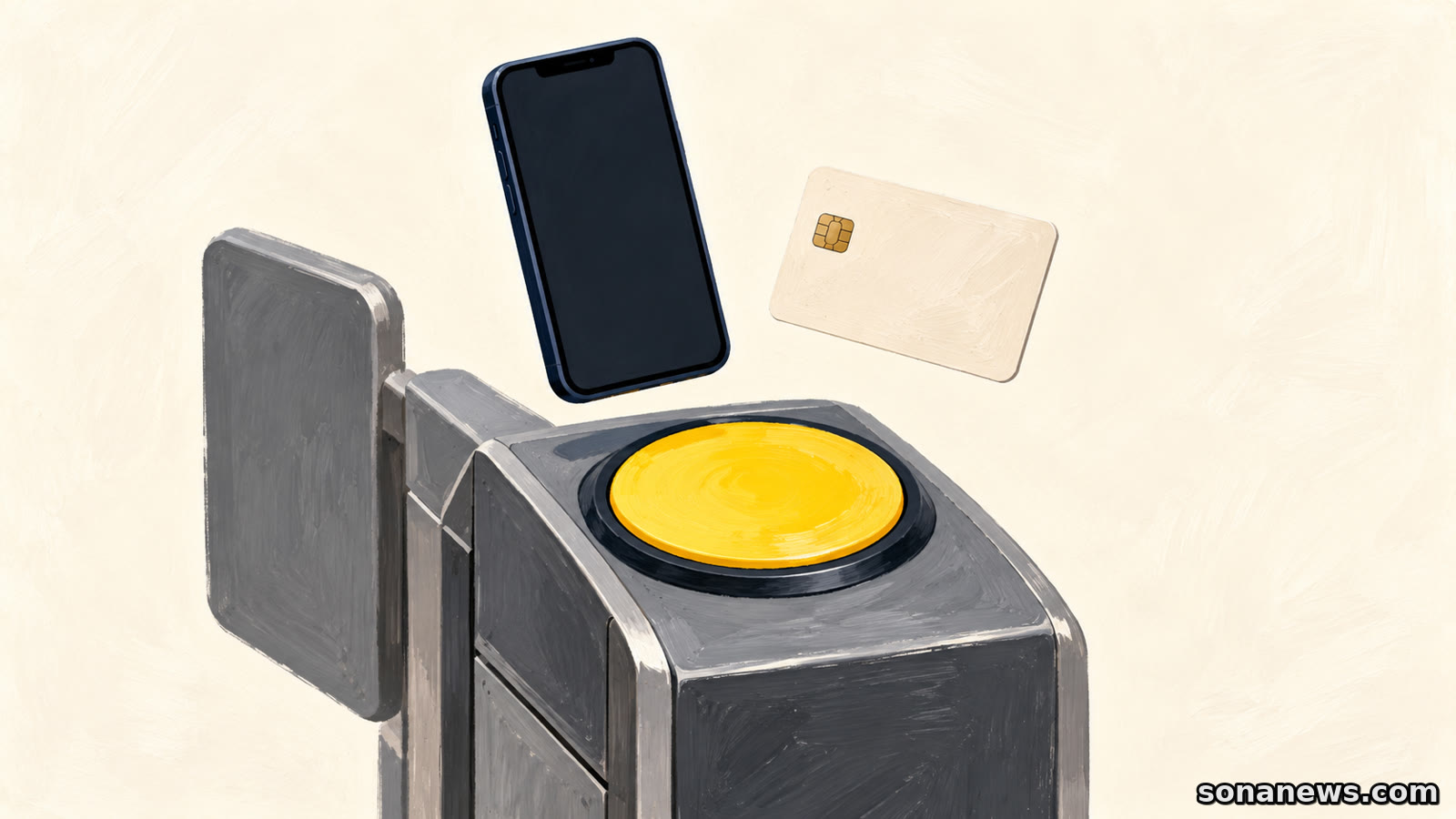

The bank card in your wallet is not a substitute for the phone you used to enter the London Underground. Even if the phone's payment comes from that card, switching to the physical card at the exit does not meet Transport for London's instruction to use the same card or device at both ends.
That distinction is easy to overlook when both ways of paying feel like access to the same money. For a pay-as-you-go rail journey, the important match is the card or device presented to the reader, not simply the bank account behind it. TfL explicitly warns against touching in with a phone and touching out with a watch or contactless card.
This is an explanation of existing London travel guidance, checked on 26 October 2026, not a newly announced charge. It concerns pay-as-you-go journeys where contactless is accepted. It does not mean every train in Britain accepts a bank card, or that every London transport service has the same touching-out procedure.
TfL's instruction is straightforward: use the same contactless card, device or Oyster card to touch in and out. A phone and a watch are not interchangeable for that purpose either. The fact that a traveller has set up the same bank card on both does not change the operator's instruction.
For example, someone who enters a Tube station using a phone should finish that journey using that phone and the same selected payment card. Taking the plastic card out instead is not a way to complete the original entry.
The distinction also matters before a phone runs low on power. TfL tells mobile-payment users to make sure their device has enough battery. Carrying the linked physical card may provide another means of payment, but it does not make that card a matching touch-out for an entry made on the phone. If the original method becomes unusable, ask staff for help rather than assuming a different device will close the journey correctly.
On the Tube, DLR, London Overground and Elizabeth line, the entry and exit records let the system work out where a passenger travelled. TfL says to touch out even when the gates are open. At stations without gates, yellow readers can be freestanding near entrances, exits or on platforms.
Walking through an open barrier and recording the end of a journey are therefore different things. The absence of a closed gate does not remove the need to use the reader. The same principle applies on National Rail journeys where the relevant pay-as-you-go system is accepted; check the route rather than extending London's contactless coverage to the whole rail network.
TfL says that without the necessary entry or exit record, it cannot work out the correct fare and charges a maximum fare for an incomplete journey. Maximum fares do not count towards capping. A daily cap should not be treated as a safety net that automatically absorbs a missed or mismatched touch.
There is a second, related problem: presenting more than the intended payment method. TfL calls this card clash and tells mobile-payment users to keep contactless and Oyster cards away from their device when touching in and out.
A bank card tucked into a phone case can make that separation less obvious. The useful habit is to present the chosen device or card on its own, not a collection of payment methods. This is different from deliberately switching between a phone and a card, but both can undermine the simple aim of recording the journey against the intended method.
For visitors from outside the UK, acceptance is another separate check. TfL says many overseas contactless cards work, but not all mobile payments linked to non-UK cards will necessarily work, and an issuer may charge overseas transaction fees. Those issuer charges are not the same thing as a TfL maximum fare.
On London's buses, passengers touch in at the start and do not need to touch out at the end. TfL warns that touching out on a bus can mean paying more than necessary. Applying the rail habit to every vehicle is therefore not a useful shortcut.
Trams also generally require a touch-in only, but station interchanges have specific instructions. TfL publishes separate steps for Wimbledon, Elmers End and Mitcham Junction. At Wimbledon, for instance, a passenger arriving by tram touches out at the station exit gates, even if they are open. Someone changing between rail and tram should read the instructions for that interchange rather than rely on a blanket “never touch out” rule.
TfL's incomplete-journey refund page specifically includes using two different cards or devices for the same journey among the possible reasons for one or two maximum fares. That is a route to having the record reviewed, not a promise that every claim will succeed.
The operator says to wait at least 48 hours before applying because most refunds are processed automatically. If no automatic refund arrives, its published claim window is up to eight weeks from the journey. Applicants need the journey or payment date and time, plus the relevant Oyster or contactless details. For a contactless refund application, TfL requires the card to be registered online.
Use TfL's own journey and payment history to establish what was recorded, then follow its incomplete-journey refund process if appropriate. The best prevention happens earlier: decide which payment method will make the whole rail journey, keep other cards away from the reader, and use that same method at the exit. “Same account” is not the instruction; “same card or device” is.
Editorial note. General travel information, not personalised legal, financial or fare-entitlement advice. Check TfL's current instructions for the journey and payment method, and ask staff or TfL customer services about an individual problem.
Sources
Help us improve
Was this article useful?
One anonymous tap helps Sona improve future reporting, headlines and source context.
Up next

Arriving after midnight does not automatically use another Interrail travel day. A change of train can, and the pass must still be valid when the overnight journey ends.
Continue readingMore in Travel