Italy's regional train tickets: check the type before stamping
Trenitalia's paper tickets, Digital Regional Tickets and electronic PDFs follow different validation rules. A printed PDF is not the same as a station-issued paper ticket.
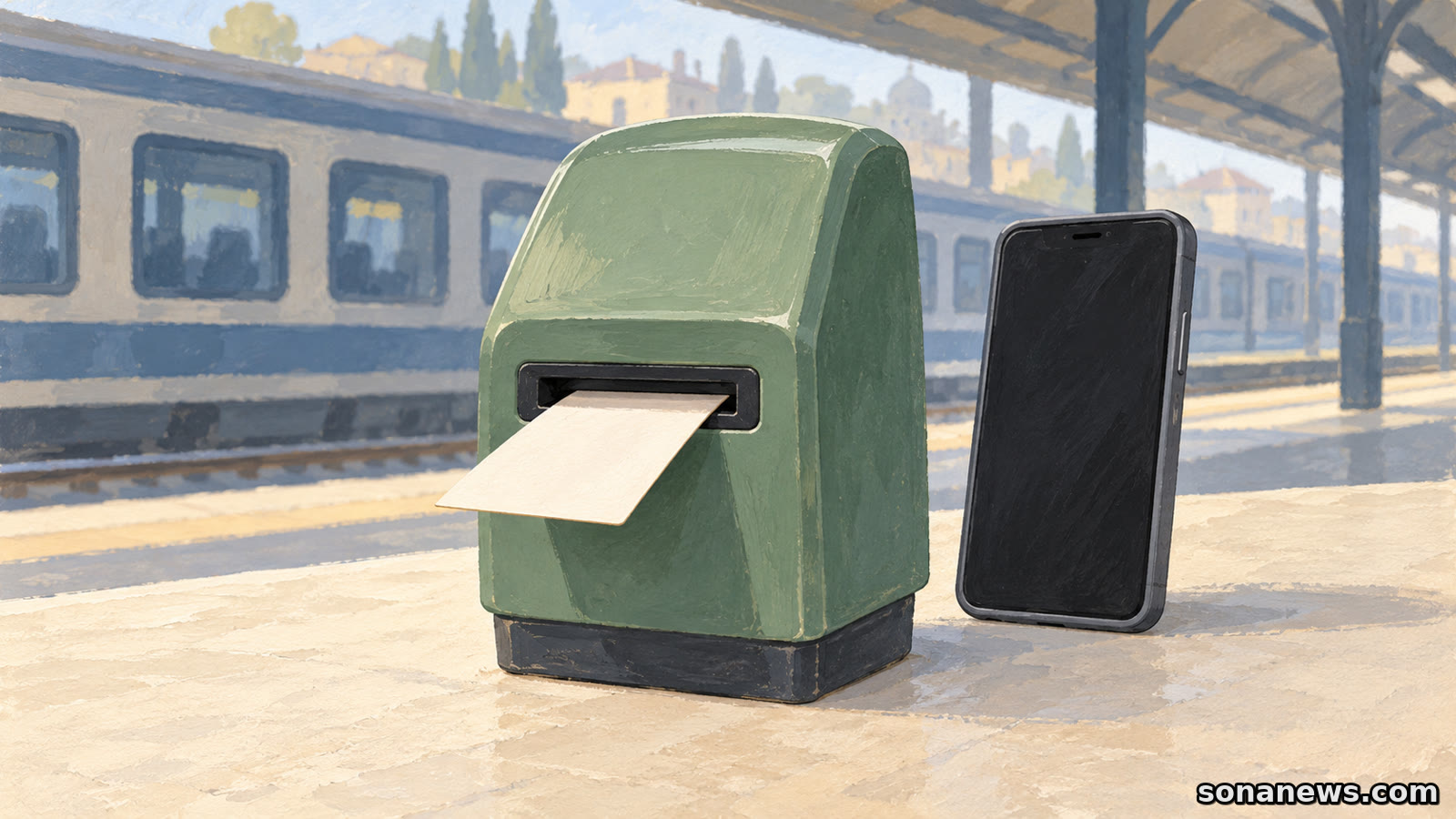

A sheet of paper is not enough to tell you whether an Italian regional train ticket needs stamping. Trenitalia sells conventional paper tickets that must be validated at the station, but an Electronic Regional Ticket can also be printed at home. That printout belongs to a different ticket product and does not need the same stamp.
The distinction matters just as much on a phone. Trenitalia's Digital Regional Ticket validates automatically at the selected train's scheduled departure. Its Electronic Regional Ticket, often supplied as a PDF, is treated as already validated for the chosen departure time. These are separate products, despite names that sound almost interchangeable in English.
This guide concerns Trenitalia regional services in Italy, using official guidance and conditions checked on 22 October 2026. It is not a new nationwide rule, and it does not establish the conditions for every Italian operator, high-speed service or local integrated fare. The useful first question is what ticket was issued, rather than what device or piece of paper holds it.
Trenitalia says single paper regional tickets must be validated before the train departs, using the validating machines at the station where the journey begins. They can be bought through channels including station ticket offices, self-service machines and authorised sellers. Buying one is not the same action as validating it.
Under the general regional conditions, validation is possible until 23:59 on the day shown on the ticket. The usual validity period is four hours from validation, although individual regional or provincial fares can have different provisions. That is not permission to use the ticket on any day, or to ignore a more specific restriction printed with the fare.
There is also a defined procedure when all the station's validators are missing or out of service. The conditions say the passenger must approach the accompanying train staff on their own initiative when boarding. Staff can then validate the ticket without a surcharge. The wording matters: this is not a general exemption for forgetting to stamp, nor permission to wait until an inspector eventually arrives.
For the Digital Regional Ticket, there is no manual check-in step. Trenitalia says it validates automatically at the scheduled departure time of the train selected. The relevant clock is the timetable, not the moment a delayed train actually leaves the platform.
Before that point, the product allows changes. Until 23:59 on the day before travel, the date and time can be changed an unlimited number of times. On the travel day, departure-time changes remain possible until the scheduled departure of the selected train. Trenitalia sends confirmation of a change, and the passenger shows the modified ticket for inspection.
Once automatically validated, the ticket is no longer changeable and is normally valid for the train indicated. It should not be treated as a four-hour open ticket simply because another Trenitalia regional product has that validity window.
Trenitalia's conditions make a separate allowance if the booked train is cancelled or delayed: the passenger may take the first available train on the same route, in the same category and class, without an additional charge. That disruption provision is not a blanket promise of free switching after missing a train for personal reasons. For a different service, check the applicable conditions with staff rather than assuming the tickets are interchangeable.
The Electronic Regional Ticket is supplied as a PDF and can be shown on a suitable screen or printed. Trenitalia's regional guidance says this product does not require validation. Its general validity runs from the selected train's departure time through the following four hours, subject to specific fare exceptions.
This explains why “paper versus phone” is an unreliable shortcut. Printing an electronic ticket does not turn it into the conventional paper ticket that needs a station stamp. Equally, the fact that a ticket appears on a screen does not tell you which set of time-change and validity rules applies.
Trenitalia lists particular uses for the electronic product, including group tickets, daily bicycle supplements and tickets issued by agencies that are not enabled for Digital Regional Tickets. The ticket description and accompanying instructions are therefore more useful than an assumption based solely on where it was bought.
For a Digital Regional Ticket bought while logged in, Trenitalia directs passengers to the website or app's “My journeys” area. For a purchase without logging in, it directs them to the link in the confirmation email or requested text message. Its inspection guidance describes the ticket's green dynamic bar, which appears automatically at the scheduled departure.
That is a reason to check that the actual ticket opens before heading for the train. A receipt confirming payment is not, by itself, the same thing as displaying the required ticket. The digital and electronic products are personal and non-transferable, and the conditions require a valid identification document when they are checked.
Trenitalia also says the Digital Regional Ticket cannot currently be added to a wallet because of its advanced functions. Travellers should not build their plan around a wallet option that the operator does not offer. A printed PDF can be an accepted presentation of the electronic product, but it is not a universal substitute for every digital ticket.
At the station, another passenger's actions may be perfectly correct for a different ticket. One person may need the validator, another may have an automatically activated digital ticket, and a third may carry a printout that needs no stamp. None proves what the next passenger must do.
Identify the operator and ticket product, check the date, route and any fare-specific conditions, then follow the matching instructions. For conventional paper tickets, allow time for validation before departure. For the Digital Regional Ticket, make any permitted change before the scheduled departure deadline. The format is visible; the ticket conditions are what decide the next step.
Editorial note. General travel information, not personalised legal or ticket-validity advice. Check the current operator instructions and conditions for the particular ticket and journey, and ask staff if the ticket type or validation requirement is unclear.
Sources
Help us improve
Was this article useful?
One anonymous tap helps Sona improve future reporting, headlines and source context.
Up next

Arriving after midnight does not automatically use another Interrail travel day. A change of train can, and the pass must still be valid when the overnight journey ends.
Continue readingMore in Travel