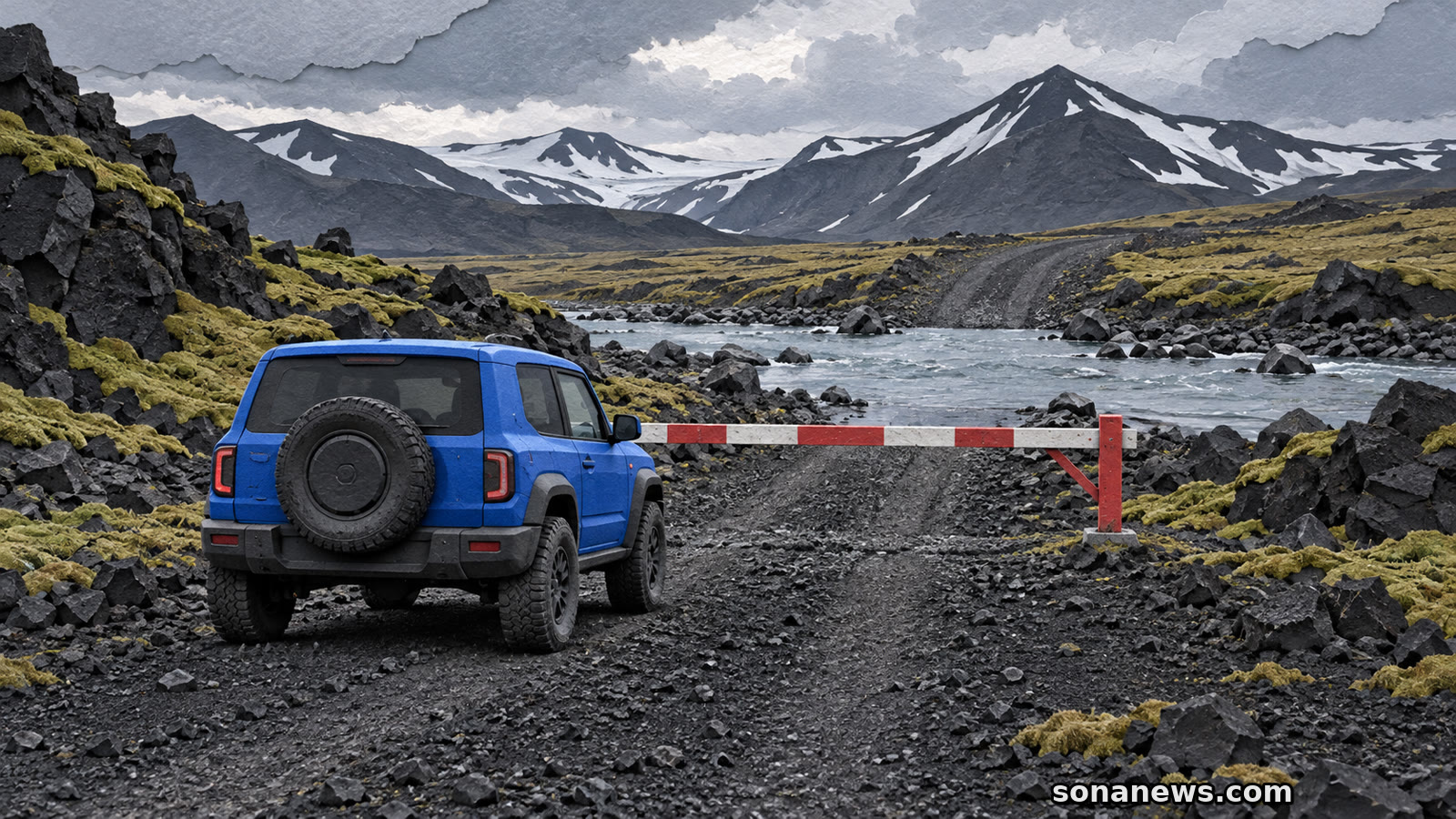
France’s Crit’Air sticker check belongs in the route plan, not at the city gate
France’s clean-air sticker can apply to a foreign-registered car, but the boundary, timetable and excluded vehicle classes are local. The route and registration document both matter.


A French city break by car can now have a boundary that is invisible on the hotel booking. The key object is a small round windscreen sticker called Crit’Air, but the useful question is not simply whether France has one. It is whether the actual vehicle and route enter a local low-emission zone at a time when restrictions apply.
That distinction matters for visitors. France’s official Crit’Air service has a specific order path for vehicles registered outside France. The sticker is therefore not only a requirement for French plates. At the same time, France does not operate one identical access rule across every city and every hour.
The practical task has three parts: classify the vehicle, check the route and read the current local rule. Leaving all three until the edge of a city turns a small piece of administration into a poor place to improvise.
Crit’Air classifies a vehicle by its local air-pollutant emissions. The French government uses six sticker classes, with the category determined by the vehicle type, fuel or power source, Euro emissions standard and, in some cases, first registration date. The sticker remains tied to that vehicle’s classification rather than changing for each journey.
The sticker is required when a vehicle circulates in a low-emission mobility zone, known in France as a ZFE-m, and when a prefect activates differentiated traffic during certain pollution episodes. It is not a nationwide road toll, a motorway vignette or proof that a particular city route is open.
This is where travel summaries often become too neat. Carrying a sticker can be necessary without being sufficient. A local zone can still restrict the vehicle’s class, and the rule can depend on where, when and what is being driven.
France’s national ZFE portal shows why one generic checklist is unreliable. The official entries describe different boundaries, vehicle scopes and timetables.
Grenoble’s rules for private cars and powered two-wheelers, for example, apply on weekdays during stated daytime hours across a defined group of municipalities. Strasbourg’s zone is described as continuous, while Clermont-Ferrand’s current restriction is narrower and does not target private cars in the same way. Other cities exclude certain ring roads, provide access corridors to park-and-ride sites or apply different rules to commercial vehicles.
Those examples are not a substitute for checking a destination. They are evidence that the destination matters. A route that stays on an excluded bypass may differ from one that turns towards a city-centre hotel, even when both appear under the same city name in a booking app.
The French government points drivers to its national ZFE portal, Bison Futé map and the Itinériz route tool. Itinériz is designed to compare an actual vehicle with existing zones, including the territory, affected vehicle classes and available exemptions. A local authority’s own page remains important when a journey is close to the boundary or depends on an exemption.
For a vehicle registered outside France, the official Crit’Air website asks for a readable photo or scan of the registration certificate. At the time of publication, it lists the government price as €3.11 plus €2 postage outside France, or €5.11 per vehicle in total.
That price is also a useful fraud check. Both the Crit’Air service and Bison Futé warn about intermediaries and fraudulent sites charging more than the official amount. The government ordering address ends in `.gouv.fr`. A paid search result or convincing design is not evidence that a seller is official.
The registration document supplies the facts used for classification. The official simulator points to fields such as the fuel type, Euro standard and first registration date, although field labels can vary between countries and document formats. This is a reason to use the foreign-vehicle application rather than guessing a colour from the age of a car.
The sticker is delivered by post. The ecology ministry says an email receipt is issued after an application and records the certificate category while the physical sticker is on its way. Travellers should not turn that receipt into a universal promise about roadside acceptance. The safer planning assumption is to allow for delivery and verify any time-sensitive question with the relevant official authority.
A traveller collecting a rental in France should not automatically order a sticker for a vehicle they do not own. The first check is the actual windscreen and the rental operator’s information. The company controls the car’s registration record and can explain how it handles local-zone access.
A rental from a neighbouring country may be foreign-registered, even if the journey begins close to France. The same route question still applies, but responsibility for documents, stickers and permitted use may also be governed by the rental agreement. Ask before crossing the border or committing to accommodation inside a zone.
Nor should an electric car be treated as paperwork-free simply because it has no tailpipe. Electric and hydrogen vehicles receive the cleanest Crit’Air class, but the official system still uses a visible sticker in the circumstances where one is required. Local access rules and rental terms remain separate checks.
The calm way to handle Crit’Air is to move the decision earlier. Identify the car, check its registration country and classification, then test the route against current official zone information. Look beyond the destination name to the precise hotel, car park and access road. Recheck shortly before departure because local boundaries, exemptions and timetables can change.
If the car cannot use the intended route, that does not necessarily cancel the trip. A bypass, accommodation outside the zone, a park-and-ride site or a different vehicle may change the plan, but the suitable alternative depends on local rules and personal circumstances. This article cannot determine that choice for an individual journey.
Crit’Air is a national sticker attached to a local decision. The most useful travel habit is not merely to buy the disc. It is to connect the vehicle record to the actual line the car will take through a French city.
Editorial note. This article provides general travel-planning information from official French sources available at publication time. It is not personalised legal, driving, rental, insurance or emissions-compliance advice. Check the actual vehicle, route, rental terms and current national and local authority instructions before driving.
Sources
- French government, official Crit’Air ordering service, Extracted 24 August 2026. Verified: foreign-registered vehicles have an official application path; a readable registration-certificate image is required; current French and overseas postage prices; six classes; vehicle-data fields used by the simulator; sticker requirement in ZFE-m areas and differentiated traffic; and the warning about intermediaries and fraudulent sites
- Service Public, “Vignette ou pastille Crit’Air (certificat qualité de l’air)”, Verified 1 January 2026 and extracted 24 August 2026. Verified: sticker purpose and classification; when it is mandatory; local-zone and pollution-episode scope; official route and zone tools; vehicle criteria; Grand Paris example; exemptions; and general enforcement context
- French Ministry for Ecological Transition, “Certificats qualité de l’air : Crit’Air”, Updated 2 February 2026 and extracted 24 August 2026. Verified: current active status; visible round sticker; six classes; official ordering and pricing basis; emailed receipt after application; lifetime classification; ZFE and temporary differentiated-traffic uses; and fraud warning
- French government national ZFE portal, “Les ZFE françaises”, Extracted 24 August 2026. Verified: active-zone list and the material differences in current boundaries, times, vehicle categories, bypass exclusions and phased restrictions, including Grenoble, Strasbourg and Clermont-Ferrand examples
- Bison Futé, “Zones à faibles émissions mobilité (ZFE-m)”, Extracted 24 August 2026. Verified: national zone map; locally defined perimeters and hours; windscreen display; official-site warning; and link to the current national zone list
- Service Public, “Itinériz : liste des ZFE et simulation de trajets”, Verified 23 December 2025 and extracted 24 August 2026. Verified: route simulation against vehicle authorisation and access to zone territory, vehicle scope and exemption information
Help us improve
Was this article useful?
One anonymous tap helps Sona improve future reporting, headlines and source context.
Up next
Some train-deck storage is available without a reservation, but a suitcase over 160 cm in total dimensions still needs the right seat on the Tokaido-Sanyo-Kyushu route.
Continue readingMore in Travel