Italy's September rail strikes start with the train number
Three nationwide rail actions overlap from the evening of 7 September to 8 September. The calendar is not a cancellation list, so check each operator and exact service before changing the trip.
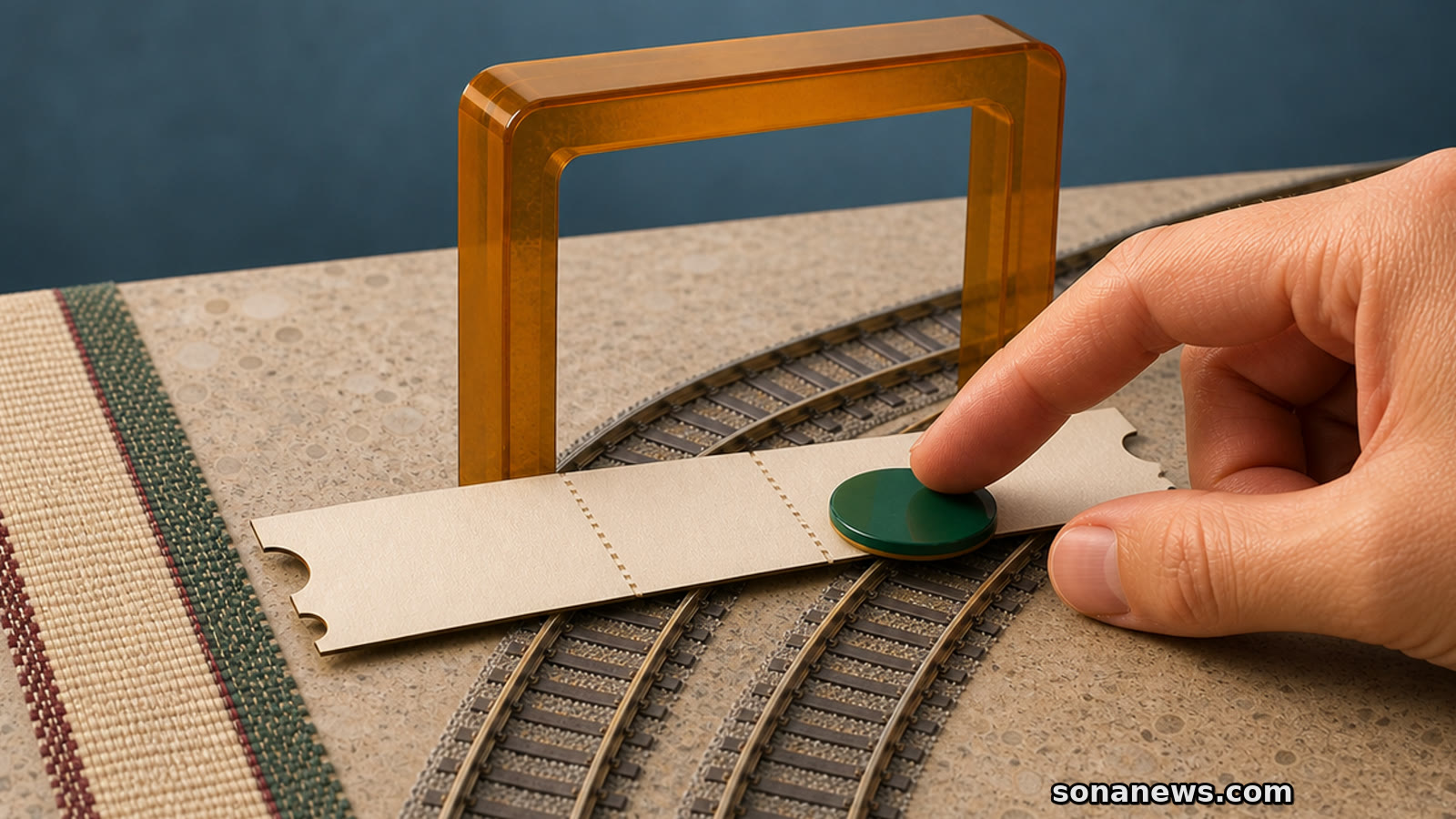

Italy's official strike calendar is a warning, not a departure board. Anyone planning a rail trip from Monday evening, **7 September 2026**, through Tuesday, **8 September**, should resist the simplest interpretation: seeing a 24-hour window does not prove that every train in that window will be cancelled.
As of 27 August, the Italian Ministry of Infrastructure and Transport's strike dashboard lists **three overlapping nationwide rail actions**, each scheduled from **21:18 on 7 September to 21:17 on 8 September**, local time. One entry covers a multi-sector national action, another concerns train and onboard staff in the FS group, and a third concerns staff at railway companies. The dashboard also lists separate regional rail actions in Lombardy and Veneto on 8 September.
That creates a wide disruption risk. It still does not answer the question printed on a ticket: will this exact train run?
The ministry dashboard confirms the announced date, time, territorial scope, sector and union fields. It marks the three main rail entries as national and currently announced. It is the right place to establish the strike window.
It is not a live operating plan. The entries do not provide a train-by-train cancellation list, and they do not guarantee that the planned timing or scope will remain unchanged. Strike notices can be revised, deferred or withdrawn. Operators may publish service details closer to departure.
The practical distinction matters. A traveller who cancels every booking solely because it falls inside the window could discard a service that remains scheduled or protected. A traveller who assumes an early-morning departure is safe merely because it sits in a familiar commuter period could be relying on a rule that does not apply to that train.
Trenitalia publishes guaranteed-service information for strikes. Its long-distance tables identify protected trains by **train number and route**. For regional traffic on weekdays, the company says essential services are guaranteed during the commuter periods **06:00 to 09:00** and **18:00 to 21:00**.
Those periods are not a promise that every train shown in an app will operate. The operator's guaranteed-train list and live service notice remain the relevant checks. The ministry calendar itself also says that trains already running when a strike begins normally continue only if they can reach their final destination within one hour; otherwise they may stop at an earlier station.
Other operators should be checked on their own channels. A journey can also involve more than one operating company even when it looks like one itinerary in a booking email.
For each booked rail leg, record five facts before making a decision:
- the operating company, not only the retailer that sold the ticket;
- the exact train number;
- the booked origin and destination stations;
- the scheduled local departure time; and
- whether connecting legs were sold as one through ticket or as separate contracts.
Then compare the service with the operator's strike page or guaranteed-train list. Check the booking app or operator account for a message, but silence several days ahead is not proof that the train will run. For a connection, repeat the process for every leg.
A sensible sequence is to check when the strike first appears, again when the operator publishes its detailed notice, and once more shortly before leaving for the station. Keep screenshots or saved notices, the original ticket and receipts for any necessary replacement journey.
EU rail passenger rules provide a decision point when a train is cancelled or a delay of more than 60 minutes at the final destination is expected. The broad options are reimbursement, continuation, or rerouting under comparable conditions, depending on the circumstances.
The carrier should offer the choice. EU guidance also says that if the railway does not communicate available rerouting options within 100 minutes of the scheduled departure of the delayed or cancelled service, a passenger may arrange an appropriate alternative public-transport journey and seek reimbursement of the necessary, appropriate and reasonable cost. That is not an automatic blank cheque for any taxi, private transfer or premium replacement.
For missed connections, protection can depend on whether the legs form a through ticket. Separate tickets can leave separate contracts and different remedies. Ask the operator before buying a replacement if the situation allows, and preserve evidence of the disruption and the cost.
Trenitalia's refund guide says a passenger who decides not to travel because of a strike may request reimbursement for an unused ticket from the declaration of the strike until the booked train's scheduled departure. Conditions can differ by operator, ticket type and sales channel, so follow the instructions for the ticket actually held.
A careful traveller does not need to guess today whether the network will stop. Build alternatives around the specific itinerary instead.
- **Identify every train number and operator now.** Do not rely on the route name alone.
- **Locate the relevant guaranteed-service page.** Save the operator link rather than a third-party summary.
- **Protect the critical connection.** If a missed flight, ferry or event would cause a large loss, identify a flexible earlier option without buying it blindly.
- **Wait for a service-specific signal.** A cancellation message, an operator notice or a guaranteed-list match is more useful than the broad strike window.
- **Recheck shortly before departure.** Live running information can change after the first notice.
The central fact is simple: the official calendar establishes a real nationwide disruption window, while the train number determines the next useful check. **21:18 on 7 September to 21:17 on 8 September** is the period that triggers verification, not a universal cancellation label.
Editorial note. This article provides general travel information, not personalised legal or immigration advice. Strike notices, timetables, ticket conditions and passenger remedies can change. Check the ministry dashboard, the operating carrier and the terms of the ticket before acting.
Sources
- Italian Ministry of Infrastructure and Transport, official strike dashboard, Extracted 27 August 2026. Verified the three overlapping nationwide rail entries, their announced 21:18 on 7 September to 21:17 on 8 September window, national scope, staff-sector descriptions, and the separate Lombardy and Veneto regional entries
- Trenitalia, "Guaranteed trains in case of strike", Extracted 27 August 2026. Verified that long-distance guarantees are organised by train number and route, that weekday regional essential services use the 06:00 to 09:00 and 18:00 to 21:00 periods, and that trains already running face the one-hour destination condition described in the article
- Trenitalia, refund guide, Extracted 27 August 2026. Verified the operator's unused-ticket refund timing for passengers who decide not to travel because of a strike
- European Union, Your Europe rail passenger rights, Extracted 27 August 2026. Verified the reimbursement, continuation and rerouting choice after cancellation or an expected delay above 60 minutes, the 100-minute rerouting-information boundary, and the through-ticket distinction for missed connections
- European Commission, rail passenger rights, Extracted 27 August 2026. Cross-checked the current EU passenger-rights framework and the role of national enforcement bodies
- Italian Transport Regulation Authority, rail passenger rights, Extracted 27 August 2026. Verified the Italian regulator's passenger-rights remit and the boundary between asking the operator and escalating a complaint
Help us improve
Was this article useful?
One anonymous tap helps Sona improve future reporting, headlines and source context.
Up next
Some train-deck storage is available without a reservation, but a suitcase over 160 cm in total dimensions still needs the right seat on the Tokaido-Sanyo-Kyushu route.
Continue readingMore in Travel