Your self-cleaning oven may need its racks taken out
A shelf that handles cooking is not automatically suitable for pyrolytic cleaning. Check the oven and accessory instructions before leaving racks, trays or runners inside.
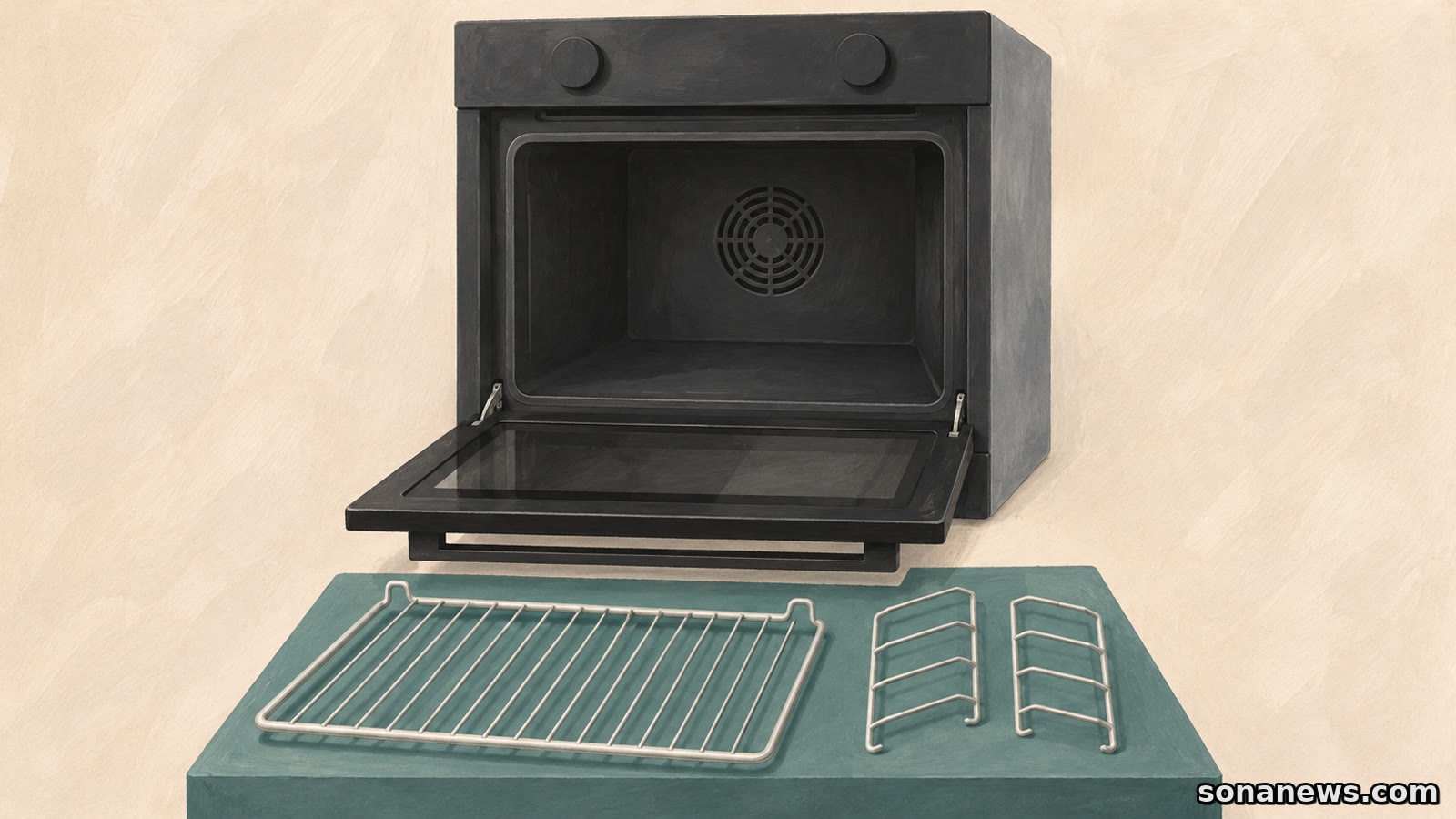

The oven can clean itself. That does not necessarily mean it can clean everything normally kept inside it. Before starting a pyrolytic cycle, the wire shelf, baking tray and removable side supports may all need to come out, even if they were supplied with the appliance.
That distinction appears in manufacturers' instructions, not just in cleaning tips. AEG's UK guide tells owners to remove accessories and removable shelf supports while the oven is cold. Bosch's UK overview similarly begins with removing everything inside. Yet Miele sells particular PyroFit runners designed for pyrolytic cleaning. The useful question is therefore not whether an oven is “self-cleaning”, but which parts its instructions explicitly allow to remain.
This is established care guidance, not a new recall or a claim that a particular appliance is faulty. The examples come from UK manufacturer guidance and a Miele product specification. They illustrate why checking the exact model matters; they are not a single procedure for every oven or market.
Cooking compatibility is not cleaning permission
Pyrolytic cleaning uses high heat to turn food residue and grease into ash. AEG describes temperatures of up to 500°C in its guide; Bosch's overview gives 485°C. Those figures describe the manufacturers' cleaning functions, not a temperature setting to copy into another oven.
The distinction matters because an accessory's everyday job tells you very little about whether it can stay in for that cycle. A rack that supports a roasting dish, or a tray sold alongside the oven, is not automatically approved for pyrolysis. “Fits this oven” and “may remain during pyrolytic cleaning” are different pieces of information.
Start with the cleaning section of the oven manual, rather than relying on a product photograph showing shelves inside. Then check any separate instructions for the accessory. If a replacement part has a different product number, do not assume that permission for the original part transfers to it.
The same caution applies to second-hand ovens whose accessories may have been changed. Knowing the oven model is useful, but it does not by itself establish the identity or cleaning suitability of every loose item that came with it.
The side supports are easy to overlook
Taking out the horizontal shelves can feel like emptying the oven. AEG's wording goes further: it specifies removable shelf supports as well as accessories. These are the supports at the sides that carry shelves or runners, rather than the shelves themselves.
That makes a quick glance through the open door an incomplete check. A removable component can look like part of the cavity, especially if it normally stays in place between meals. The manual's preparation list is more useful than deciding by appearance what counts as an accessory.
This is not an instruction to dismantle an oven. Remove only parts identified as user-removable, using the method given for that model, with the appliance cold. Do not force a support, remove fixed panels or borrow a release mechanism from another manufacturer's video. If the instructions are unclear, ask the manufacturer before starting the cycle.
An oven with a steam function may have another preparation step. AEG tells owners of its steam ovens with a water tank to empty the tank before pyrolytic cleaning, following the model's manual. That is a model-specific requirement, not a reason to add water to a pyrolytic cycle.
Some accessories are designed to stay
A blanket rule that every runner must always be removed would also be wrong. Miele's specification for the HFC 72 PyroFit FlexiClip runners explicitly lists automatic pyrolytic cleaning and identifies them for H 6000/7000 appliances with pyrolytic cleaning.
That is evidence of a particular compatible accessory, not permission for all telescopic runners. The product name and compatibility details do the work. A similar-looking runner, another Miele part or an accessory from a different manufacturer needs its own instructions checked.
Nor does approval for one pair of runners automatically cover the tray or shelf resting on them. Treat each item separately where the manual does so. The aim is to establish a documented match between the oven, the accessory and the cleaning function, rather than to infer permission from a shared brand or a metal finish.
If that match cannot be established, pause and obtain the correct guidance. A cleaning programme is not a useful way to test an unidentified accessory's heat tolerance. Clean excluded parts separately using their own care instructions, rather than assuming they can join the cavity's cycle.
Preparation does not end with the racks
The remaining precautions still matter. AEG advises wiping the cavity and inner door glass before starting, ensuring good ventilation during and after the cycle, and keeping children away while the appliance is hot. Its guidance also says to move pets, especially birds, away from the vicinity during and after cleaning.
Follow the manufacturer's instructions for the household and installation concerned. An empty oven is not a substitute for those precautions. Bosch's HBA571B.4 manual also requires removal of coarse dirt and warns that vapours from the cleaning function can irritate mucous membranes. Neither a familiar brand nor the term “self-cleaning” should be read as a blanket health assurance.
AEG says its door locks during pyrolytic cleaning and instructs owners to wait until the oven is cold before wiping away the residue and reinserting accessories. Do not force a locked door or reach inside because the timer appears to have finished.
The preparation is less convenient than the phrase “self-cleaning” suggests, but it answers the important question before the heat begins. The oven may handle the residue. The manual still decides what belongs inside with it.
Editorial note. General household information, not personalised appliance-repair, medical or safety advice. Use the exact oven and accessory instructions. Prepare only when cold, keep children away from the hot appliance, follow ventilation and pet precautions, and allow the required cool-down. Do not force parts or a locked door, bypass safety features or dismantle fixed components. Seek manufacturer or qualified service support if the correct procedure or accessory compatibility is uncertain.
Sources
- Source: AEG UK, How to use Pyrolytic Cleaning on your AEG oven, Accessed 11 November 2026. Confirms cold removal of accessories and removable supports, steam-model tank preparation, pre-wiping, ventilation, children and pets precautions, door locking and cool-down before wiping and reinsertion. Temperature is attributed, not prescribed universally
- Source: Bosch UK, How to use pyrolytic cleaning, Accessed 11 November 2026. Confirms removal of contents before the function and its stated 485°C temperature. The page's suggested cleaning frequency is not generalised across appliances. Its brief wipe-after wording is not used to override AEG's explicit cool-down precaution
- Source: Miele, HFC 72 Original Miele PyroFit FlexiClip runners product specification, Accessed 11 November 2026. Explicitly supports automatic pyrolytic cleaning and compatibility wording for H 6000/7000 appliances with the function. This is a product-specific exception, not approval for other runners, trays or racks
- Source: Bosch, HBA571B.4 User manual and installation instructions, section 14, Accessed 11 November 2026. Confirms removal of accessories, cookware and shelf supports, removal of coarse dirt, ventilation, possible mucous-membrane irritation, child/pet precautions and cool-down. This is a particular model's manual, not a universal accessory compatibility table
Help us improve
Was this article useful?
One anonymous tap helps Sona improve future reporting, headlines and source context.
Up next
Metal grease filters and carbon odour filters need different care. UK manufacturer guidance shows why even a washable carbon filter needs its own instructions.
Continue readingMore in Home & Living