A new friendship study challenges the ‘wide or close’ trade-off
Across five studies with 5,707 participants, wanting a wider friendship network went with wanting intimacy with more friends. The scale measures preferences, not proof that people can sustain both.
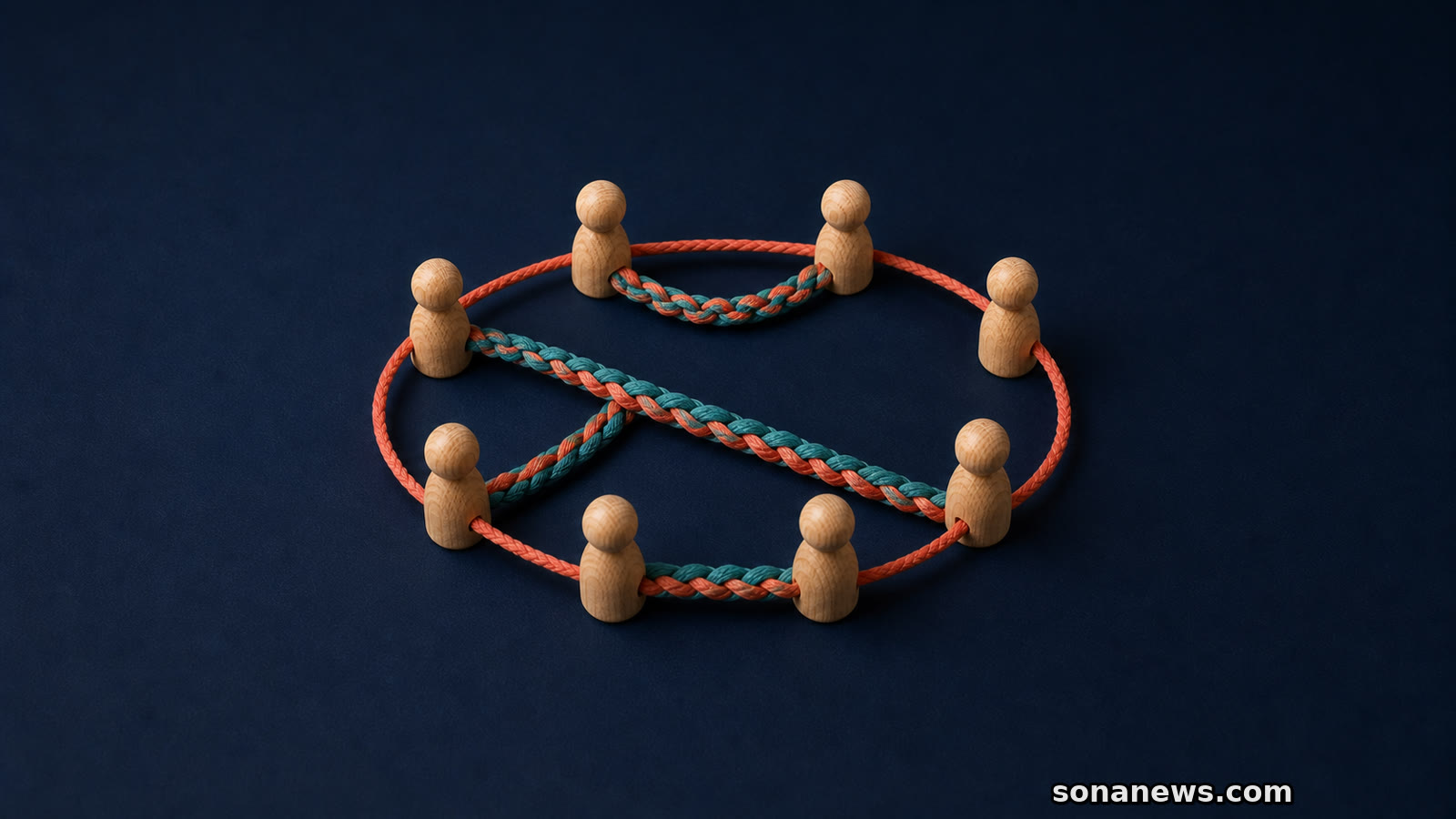

A long guest list can look like the opposite of a close friendship. So can a busy group chat beside the one person someone calls when life goes wrong. Everyday language encourages a simple choice: collect a broad social circle or invest deeply in a small one.
A new paper suggests that this familiar trade-off may be framed too neatly. Across five studies involving 5,707 participants, researchers developed a Friendship Making Orientation Scale with two separate dimensions: preference for a wide friendship network and desire for intimacy with many friends. Those dimensions were positively related. On average within the study samples, people who wanted a wider circle also tended to want closeness with more of its members.
That does not show that anyone can keep an unlimited number of intimate friendships. It shows that the wishes for breadth and depth did not sit at opposite ends of one scale.
The paper was published in *Evolution and Human Behavior* in April. Its authors began with a resource problem: time and energy are finite, yet friendships can provide companionship, emotional support, practical help and access to a wider pool of information or resources. A quality-versus-quantity trade-off sounds plausible under those limits.
Instead of assuming the trade-off, the team built questions to test how people differ in their motivations to make friends. Items contributing to the wide-network dimension included enjoying casual friendships with many different people and wanting introductions to new people. The second dimension concerned wanting intimacy with many friends.
The distinction matters. Someone can enjoy meeting people without wanting every connection to become close. Someone else can want greater intimacy with many people while feeling that their current relationships do not reach that level. Treating both situations as simply “having many friends” would erase the gap between an existing network and the network a person wants.
The scale also behaved in different ways against participants' self-reports. A stronger preference for a wide network was associated with greater extraversion, more reported friends and more friends reportedly willing to help when needed. A stronger desire for intimacy with many friends was associated with fewer reported friends, fewer who were willing to help, and lower satisfaction with both friendship number and quality.
That second pattern should not be read as proof that wanting closeness damages friendship. The studies are not an experiment assigning people to social goals. The authors offer a more tentative possibility: a high desire for intimacy may sometimes register an unmet threshold, keeping friendship-seeking motivation active when a person feels below the level of connection they want. Their analyses on that mechanism were exploratory.
Most of the research focused on United States samples. In the fifth study, the team tested the two-part scale among 673 participants across Brazil, Egypt and the Philippines. The same two-factor structure held across those samples, and the dimensions remained associated with measures including friendship quantity, closeness and prosociality.
That cross-cultural check is more informative than validation in one U.S. sample alone. It is not a licence to describe one global friendship psychology. Four countries cannot represent every language, age, class, community or norm around kinship and friendship. A measure can also function consistently across samples while average expectations and everyday practices still differ.
The design has other limits. The scale records stated preferences and self-reported social outcomes. It does not observe conversations, measure the quality of each friendship independently or follow a network over years. The paper proposes a stable individual difference, but repeated longitudinal work would be needed to show how stable these orientations are through moves, work changes, parenthood, bereavement or other shifts in available time.
Most importantly, a positive link between wanting breadth and wanting intimacy does not establish that people achieve both. The authors explicitly leave that question open. Finite attention may still constrain the number of relationships anyone can sustain, even when the underlying wishes rise together.
A 2023 systematic review helps place the new scale in context. It examined 38 articles on adult friendship and wellbeing published from 2000 to 2019. Friendship quality and socialising with friends were among the factors that predicted or correlated with wellbeing. The number of friends also showed positive correlations in parts of the literature. The reviewers found substantial gaps, including sparse, contradictory or population-specific evidence for some outcomes.
That mixed picture is not a reason to turn every friendship into a measurement exercise. It is a reason to resist a single social scoreboard. Network size, felt closeness, satisfaction, support and time spent together describe different things. A contact count cannot reveal whether someone feels known, while one intense friendship does not automatically supply the range of companionship or practical help that a broader circle might provide.
The new study's most useful contribution is therefore not an ideal friend number. It is a better pair of questions. Does a person want a wider range of connections? Do they want intimacy with more of the people they know? The answers can diverge, and they can also move in the same direction.
For readers, that distinction changes the usual cultural script. A person who wants more friends is not necessarily avoiding depth. A person dissatisfied with closeness is not necessarily short of contacts. The mismatch may be between the social life on paper and the kind of connection being sought.
The research does not promise that anyone can “have it all”. It does show why the wish for more people and the wish for deeper friendship should not be forced into an either-or choice before they have even been measured separately.
Sources
- **Ayers, Guevara Beltran, Mercado and Aktipis, *Evolution and Human Behavior*, DOI 10.1016/j.evolhumbehav.2026.106878:** Verifies the paper title, five-study total of 5,707 participants, two-factor Friendship Making Orientation Scale, test-retest reliability, construct and discriminant validity, three-country measurement-invariance test and association with friend-seeking behaviour
- **OpenAlex record and reconstructed publisher abstract for the same paper:** Verifies the 22 April 2026 publication date, open-access status, author affiliations, sample total and abstract wording without adding unreported effect sizes
- **Ayers and Guevara Beltran, Human Behavior and Evolution Society author explainer, 2 August 2026:** Verifies the sample Friendship Making Orientation items, associations with extraversion, reported friend number, help-ready friends and friendship satisfaction, the positive relationship between the two preferences, the exploratory threshold interpretation and the 673-person Brazil, Egypt and Philippines check
- **Pezirkianidis and colleagues, *Frontiers in Psychology* systematic review:** Verifies that the review covered 38 adult-friendship articles published from 2000 to 2019, found positive evidence around friendship quality, socialising and friend number, and identified sparse, contradictory or population-specific gaps
- **Boise State University research notice, 24 April 2026:** Independently verifies the paper's special-issue context, lead author affiliation, proposed construct and cross-cultural support claim
Help us improve
Was this article useful?
One anonymous tap helps Sona improve future reporting, headlines and source context.
Up next

US research finds that people can underestimate how welcome their appreciation will be. The useful lesson is about sincere, specific thanks, not a guaranteed way to improve a relationship.
Continue readingMore in Lifestyle