Taking a cello on Eurostar? Book its space, not just your seat
On Eurostar's London routes, a cased medium-sized instrument can need an accompanying ticket or a separately booked luggage space. The guitar exception is not a rule for every instrument.
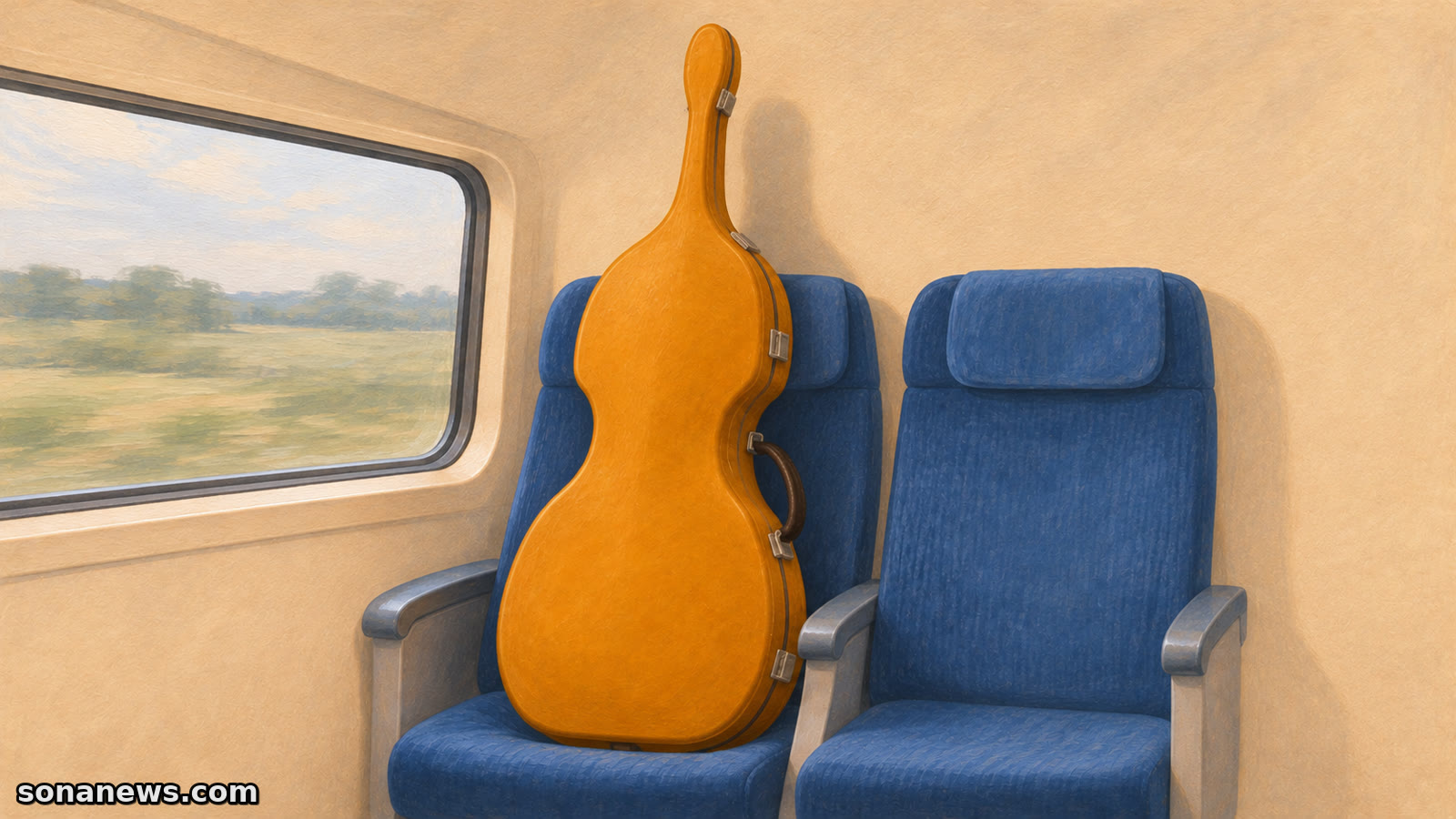

A cello can have a place beside its owner on a Eurostar train to or from London, but buying the owner's ticket does not arrange that place. Eurostar's instrument policy says cased instruments between 85cm and 136cm long can travel in an adjacent seat with an accompanying ticket booked through its contact centre, subject to availability. There are other options, but none amounts to assuming a free seat will be there on departure day.
That is the useful distinction when comparing a rail journey with flying: permission to take a musical instrument is not one uniform luggage allowance. The instrument's length, its case and the route determine which arrangements Eurostar describes. This is a guide to the operator's current published rules, checked on 12 November, not an announcement of a new restriction.
A guitar is an explicit exception
For journeys to and from London, Eurostar says instruments smaller than 85cm long, and guitars, can travel as part of the passenger's luggage allowance. It specifically requires guitars to be in a case. The wording matters: guitars are named separately, rather than every instrument being treated identically at the 85cm threshold.
The general allowance is two pieces of luggage and one small item of hand luggage in Eurostar Standard and Plus, or three pieces and one small item in Premier. An instrument accepted within that allowance is not described as an extra free item on top of it. A traveller packing a guitar, a suitcase and other bags still needs to account for the whole load.
Eurostar does not impose a strict weight limit on luggage included in the ticket, but passengers must be able to carry it safely themselves. That does not remove the size rules or create room for a larger instrument. The operator applies a separate weight limit to additional items on London routes, so the ordinary allowance should not be used as a blanket promise about registered luggage either.
For a cello, arrange the space with the journey
The instrument page gives three options for cased instruments in the 85cm-to-136cm band. One is to call the contact centre to book the journey and an accompanying ticket, so the instrument travels in the seat beside the passenger. Another is to send it by courier. The third is to contact Eurostar Travel Services about a dedicated luggage space.
The seat option is subject to availability. Eurostar's general luggage page also says it is subject to a fee. Neither statement establishes the price of an instrument seat on a particular departure, and this guide does not quote one. Eurostar's contact page warns that a service fee may apply to bookings or changes made by telephone.
For the booking conversation, have the instrument type, its packed dimensions and the intended trains ready. That is a practical way to make the enquiry specific, not a substitute for the operator's acceptance. Ask about the outward and return journeys rather than assuming that an arrangement on one departure covers both.
The published instruction is to book an accompanying ticket through the contact centre. It is not an instruction to buy an ordinary passenger ticket under an invented name, select two seats online or occupy whichever adjacent seat remains empty. Those shortcuts are not the process Eurostar sets out for an instrument.
A luggage space is a different arrangement
Eurostar's dedicated instrument page limits its booked luggage-space option to selected trains between London, Paris and Brussels. It directs passengers to Eurostar Travel Services and encourages early booking. That is narrower than saying that every train on those routes, or every Eurostar destination, offers the service.
There is a reason to confirm the specific train rather than rely on a general network list. Eurostar's wider luggage page also discusses extra-luggage services and lists some Amsterdam departures, while the dedicated instrument page names London, Paris and Brussels for its instrument service. The broader list is not a clear promise that a particular cello can use that service to Amsterdam. Obtain confirmation for the instrument and departure instead of extending one page's wording to another service.
For instruments longer than 136cm, the dedicated London-route guidance is more restrictive: Eurostar says they must go by courier and cannot travel with the passenger. It names harps and double basses as examples of large instruments. The accompanying-seat option should not be presented as a way around that upper limit.
Do not transfer the London rule to every route
Eurostar publishes a separate special-luggage policy for travel between Belgium, France, the Netherlands and Germany. On the instrument page, acceptance depends on available space, and passengers are told to speak to the Train Manager before boarding for guidance and approval.
That section describes one additional piece of luggage measuring at most 75 x 53 x 30cm and one piece of hand luggage alongside the special item. The special item's case must be no longer than two metres, with a €30 fee per case. Passengers must be able to carry their luggage themselves. This is not the same arrangement as a prebooked instrument seat on a London service, and paying a fee should not be read as overriding the stated space and approval conditions.
A journey with a connection can therefore involve more than one luggage check even when Eurostar appears on both tickets. A separately booked onward train with another operator needs its own policy check too. An acceptance for the first leg is not evidence of acceptance for the next.
The planning question is simple enough to ask before committing to a departure: is this instrument travelling within the ordinary allowance, in a booked seat, in an agreed luggage space or separately by courier? Settle that alongside the passenger booking. The case beside the seat is part of the journey, not an afterthought to the ticket.
Editorial note. General travel information, not a booking confirmation or personalised legal, immigration or insurance advice. Check Eurostar's current conditions and obtain confirmation for the instrument, case and departure concerned. Luggage acceptance does not establish customs compliance or permission to work at the destination.
Sources
Help us improve
Was this article useful?
One anonymous tap helps Sona improve future reporting, headlines and source context.
Up next

A drained stove is not automatically cleared for a flight. US guidance distinguishes fuel-free equipment from fuel containers, and an airline can still refuse used kit.
Continue readingMore in Travel