Why a space coffee cup needs a sharp inside corner
An open cup can deliver a sip in microgravity, but its shape has work to do. NASA's capillary-cup design guides liquid to the rim without ordinary pouring.
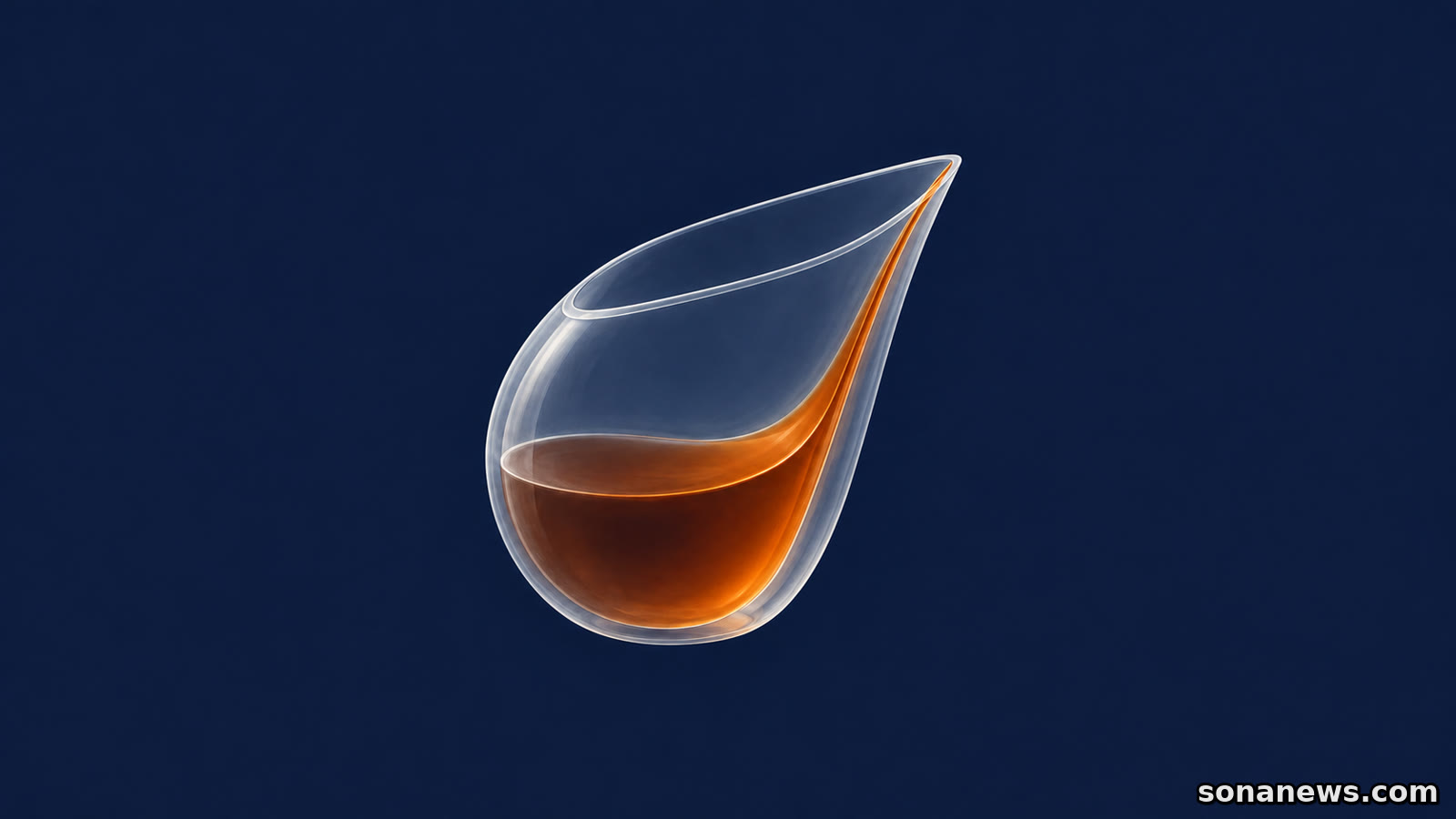

A space coffee cup can look as though someone has pinched one side into a point. That awkward-looking corner is not a decorative flourish. It gives the drink a route from the body of the cup to the place where an astronaut takes a sip.
NASA's capillary-cup design uses an angled channel running along the inside wall, from the bottom to the lip. In microgravity, capillary forces move liquid along that channel. Drinking removes some liquid at the rim, and more follows from the reservoir. The cup's geometry does part of the work that an ordinary mug leaves to gravity.
This is established spaceflight engineering, not a new launch announcement. A NASA technical brief published in 2011 describes the mechanism, and the agency's 2015 Capillary Beverage material shows later specially shaped cups. The useful question is not whether astronauts can have coffee. It is how an open container can deliver it without the usual pour.
The corner is an open channel, not a straw
On Earth, tipping a mug brings the drink towards its edge. In microgravity, designers cannot rely on that familiar downward pull to organise the liquid in the same way. A pouch and straw provide one solution: keep the beverage contained and draw it out through a tube.
The capillary cup offers a different arrangement. Its narrow channel is open, with two walls meeting at an angle. NASA's technical description says capillary forces move the beverage along it until the liquid reaches the upper lip and an equilibrium is established. At that point, the flow stops.
Taking a sip changes the balance. Liquid removed at the lip is replaced by liquid moving along the corner from the main reservoir. The description is more precise than saying the drink simply floats upwards. The fluid follows a deliberately shaped surface; it is not a detached blob travelling through the air.
Nor is the channel a hidden straw. Its open geometry is the point. The user drinks at the rim of an open vessel, while the interaction between liquid and cup helps keep a supply there.
Why the material matters as well as the outline
A pointed silhouette alone does not explain the design. How the liquid wets the surface also matters. NASA's technical brief gives a practical example from the early prototype: coffee residue left to dry changed the contact-angle properties, and the next fill was reluctant to move up the channel.
In that flexible prototype, gently squeezing the channel narrowed its angle and helped bring the liquid to the lip. Squeezing could also help move the last few drops as the cup emptied. Those observations concern that particular design, not instructions for handling every later space cup.
They do, however, explain why copying the outline is not the whole engineering task. Shape, surface condition and the liquid's interaction with the wall work together. An attractive pointed cup is not automatically a tested microgravity drinking system.
The same brief discusses possible material choices and coatings for the channel. These are design considerations, not proof that every cup shown in later photographs uses the same construction. It is worth separating a principle that persists from details that can change between prototypes.
From a handmade vessel to purpose-built cups
Rochester Institute of Technology's Vignelli Center records the early cup made by astronaut Donald Pettit from repurposed Mylar sheeting and Kapton tape on the International Space Station. Its teardrop shape created the narrow route towards the drinking rim.
The centre's design history describes a later version developed by Mark Weislogel and his team at Portland State University, made from 3D-printed food-grade plastic. NASA's own 2015 photograph shows a group of translucent vessels with rounded bodies and conspicuously pointed sides, rather than a row of conventional circular mugs.
These details make the object easier to read. The rounded part holds the beverage; the narrow inside corner provides the path to the lip. The unusual outline is a visible consequence of a fluid-control problem, not simply a space-age styling choice.
The history also guards against a misleading novelty claim. An image circulating now may show a design or experiment from years earlier. Neither an old mission page nor a newly shared photograph establishes that a new cup has just been delivered to orbit.
The cup and the coffee machine solve different problems
NASA's April 2015 account discussed the cups alongside ISSpresso, an espresso-making technology demonstration for the station. That pairing can make the two pieces of equipment seem like one invention. They address different parts of the drink's journey.
The machine was intended to prepare beverages. The specially designed cups were part of the Capillary Beverage investigation, using fluid properties such as surface tension to control the drink. Brewing coffee and delivering a sip from an open rim are not the same engineering problem.
NASA also described possible contributions to microfluidics, including applications on Earth. That was a research prospect, not evidence that a space coffee cup had already produced a particular medical device or improved treatment. The modest claim is interesting enough: a familiar daily action can expose a useful fluid-physics problem.
An open cup in orbit does not mean any household mug will work there, or that spilling has become impossible. The early technical brief describes resistance to spilling during normal cup movements, not protection against every disturbance. What the design demonstrates is more specific: with the right corner and surface interaction, liquid can be guided to a sipping point without relying on an ordinary gravity-driven pour.
Sources
Help us improve
Was this article useful?
One anonymous tap helps Sona improve future reporting, headlines and source context.
Up next
A metal mesh can be see-through to your eyes and still reflect radio waves. The wavelength, not a mirror-like shine, determines what the telescope needs.
Continue readingMore in Space