Webb's gold mirrors have a glass coat you cannot see
The telescope's familiar gold surface is a microscopic coating on beryllium, with a protective glass layer above it. Each material has a different job.
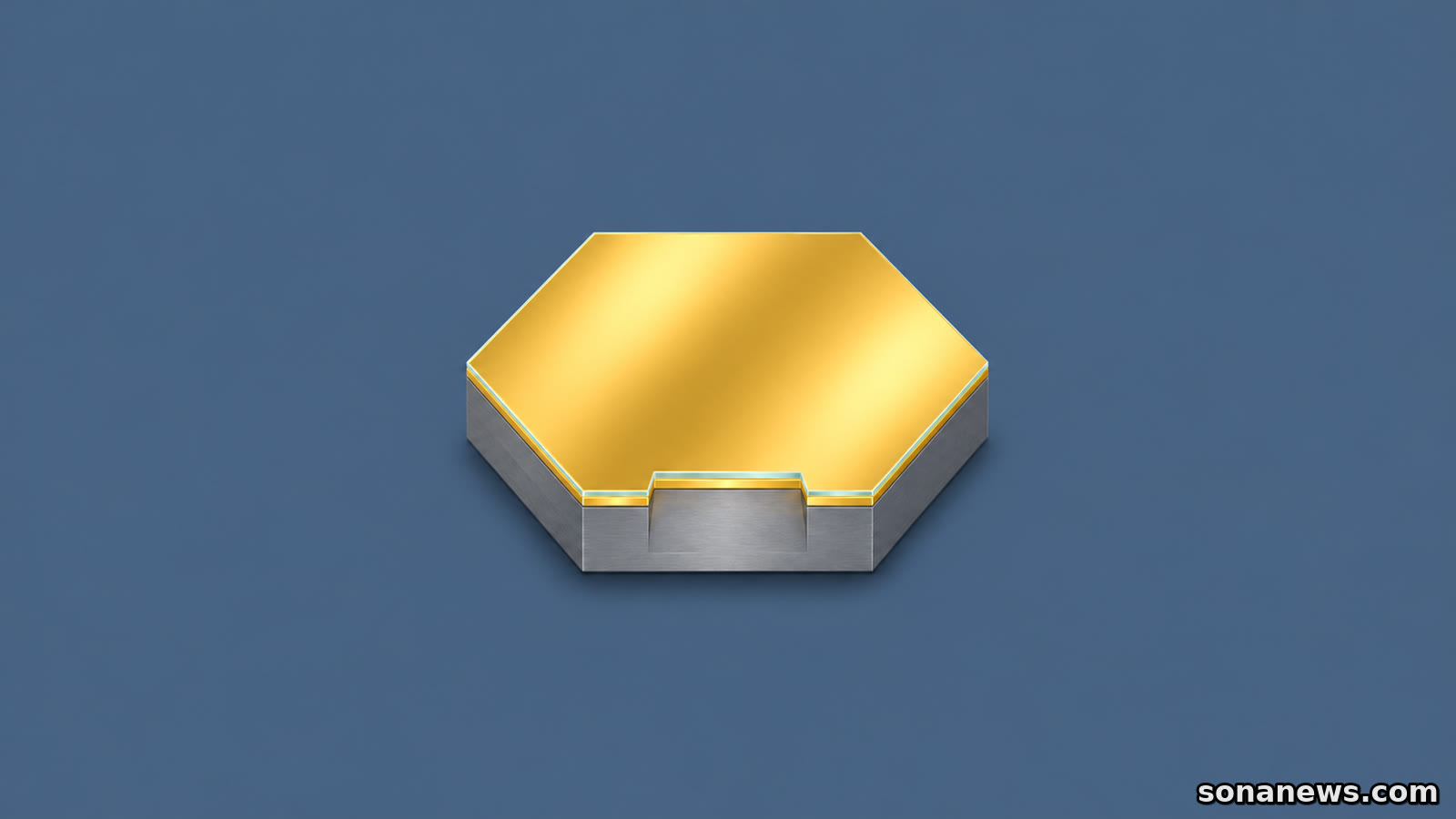

The gold is the part everyone notices. In photographs of the James Webb Space Telescope, its honeycomb-like primary mirror looks almost like a collection of precious-metal plates. But the gold is neither the bulk of the mirror nor its outermost protective material.
NASA's description of the mirror-making process identifies a thin layer of glass deposited on top of the gold. Its job is to help protect the soft metal from scratches. Beneath both coatings sits beryllium, the lightweight metal that gives the mirror segment its structure.
That distinction explains more than the colour of a famous telescope. Webb's mirrors combine materials chosen for separate demands: holding a precise shape in the cold, reflecting infrared light and protecting a delicate surface. This is established engineering, not a newly discovered feature or an announcement of a repair in space.
The gold is a coating, not a slab
NASA gives the typical gold thickness as 100 nanometres. In its historical account of the secondary mirror, the agency expresses the same thickness as one ten-thousandth of a millimetre. A mirror can therefore look thoroughly golden without being made from a thick piece of gold.
The choice serves the telescope's observations. Gold improves the reflection of infrared light, the part of the spectrum Webb was designed to study. The visible colour is a consequence of the material, not the reason for choosing a luxurious finish.
It is also not a claim that gold would be the best coating for every telescope. An optical surface has to suit the wavelengths and conditions of its instrument. The useful question is what light the telescope needs to collect, rather than which metal looks most reflective to a human eye.
In Webb's case, the coating belongs to a larger optical system. The 18 hexagonal primary segments act together as a collecting mirror, directing light to the round secondary mirror. Further mirrors then send that light towards the scientific instruments. The primary mirror's gold face is the most recognisable part of that route, but not the whole route.
The less visible layer protects the gold
The protective coating is amorphous silicon dioxide, written chemically as SiO2. NASA describes it as glass. It is deposited above the gold because pure gold is very soft, leaving the reflecting material vulnerable to scratches during handling or if particles move across its surface.
That is a narrower claim than saying Webb has an armour plate. The explanation concerns surface protection. It does not mean the telescope is scratch-proof, that a glass cover can stop every impact, or that the mirrors are enclosed behind a separate window.
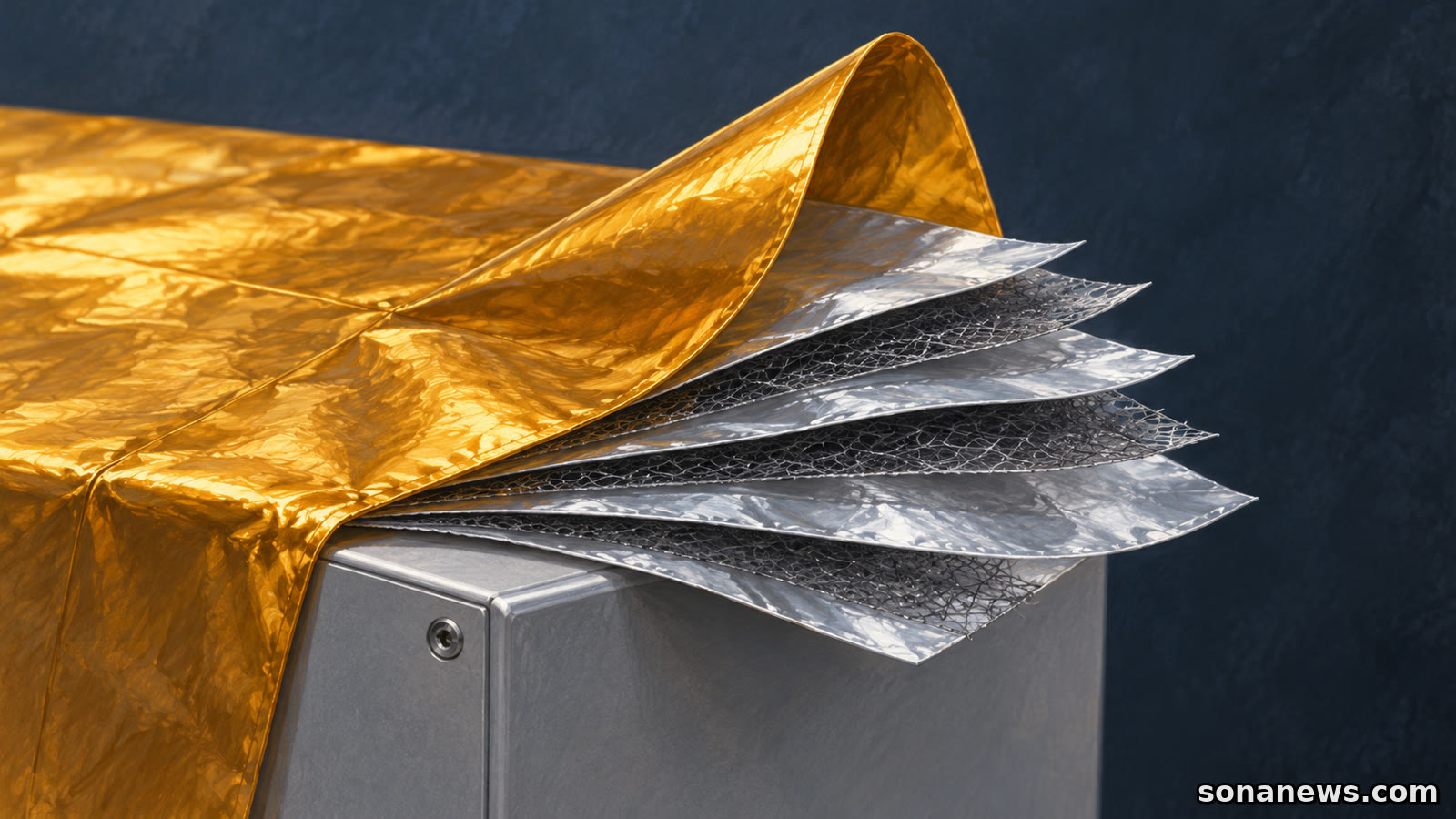
Nor should the arrangement be imagined as a thick sheet of household glass laid over a gold tile. Both the gold and its protective overcoat are thin deposited layers. A drawing that makes them separately visible must exaggerate their thicknesses, rather than present the drawing as a literal cross-section at the scale of the full mirror.
The distinction matters when reading space imagery. A photograph can show the golden face clearly while revealing very little about the coating stack. The striking colour is not a complete guide to what the optical surface is made of.
Beryllium does the structural work
The mirror underneath is made from beryllium. NASA describes it as strong for its weight and good at retaining its shape across a range of temperatures. Its behaviour at very low temperatures helped make it the choice for Webb.
The manufacturing process also removed much of the material from the back of each segment, leaving a thin rib structure. That reduced mass while preserving the required shape. The familiar front-facing photographs do not show all the engineering behind the reflecting face.
There were separate challenges here. A large collecting area gathers light, but the telescope still had to be light enough to launch. A polished shape made at room temperature also had to become the right shape under the cold conditions of operation. Choosing a reflective coating alone could not solve either problem.
This is why describing the segments simply as gold mirrors leaves out the most substantial material. Beryllium supports the optical form; gold improves infrared reflection; the glass overcoat helps protect the soft reflecting layer. The roles are complementary, not interchangeable.
The coating came after the cold tests and polish
The sequence of manufacture is revealing. NASA's account describes shaping and polishing the beryllium, then testing the mirror segments at cryogenic temperatures. Engineers measured how their shapes changed in the cold and used that information for the final polishing work.
Only after the shape had been corrected and polishing completed was the thin gold coating applied. The process was vacuum vapour deposition: a small quantity of gold was vaporised inside a vacuum chamber and deposited on the mirror. Areas that were not meant to receive gold, including mechanisms and the back, were masked off.
The protective glass layer was deposited over the gold. After coating, the mirrors underwent another verification of their surface shape at cryogenic temperatures. These were manufacturing and ground-testing steps before launch, not work now being performed on the telescope in orbit.
For a reader looking at a Webb photograph, the most useful mental picture is therefore not a golden slab. It is a carefully shaped metal mirror with extremely thin coatings that do different jobs. The brilliant surface attracts the eye; the less conspicuous materials help explain how it became a working astronomical instrument.
Sources
Help us improve
Was this article useful?
One anonymous tap helps Sona improve future reporting, headlines and source context.
Up next
A metal mesh can be see-through to your eyes and still reflect radio waves. The wavelength, not a mirror-like shine, determines what the telescope needs.
Continue readingMore in Space